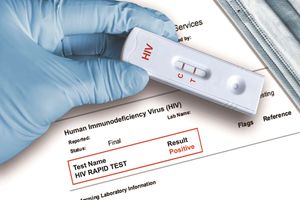
Seven in 10 new child HIV infections linked to missed treatment by mothers

The number of HIV infections from the participants who were given the vaccine were no different from those placed in the placebo group.

Seven out of every 10 new HIV infections among children in Kenya come from mothers who either stopped taking antiretroviral therapy (ART) or never received treatment at all, according to the Kenya HIV Estimates 2026.
Modern antiretroviral drugs can reduce the risk of mother-to-child transmission (MTCT) to below five per cent. However, gaps in Kenya's maternal healthcare cascade continue to expose thousands of infants to the virus during pregnancy, childbirth and breastfeeding.
In 2025, an estimated 13,936 Kenyans were newly infected with HIV, according to data released by the National Syndemic Diseases Control Council (NSDCC). Of these, 10,540 were adults aged 15 and older, while 3,396 were children aged zero to 14. By sex, 9,044 were female, and 4,891 were male. This means roughly one in every four new HIV infections nationwide occurred in a child.
The data show that 72 per cent of all new paediatric infections were driven by mothers missing out on life-saving medication. Of these, 38 per cent occurred among mothers who dropped off ART, while 34 per cent happened among mothers who never received ART at all.
Over half of all infant infections, 51 per cent, occurred during breastfeeding rather than during pregnancy (49 per cent). This points to treatment fatigue after delivery and missed clinic follow-ups, which leave babies vulnerable long after birth.

Severe bleeding, infections, complications from unsafe abortions and underlying conditions such as HIV/AIDS are among the leading causes of death, the report said.
The data points to four other sources of new paediatric infections in 2025. One is mothers infected during pregnancy or breastfeeding, at 11 per cent.
"Women who tested negative early in pregnancy but acquired HIV later while expecting (three per cent) or while nursing (eight per cent), without being retested or placed on prevention, infect their baby," says the report.
Also, mothers who started treatment mid-pregnancy still transmitted the virus during pregnancy (three per cent) or breastfeeding (five per cent).
"Mothers who started ART late in pregnancy (five per cent), women initiated too close to delivery to achieve full viral suppression before birth (four per cent) or during early nursing (one per cent), and mothers who were already on ART before pregnancy (four per cent), with breakthrough transmissions occurring during pregnancy (two per cent) or breastfeeding (two per cent) despite pre-existing treatment," says the report.
A high MTCT rate reflects missed opportunities across the Prevention of Mother-to-Child Transmission (PMTCT) cascade, which spans antenatal care (ANC), delivery and the postnatal period.
An infant's exposure to HIV can occur in the womb, during labour and birth, and through breast milk. But mothers living with HIV can give birth to HIV-negative babies. Being on ART and having an undetectable viral load during pregnancy and breastfeeding significantly reduces the risk of transmission.
The World Health Organisation (WHO) recommends effective HIV treatment during pregnancy, an informed and careful choice between vaginal delivery and caesarean section, continued breastfeeding, and giving the baby anti-HIV drugs (infant PEP) for a few weeks.
Nationally, Kenya's MTCT rate eased slightly from 9.3 per cent in 2024 to 8.04 per cent in 2025. It remains well above the WHO elimination target of five per cent. No county in Kenya has achieved this target.
The NSDCC warns that the antenatal clinic, the main place where HIV is caught and treated in expectant mothers, is reaching fewer women. In Kenya, all expectant mothers must be tested for HIV at their first antenatal visit. Those found to be infected are started on treatment immediately.
First-visit ANC attendance has fallen sharply from 96 per cent in 2021 to 79 per cent in 2025. This means more than one in five pregnant women (21 per cent) never attend an antenatal clinic where nurses could diagnose the virus.
Even among women who do visit a clinic, testing and early treatment are declining. Of those who attended a first antenatal visit, 14 per cent went untested, meaning HIV testing reached only 68 per cent of all pregnant women in 2025.
Also, only 19 per cent of expectant mothers attended ANC during their first trimester. This leaves most women starting ART too late to achieve reliable viral suppression before delivery.
"Only about 60 per cent of pregnant women completed four or more recommended ANC visits, creating repeated gaps where mothers fall out of care. Meaning out of the 10 women who started care, only six completed the four visits, four dropped on the way," says the report.
In terms of MTCT rates, 17 counties sit above 10 per cent. Arid and semi-arid (ASAL) northern counties account for most cases, as sparse health infrastructure and low clinic attendance continue to drive transmission.
Wajir recorded the highest MTCT rate in the country at 30.9 per cent, followed by Turkana (22.0 per cent), Samburu (21.9 per cent), Marsabit (21.2 per cent), Mandera (19.9 per cent), Mombasa (17.1 per cent), Garissa (16.2 per cent), Nyeri (15.8 per cent), Vihiga (15.1 per cent) and Kajiado (15.1 per cent). Uasin Gishu recorded the lowest rate nationally at 6.3 per cent.
However, when measured by the number of newly infected children, the epidemic is concentrated in high-population and lake-region counties. Five counties, Migori (316 new child infections), Nairobi (314), Homa Bay (309), Kisumu (271) and Siaya (205), accounted for over 40 per cent of all new paediatric infections nationwide in 2025. They were followed by Kakamega (152), Bungoma (146), Nakuru (143), Kiambu (132) and Mombasa (113).
The NSDCC analysts emphasise that ending new HIV infections in Kenyan babies requires expanding clinic reach and testing efficiency in northern counties. It also requires scaling up retention, repeat testing during breastfeeding, and adherence support in high-volume lake-region and urban counties.
Dr Florence Njenga, a medical doctor and PMTCT consultant, said a woman living with HIV can give birth to an HIV-negative baby and continue to care for and breastfeed the baby without the baby becoming infected.
She explained that prevention of mother-to-child transmission can be achieved through early detection of infection in the mother.
"This is why HIV testing is part of the tests that are done at the first antenatal visit, and for those who test negative, the test is repeated throughout pregnancy, delivery and breastfeeding," she said.
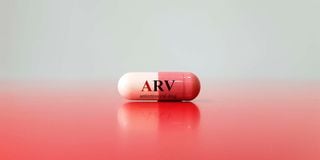
Medication of ARV (antiretroviral drug) for treatment HIV infection.
Mothers who test HIV-positive are started on antiretroviral treatment the same day.
"For women already living with HIV and those starting HIV treatment during pregnancy or breastfeeding, it is necessary to take antiretroviral medication daily, as prescribed. The goal of taking the medication is for the level of the virus to be very low, to the level of not being detected by a viral load test," she advised.
She added: "It is important for the mother to notify the healthcare providers during pregnancy and delivery of their HIV status so that the necessary monitoring can be done, and special care can be taken during the delivery process."
"It is important to let the team caring for the baby know that the infant was exposed to HIV, so that they can provide timely preventive medication and carry out the necessary tests. The vaccination schedule is also slightly different," she said.
She advised that the baby should be started on preventive antiretroviral medication as soon as possible after birth and continue on it until six weeks after the baby stops breastfeeding. The baby should be exclusively breastfed for the first six months. At six months, when complementary feeding starts, breastfeeding can continue as long as the HIV prevention medication is also being taken.
"The baby gets tested for HIV at regular intervals until the time when breastfeeding stops. With timely care and support, mothers can give birth to HIV-negative babies."
Follow our WhatsApp channel for breaking news updates and more stories like this.