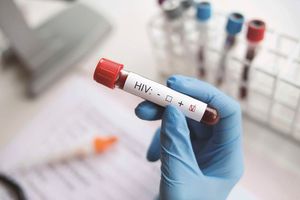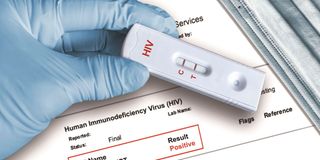
HIV Testing Strip. Only a small proportion of Kenyan men have ever used HIV self-testing kits.

Despite widespread awareness of HIV self-testing kits among Kenyan men, only a small proportion have ever used them, highlighting persistent social, economic and psychological barriers to testing.
A study based on data from the 2022 Kenya Demographic and Health Survey (KDHS) has found that although most men aged 15 to 59 know about HIV self-testing (HIVST), only about one in 10 have ever used the kits.
The findings suggest that making HIV testing private and convenient is not enough to encourage men to establish their HIV status.
Concerns about stigma, discrimination and possible judgment by healthcare workers remain major obstacles. Some men are also apprehensive about how their partners or other people would react if they discovered they were testing for HIV.
Other challenges include the cost of purchasing the kits, uncertainty about where to obtain them, fears of using them incorrectly and anxiety about dealing with a positive result.
The study further highlights disparities in access and uptake based on geographical location and economic status.
Men living in urban areas are more likely to use HIV self-testing kits than their rural counterparts, partly because rural residents face difficulties accessing information about where the kits are available.
Also Read: Kenya to manufacture HIV-prevention drug
Education also plays a significant role. Men with tertiary education are considerably more likely to know about HIV self-testing, while actual usage is higher among those from wealthier households.
This suggests that financial resources influence whether awareness translates into action, particularly in communities where purchasing privately available testing kits may be beyond the reach of many households.
The study also established that men with multiple sexual partners were more likely to be aware of and use the kits. Meanwhile, those who had never engaged in sexual intercourse recorded lower uptake, largely because they perceived themselves to be at little or no risk of HIV infection.
People intending to use the HIV self-testing kits should be adequately prepared before testing and have access to support after receiving their results.
A comparison with other African countries included in the study shows that Kenya continues to lag behind some of its neighbours in the adoption of HIV self-testing.
In Lesotho, 55.9 percent of men were aware of the kits, while 33.7 per cent had used them. Nigeria, on the other hand, recorded awareness levels of 23.1 per cent and utilisation of 3.3 per cent.
Michael Onyango of the Movement of Men against AIDS in Kenya said the findings reflect the challenges experienced by men in accessing and embracing HIV testing services.
He identified fear of a positive result as one of the biggest factors discouraging men from using self-testing kits.
Mr Onyango said unlike conventional testing services, where clients may receive counselling before undergoing the procedure, self-testing can leave individuals to confront the outcome without adequate emotional preparation.
“When one uses the self-test kits, there is usually no prior counselling to prepare one for the results. Before knowing one’s HIV status, there is a need for counselling to prepare the man for the outcome of the results. Knowing one’s HIV status, and more so being positive, ends up affecting them psychologically,” he told the Nation.
He said people intending to use the kits should be adequately prepared before testing and have access to support after receiving their results.
Mr Onyango called for community-based awareness programmes to address fears surrounding HIV and reassure men that effective treatment and support are available regardless of their status.
“We need to have a community awareness campaign to reassure the people, and more so men, that irrespective of their status after testing, all will be fine and it's not the end of life for them,” he said.
He further raised concerns about the emotional and psychological consequences of testing without adequate support, noting that some individuals could experience severe distress after receiving positive results.
Kennedy Otina, the Executive Director of the Masculinity Institute, attributed the low uptake partly to men's reluctance to seek medical attention.
He said many men tend to ignore signs of illness and only visit health facilities when their conditions have deteriorated.
“Men do not want to assume they are sick. They rarely go to hospital and usually go only when they are critically ill. With most of them being the breadwinners of their families, the thought of feeling that they could be unwell could affect their productivity,” Mr Otina said.
He noted that traditional expectations surrounding masculinity, particularly the perception that men should remain strong and productive, could discourage them from acknowledging their health concerns.
Mr Otina called for sustained public education campaigns to encourage men to take responsibility for their health and embrace HIV self-testing as part of routine preventive healthcare.
HIV Testing Strip. Only a small proportion of Kenyan men have ever used HIV self-testing kits.
He also pointed to the attitudes of some healthcare workers as a possible deterrent, arguing that the health system does not always provide an environment in which men feel comfortable seeking services.
“The health environment, which includes the health workers, seems not to favour men, mostly in the way they treat them, which could be a reason why they shun going to hospitals and getting tested,” he said.
Public health experts and organisations, including Amref Health Africa, have similarly identified socioeconomic and psychological challenges as significant barriers to HIV self-testing among men.
Fear of receiving a positive result, uncertainty about how to cope with the news and the absence of immediate professional counselling can discourage individuals from testing themselves.
Community stigma also remains a concern, with experts warning that some men are uncomfortable purchasing, possessing, or keeping HIV testing kits for fear of being suspected of having the virus.
The findings point to the need for interventions that go beyond distributing testing kits.
The study indicates that expanding access to affordable kits, improving public awareness, strengthening counselling and referral services, and addressing negative attitudes towards HIV could help increase uptake among Kenyan men.
It adds that encouraging men to test will require not only making the kits accessible but also creating an environment in which they feel safe seeking information, knowing their status, and accessing treatment and support.
Follow ourWhatsApp channel for breaking news updates and more stories like this.