SHA crisis: Hospitals threaten to stop dialysis, cancer treatment
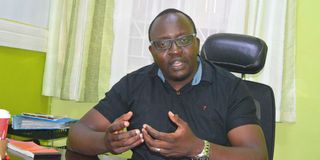
The Rural Private Hospitals Association of Kenya chairman Brian Lishenga.

Private hospitals across Kenya are threatening to suspend critical services, including cancer treatment, dialysis and chronic surgical procedures, following months of delayed reimbursements from the Social Health Authority (SHA).
The move threatens thousands of lives that depend on these specialised services to survive, as healthcare providers struggle to maintain expensive treatments without adequate compensation from the cash-strapped authority.
Many facilities are now considering withdrawing from SHA contracts altogether, warning that continued non-payment will force them to restrict life-saving services to cash-paying patients only – effectively excluding the majority of Kenyans who depend on SHA coverage.
Dr Brian Lishenga, chairman of the Rural Private Hospitals Association (RUPHA), revealed the extent of the financial crisis facing healthcare providers, with member hospitals forced to borrow money from banks to continue operating.
"It is not fair that hospitals offer services and then have to beg for payment," Dr Lishenga said. "We have hospitals owed more than Sh2 million, and there is no way to run a hospital under these conditions."
Expensive specialised services
The association's members report being pushed to the brink of bankruptcy as they attempt to maintain expensive specialised services without adequate compensation. Many facilities are borrowing against their assets to purchase medications, maintain equipment and pay specialised staff required for chronic disease treatment.
"We cannot continue operating dialysis units and cancer centres at a loss," explained one hospital administrator who requested anonymity. "These are expensive services that require consistent cash flow to maintain equipment and purchase medications."
According to a SHA official who sought anonymity, the reimbursement crisis stems from the authority's failure to attract meaningful participation from Kenya's informal sector, which comprises approximately 83 per cent of the country's workforce.
Despite government projections, only 10 per cent of informal sector workers who completed the mandatory means testing process remain active contributors to the system, with the rest failing to remit their annual payments as required by law.
SHA data shows that of 18.5 million registered Kenyans, about 3.5 million are from the formal sector. While 4.6 million took the means testing, only 1.2 million have ever paid, and just 500,000 Kenyans remain active contributors.
"This means we are depending on salaried Kenyans to run the kitty. Without the 2.75 per cent [contribution], we are unable to run our healthcare," Dr Lishenga said.
The means testing process, designed to determine appropriate contribution levels for informal sector workers, has proven a significant barrier to enrolment. Many informal workers found the process cumbersome and have since abandoned their SHA registration, leaving the system financially vulnerable.
"The few informal sector participants who remain active are predominantly individuals with chronic conditions who desperately need healthcare services. This adverse selection has created a funding nightmare for SHA, as the system faces high-cost claims without sufficient premium revenue from healthy contributors," the SHA official said.
Human cost of the crisis
The payment delays have created a dangerous standoff between healthcare providers and SHA, with patients caught in the middle. This crisis is exemplified by the ordeal of 70-year-old Gatamu Waigwa, a retired anaesthetist from Nyeri.
For the past four months, Waigwa has been waking up at 4am to board a matatu to Nairobi, spending entire days at SHA offices pleading with officials to save his life.
His struggle began when SHA slashed his oncology benefits from Sh600,000 under the defunct National Hospital Insurance Fund (NHIF) to just Sh400,000 – a reduction he says will kill him. Despite promises of a Sh550,000 oncology package, SHA has refused to honour the full amount, leaving Waigwa Sh200,000 short of what he needs to survive.
"I have two weeks left to finish the cancer medication I am currently taking, which costs Sh92,800, as well as injections totalling around Sh10,000," Waigwa told the Nation on Tuesday. "If I don't have them, according to my doctors, the cancer will spread and kill me. I do not want to die."
The gravity of his situation deepens when considering the final quarter of the year – he still needs another Sh100,000 for medication to see him through December.
Waigwa's case exemplifies the broader crisis: his cancer treatment costs exceed what many healthy Kenyans contribute to SHA in an entire year, yet his survival depends on the system's ability to honour its coverage promises.
"With cancer patients requiring chemotherapy, kidney patients needing regular dialysis, and individuals with chronic conditions requiring ongoing surgical interventions, SHA finds itself unable to meet reimbursement obligations to healthcare providers with limited contributions," the SHA official explained.
Efforts to obtain comment from SHA CEO Mercy Mwangangi were unsuccessful, as calls went unanswered. SHA officials promised to respond to questions but failed to do so, and later attempts to get a response were also unsuccessful.
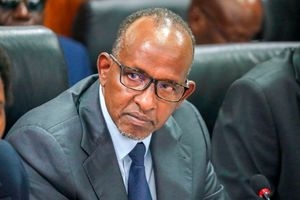
Separately, Health Cabinet Secretary Aden Duale says at least 1,058 health facilities have been closed down by the Ministry of Health across the country due to various reasons, including defrauding SHA.
Mr Duale said that most of the facilities were implicated in SHA-related fraud, while others have failed to comply with set standards.
The CS further revealed that 458 health facilities have been downgraded across the country, as the government intensifies efforts to weed out unlicensed and substandard service providers.
"In collaboration with the Kenya Medical Practitioners and Dentists Council (KMPDC), we have closed down various facilities; some for defrauding SHA and others because of various reasons for non-compliance. We will continue with the crackdown to streamline the provision of healthcare services in the country," said Mr Duale in Nakuru.
Additional reporting by Purity Wanjiru