SHA reveals illnesses draining Kenya’s health fund

The data shows respiratory diseases accounted for 21.4 per cent of all claims processed by SHA between July 2025 and April 2026.

What you need to know:
- Kenyans are going to hospital mostly for coughs, stomach problems and fever.
- The Ministry of Health has identified respiratory diseases as a growing concern.
More than one in every five claims filed with the Social Health Authority (SHA) across the country is for a respiratory condition.
According to data from the Social Health Insurance Fund (SHIF) facility payment report, Kenyans are going to hospital mostly for coughs, stomach problems and fever. These conditions, however, are inexpensive to treat.
Maternal care, cancer, kidney disease, cardiovascular conditions and trauma take the largest share of spending despite fewer claims.
Acute upper respiratory infections alone, including coughs, throat infections and sinus problems, account for more than 10 per cent of all specific condition claims. Lower respiratory infections, including pneumonia, add a further 5.7 per cent.
The data shows respiratory diseases accounted for 21.4 per cent of all claims processed by SHA between July 2025 and April 2026.
The figures reveal a country managing two distinct health burdens: a high volume of common conditions that keep filling hospitals but are cheap to treat, and a smaller but far more expensive cluster of serious illnesses consuming the larger share of health spending.
“A consultation, basic medication and a few days of management handle most of them. The condition accounts for only 8.6 per cent of SHA’s total spending. Acute upper respiratory infections, the single most common condition in the dataset, cost just 4.1 per cent of the total bill,” states the report.
Lower respiratory infections, a more serious category that includes pneumonia and bronchitis, rank sixth among specific conditions, generating 5.7 per cent of claims at 4.5 per cent of cost.
The same picture emerges in the Economic Survey 2026, which shows that diseases of the respiratory system remained the leading cause of illness reported in health facilities in 2025.
These range from acute upper respiratory infections to chronic lower respiratory tract illnesses such as asthma and chronic obstructive pulmonary disease. Together, they accounted for 15.4 million cases in 2025, or 18 per cent of all reported illnesses.
The Ministry of Health has identified respiratory diseases as a growing concern requiring urgent structural intervention. Speaking at the launch of an advanced bronchoscopy training programme at Kenyatta National Hospital last year, Medical Services Principal Secretary Ouma Oluga said tuberculosis, pneumonia, asthma and lung cancer continue to affect thousands.
The bronchoscopy initiative aims to improve early detection and management of respiratory conditions.

Social Health Authority signage at Mutuini Hospital in Dagoretti South Sub-County, Nairobi, on August 27, 2025.
“This reflects a growing recognition by the government that Kenya’s respiratory disease burden requires more than routine outpatient management,” said Oluga then.
Digestive disorders follow closely at 17.8 per cent of all claims, again at a cost share well below their volume at 7.2 per cent. Gastritis and peptic ulcer disease, the second most common specific condition at 11.6 per cent of claims, is a quiet epidemic.
Then there is malaria. The SHA payment data shows malaria as the third most common specific condition at 9.8 per cent of all claims. Read alongside the Economic Survey's finding that malaria cases surged from 3.8 million in 2024 to 14.3 million in 2025, a nearly 280 per cent increase in a single year, the scale of what is happening becomes clear.
The disease appears in SHA’s data not just as a volume driver but as a cost driver, accounting for 6.7 per cent of total spending, a proportion notably higher relative to its claims share than respiratory conditions. The figure reflects the diagnostic workload, antimalarial medication and hospitalisation that severe cases require.
Maternal and obstetric conditions account for 11.2 per cent of claims but 18.9 per cent of all SHA spending, the highest cost share of any disease category in the dataset. The report’s summary acknowledges that “maternal care, cancer, renal disease, cardiovascular disease and trauma take a larger share of spending because they require more intensive or specialised care”.
Normal delivery is the fourth most common specific condition at 8.4 per cent of claims and a cost share of 10.5 per cent. Caesarean section takes 3.8 per cent of claims and a cost share of 8.4 per cent.
“Together, obstetric care absorbs roughly a fifth of SHA’s total payment outflow. The Economic Survey records 242,400 caesarean sections in 2025, a 9.9 per cent increase from the previous year, meaning the most expensive form of delivery is becoming more common precisely as the system is being asked to bear the cost,” the report states.
Musculoskeletal conditions rank fifth at 8.9 per cent of claims and 5.1 per cent of costs. This category covers joint pain, back problems, arthritis and sports injuries.
“The relatively low cost share suggests these are mostly managed conservatively at outpatient level, though the volume points to a significant and often under-discussed burden of chronic pain and mobility limitation among the SHA-covered population,” A director at SHA said.
Endocrine disorders, primarily diabetes, round out the top 10 at 2.2 per cent of claims and 3.6 per cent of cost. While these are among the lowest ranked by volume, the cost share running higher than volume suggests that diabetes management, including medication and monitoring, carries a per-visit cost above the average for common conditions.
Cancer is ranked ninth in the claims table at just 2.8 per cent of total claims. It sits at rank two in the cost table at 16.5 per cent of total spending.
“Cancer treatment involves specialised procedures, repeated care or longer management. It means months of chemotherapy visits. It means PET scans. It means radiotherapy sessions, supportive medication, follow-up care and the recurring cost of monitoring a disease that does not leave quickly or cheaply,” the director said.

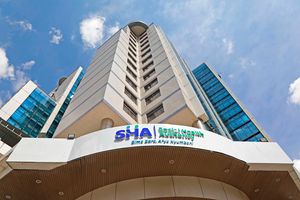
The Social Health Authority building in Nairobi.
The SHA data confirms that the previous Sh550,000 annual cancer benefit was structurally inadequate.
“Cancer patients are among the most expensive patients in the scheme, and they were being held to a benefit limit that the data shows was being breached regularly before treatment was complete. The expansion to Sh800,000 is not a generous addition. It is a correction demanded by the numbers,” the director said.
Cardiovascular disease follows a pattern similar to cancer. At 6.7 per cent of claims and 14.8 per cent of costs, heart disease is the third most expensive condition by cost share. Hypertension, the most common cardiovascular condition at 6.1 per cent of claims, carries a cost share of 8.9 per cent.
Renal disease tells perhaps the starkest story in the dataset. Genitourinary conditions rank eighth by volume at 4.3 per cent of claims but account for 13.6 per cent of cost. Within that category, chronic kidney disease managed through dialysis accounts for 2.6 per cent of claims and 12.8 per cent of total SHA spending.
A single patient on dialysis generates two or three claims per week, every week, indefinitely. Over 14,800 Kenyans are currently on the scheme’s dialysis cover, with 80 per cent of them chronic cases requiring weekly sessions.
Road traffic injuries complete the picture of high-cost, lower-volume conditions at 4.9 per cent of claims and 9.6 per cent of costs. Emergency surgery, orthopaedic intervention, blood products, ICU admission and extended rehabilitation are some of the services that make accidents costly to treat, placing a financial strain on a scheme that is spending more than it collects.
Follow our WhatsApp channel for breaking news updates and more stories like this.