SHA reveals list of health services you can seek overseas
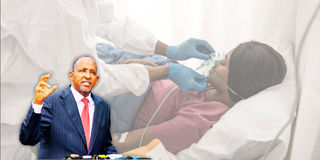
CS Aden Duale gave the list following widespread abuse of the scheme by cartels.

The Social Health Authority (SHA) has released a list of 36 healthcare services unavailable in Kenya that Kenyans can now seek overseas with coverage.
The announcement follows a previous halt on overseas treatment by the Health Cabinet Secretary Aden Duale over widespread abuse of the scheme by cartels and unregulated foreign hospitals.
The services include wrist joint arthroplasty, liver transplant, bone marrow transplant, paediatric kidney transplant, and laryngeal transplant. The list remains preliminary as the process of identifying additional interventions continues.
In a gazette notice, SHA stated that these services are unavailable due to several factors, including lack of surgical expertise and advanced implants, inadequate oncology infrastructure, lack of implants and training, limited technical skills, and lack of technology.
SHA announced that the notice followed a "rigorous, systematic, and evidence-based assessment by the Benefits Package and Tariffs Advisory Panel (BPTAP) to identify services eligible for overseas referral."
"This new process, unlike the previous framework under the defunct National Health Insurance Fund (NHIF), is guided by a robust legal framework, including the Social Health Insurance Act, 2023, and its attendant Regulations and the Public Procurement and Asset Disposal Act," said CS Duale.
The Cabinet Secretary noted that SHA can only make payments to healthcare providers who are empanelled and have contracts with the authority. Consequently, he announced that the SHA board of directors has been directed to proceed with empanelment and contracting of overseas facilities and to notify the public of the list to facilitate approval of overseas treatment requests in line with regulations and Ministry of Health guidelines.
"A beneficiary can only access treatment outside Kenya if the healthcare service is not available locally. The beneficiary's contributions must also be up to date, and the treatment must also be provided by an SHA-contracted health facility," CS Duale explained.
"Overseas facilities must be accredited in their home country and officially recognised by the relevant regulatory body in Kenya. A key requirement is that these overseas providers must be linked to a contracted health facility in Kenya to ensure continuous follow-up care upon the beneficiary's return."
All referrals for overseas treatment will be reviewed by the claims management office to ensure they are medically necessary. The proposed treatment must also be within the benefit plan's financial limits and cannot be an unproven or experimental therapy.
The maximum amount payable for overseas treatment is capped at Sh500,000. This limit is subject to review once the Health ministry completes contracting and rate negotiations with accredited providers abroad.
For Mary Wanjiku (Healthy Nation, Sept 22), who is battling kidney disease, has undergone multiple strokes and failed transplants, and now needs a third kidney transplant, the list represents another stumbling block in her pursuit of healing.
Mary was diagnosed with kidney failure at age 22, just after graduating from university. Her condition was initially traced to untreated high blood pressure, which led to kidney damage and a stroke.
She has undergone two kidney transplants, both of which ultimately failed due to complications like a lethal form of tuberculosis. For many years, she has been dependent on dialysis to survive, which comes with significant physical limitations and a very strict diet. The disease has severely impacted her physically, causing a limp, bone disorder, and dental problems.
Her doctors have recommended a third transplant, and a cousin has been identified as a donor. However, the procedure in India is expensive and requires Sh15 million. She expresses shock and confusion about this, noting that she has no local option for her transplant.
She explains that since no other adult kidney transplant has ever been performed in Kenya, her only choice is to travel abroad for the procedure.
"The new policy means the government will not pay for my treatment, which is a major setback. I had hoped for some financial assistance, mentioning that the previous amount was around Sh500,000 for the patient and Sh180,000 for the donor," she says.
"Kenyan doctors consider my kidney transplants to be a sensitive case and are unwilling to risk performing the procedure locally. Despite already raising some funds, the lack of government support means I now have to cover the entire cost myself."
For many Kenyans like Mary, who depend on foreign medical care for specialised treatments, the new Social Health Authority policy presents a significant challenge and places a heavy financial burden on patients seeking life-saving procedures not available in Kenya. This policy, designed to streamline and regulate, ultimately forces individuals to bear the full cost of their treatment, creating a major obstacle to their pursuit of health and healing.