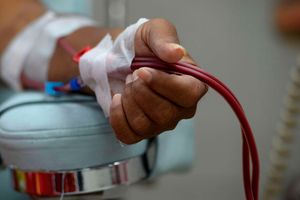
Six months without pay: Hospitals shut pharmacies and labs as SHA delays bite
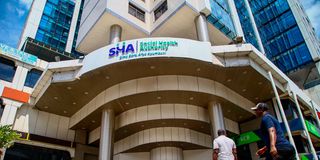
The Social Health Authority building in Nairobi.

For more than six months, Level 2 and Level 3 hospitals have not received payment for primary healthcare from the Social Health Authority (SHA), forcing many facilities to suspend essential services.
This chronic delay, coupled with widespread rejection of previously submitted claims, has pushed many private healthcare providers to the brink of collapse. Facilities across the country are grappling with severe cash flow crises.
Patients have been left stranded, unable to access critical services. Hospitals cannot pay suppliers, suppliers refuse to deliver essential medicines and equipment, and healthcare workers are losing their livelihoods.
The situation has become so dire that most affected hospitals have been forced to close their pharmacies and laboratories, unable to procure the drugs and consumables needed to serve patients under the government’s Universal Health Coverage programme.
Monica Nyokabi, owner of a Level 3A hospital in Mombasa County, has not received payment since July last year. Her outstanding dues now amount to Sh4.2 million for maternity, inpatient and outpatient services provided to SHA beneficiaries under primary healthcare.
Sh3.2 million
“This is an estimation based on what they used to remit—about Sh800,000 per month. Given the months I have not been paid, that is what they owe me. They have always decided what to remit and how much to allocate to hospitals,” Ms Nyokabi explains, highlighting the arbitrary nature of SHA’s payment processes.
For inpatient services alone, SHA owes her facility Sh3.2 million. Last year, SHA claimed there was a mismatch in her facility’s records and declared it was not authorised to offer inpatient services—despite no official revocation appearing in the Kenya Gazette.
“According to the Kenya Gazette, my facility’s licence was not revoked. But still, I cannot admit patients because I will not be paid for the services. If they refuse to pay me for the inpatient services I have already provided, why do they not at least pay me what has accrued from primary healthcare?” she asks.
The financial strain has forced her to make difficult operational decisions. “We are in a difficult situation. I have closed down my laboratory and pharmacy because I do not have reagents or drugs. My doors remain open for consultations, but patients must go elsewhere for tests and medication,” she says. The once-stocked shelves now stand bare. “There are no drugs. Suppliers have refused to deliver because we are in debt. We have complained, but everyone is silent. We do not know who to approach or where to turn anymore,” she adds.
Dr James Mwangi, who runs a Level 2 hospital in Busia County serving about 100 patients a day, has been forced to operate with a skeleton staff after laying off nurses, laboratory technicians, and his pharmacist.
“We have outstanding claims worth Sh2.8 million dating back to August. Our employees have families to feed, rent to pay, and school fees to clear—but we cannot pay salaries because SHA has not paid us,” he says. “Some of my staff have resigned to seek employment elsewhere. Those who remain are demoralised and overworked.”
He describes the rejection of claims as particularly devastating. “They reject claims on flimsy grounds—a missing signature here, a wrong code there, an error on a date. When you resubmit, it takes another two months, only to be rejected again. It is as though they are deliberately frustrating us to force us out of the system,” he explains.
Social Health Authority (SHA) signage at Mutuini Hospital in Dagoretti South Sub-County, Nairobi, on August 27, 2025.
The current crisis is not SHA’s first controversy. The transition from the National Hospital Insurance Fund (NHIF) to SHA has been plagued by implementation challenges and allegations of mismanagement since its rollout. In the early months of SHA’s operation, hospitals reported widespread system failures that prevented claim submissions. Healthcare providers complained of a cumbersome claims management system that was difficult to navigate and prone to errors.
Essential outpatient care
In response to these concerns, SHA Chief Executive Officer Dr Mercy Mwangangi said the authority provides primary healthcare services across Level 2, 3, and 4 facilities to registered beneficiaries, covering essential outpatient care including consultation, diagnosis and treatment of common conditions, prescribed laboratory and basic imaging investigations, management of acute and chronic illnesses, maternal and child health services, medicine dispensing, screening services, minor procedures, and mental health counselling. The fund, she said, is fully financed by the exchequer.
Dr Mwangangi explained that all registered beneficiaries are mapped to a specific county at the point of registration, allowing them to access primary healthcare services within any Level 2 to 4 facility in that county. SHA allocates a global budget to each county based on the number of registered beneficiaries. At the end of every month, the budget is distributed among participating facilities using a weighted formula that considers the number of patient visits and the complexity and type of services provided.
“Before any payments are made, SHA conducts rigorous system checks, access rule validation, and adjudication to ensure accuracy, compliance, and accountability,” she said.
She said SHA has released payments up to October 2025, all within the stipulated 90-day payment timeline.
However, healthcare providers like Monica and James say the reality on the ground does not match SHA’s assurances. Despite the authority’s claims, both facility owners insist they have not received any funds for months, leaving them unable to pay staff, stock medicines, or serve patients.
Follow our WhatsApp channel for breaking news updates and more stories like this.