Happening Now: NTV KENYA LIVE | Senate Proceedings
Swallowing pain, mounting costs: Inside Kenya’s rising oesophageal cancer crisis
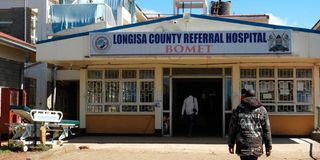
Longisa County Referral Hospital in Bomet. It offers cancer diagnoses, consultations, chemotherapy, and palliative care through its oncology unit.

What you need to know:
- In Bomet, Jackeline Cherono Yegon’s battle with oesophageal cancer reveals the human cost of delayed diagnosis, limited services, and high out-of-pocket expenses.
- Simon Maina’s experience in Nakuru shows how access to oncology centres, radiotherapy, and the Social Health Authority can make the difference between treatment and despair, despite persistent stock-outs and indirect costs such as transport and nutrition.
Backed by data from National Cancer Institute of Kenya and Globocan, new studies and screening initiatives aim to uncover risk factors and promote early detection across the Rift Valley cancer belt.
Jackeline Cherono Yegon sits on the green grass beside her parents’ home in Sotik, Bomet County, watching the sun sink slowly as evening approaches. At times, the 46-year-old lies down to rest her frail body, weakened by illness, as the world moves quietly around her.
She says her elderly mother is her primary caregiver, with support from her firstborn son (Dominic Kipkirui Langat), husband, and in-laws. She was correctly diagnosed with oesophageal (food pipe) cancer in July of 2025. “I no longer have the strength I used to. Most days, I just lie down,” she said softly, her son Langat relaying her words during our interview.
Her ordeal began in April 2025 when she developed persistent stomach discomfort and vomiting. She visited the nearest sub-county hospital, where she was treated for ulcers and given medication. When her symptoms persisted, she returned to the same facility a week later.
According to Cherono, doctors then ordered an X-ray, which suggested compression of her oesophagus, prompting a referral to another sub-county hospital for further evaluation. Here, she underwent a chest CT scan for Sh10,000, but doctors said the results were inconclusive. “I was referred again, this time to Litein, where I underwent an MRI that cost me about Sh8,000, and a biopsy followed, for which we paid Sh40,000,” she recalls.
In July, Cherono was referred to a private hospital for an endoscopy. By then, she was barely eating and had transitioned to consuming liquids—tea, porridge, and milk—her main source of nourishment. “The report showed a tumour (mass) in the middle section of my oesophagus, to which doctors recommended an oesophageal stent (a tube placed in your oesophagus to keep open a blocked area. The tube helps one swallow solids and liquids) before starting further treatment,” she says.
The procedure was estimated to cost about Sh80,000, money the family did not have. After the stenting, she was to be referred to Moi Teaching and Referral Hospital, Eldoret, but the lack of funds has continued to block her from accessing care. Beyond treatment costs, the journey would require accommodation for both Cherono and her caregiver(s), and they have no relatives in Eldoret who could host them.
At this point, the family estimates they have spent close to Sh150,000 on tests, procedures, and consultations. Since July, the mother of eight children, aged between 10 and 25, has been under home-based care, receiving intravenous fluids twice a week, every Tuesday and Thursday, alongside an injectable diclofenac for pain management.
“I get IV fluids to boost my strength because I’m unable to eat. Even blended food makes me cough and vomit, and I can only manage liquids,” she explains. “The Social Health Authority (SHA) covers the fluids, but sometimes the hospital runs out, and we are forced to buy them from a nearby chemist at Sh150.”
Unfortunately, she has not returned to the hospital for follow-up scans and continues to experience chest and back pain. She occasionally receives nutritional supplements costing about Sh1,000 meant to last two weeks, but they are not always available, forcing her to go without. Before falling ill, Cherono supported her family through casual farm work.
She recalls that shortly before the pain in her throat began, she had been working on someone’s farm during a hot, dusty day together with two of her children, and all of them developed throat irritation. “The children drank hot water and recovered. But mine never went away,” she says through her son, adding that she suspects the farm may have been sprayed with chemicals, as they were weeding maize at the time, but she is not certain.
According to Deborah Chepkemoi, a clinical oncologist at Longisa County Referral Hospital, the southern part of the Rift Valley continues to record a high burden of cancer cases, with Bomet County among the most affected. She explains that oesophageal cancer (EC) is one of the most common cancers in the county and affects both men and women.
According to the medic, breast cancer is the leading diagnosis among women, followed by cervical cancer and then oesophageal cancer. Among men, prostate cancer ranks highest, followed by oesophageal cancer and hepatobiliary cancers (liver, pancreas, gallbladder). She adds that stomach cancer is also present, though less common, usually ranking fourth or fifth, while leukaemias cut across both genders and are relatively common in the southern Rift Valley.
She explains that, like most cancers, EC does not have a single identifiable cause, but is associated with several known risk factors. “These include alcohol consumption, tobacco use, genetics, and obesity. Exposure to chemicals, particularly pesticides and herbicides commonly used in farming, is also considered a general cancer risk factor,” she explains, adding that the risk factors observed in Bomet county largely mirror national patterns.
While county-specific causes are still being studied, she notes that research is costly and takes time. Chepkemoi says the county’s level five (Longisa) hospital offers cancer diagnosis, consultations, chemotherapy, and palliative care through its oncology unit. However, the facility does not provide radiotherapy services, forcing patients like Cherono to seek treatment in Eldoret, Nakuru, or Nairobi.
She also explains that the hospital currently lacks the capacity to perform oesophageal stenting due to the absence of an endoscopy machine. “We are, however, able to insert gastrostomy tubes, which allow patients to feed directly through the stomach, and are fully covered for patients under SHA, while cash-paying patients may spend up to Sh100,000 for the same,” she says, adding that patients who may benefit from stenting are referred to a private hospital within Bomet.
On whether stenting is always required before chemotherapy or radiotherapy, Chepkemoi explains that the decision depends on the patient’s condition and degree of swallowing difficulty. “Patients who can still swallow solid or semi-solid food may proceed with treatment without it. However, for those with severe swallowing difficulties, stenting or gastrostomy is recommended to ensure adequate nutrition before aggressive treatment begins,” she explains, adding that stenting can be done for both curative and palliative purposes, and in advanced disease, treatment options may be limited to chemotherapy or palliative care.
While Cherono’s case unfolds in Bomet, a similar patient is luckily receiving care for oesophageal cancer elsewhere in the Rift Valley. Simon Maina Manyara is seated among a handful of patients, receiving his fourth and second-last dose of chemotherapy at the Nakuru County Referral and Teaching Hospital’s Oncology Centre as he counts down the final days of his radiotherapy sessions.
His routine now follows a strict pattern of chemotherapy every Monday, followed by daily radiotherapy from Monday to Friday. As the intravenous medicine flows from his right hand into his body, he says that when the year began, he never imagined it would take this turn. The 54-year-old, a resident of Mwariki estate, explains that on days he feels strong enough, he comes to the hospital alone. When the treatment overwhelms him, his wife accompanies him.
Today, he came by himself. He looks visibly weak and says he has lost significant weight due to the intensive treatment and long period of illness. He, too, says his problems began in April, when he started feeling pain each time he swallowed food. Hot meals triggered a burning sensation as they moved down his chest, and when he mentioned it to his wife, she suggested it might be a bloating (‘gas’) problem and advised him to seek medication.
As a long-time smoker, Maina also did not imagine the problem could be anything more serious than indigestion. “While I got the medication, the pharmacist then advised me to undergo a gas test costing Sh800, which I couldn't afford at the time, so I opted for over-the-counter medication, and the symptoms, however, did not go away,” says Maina, noting that among the drugs he’s taken over time were omeprazole and another prescription.
'Water wouldn't help'
The long-distance driver who plied the Kisumu–Nakuru route says his condition worsened within weeks, and he began to feel food getting stuck in his chest, unable to reach his stomach. “It would stay there for up to three days, and even water wouldn’t help. By June, I knew I needed hospital care,” he recalls, pointing to his upper chest.
Clinicians recommended specialised imaging and referred for a chest and abdomen CT scan costing Sh4,000. The results prompted a recommendation for further investigation. Soon after, he underwent an oesophageal biopsy costing Sh2,500, and the tissue samples were sent to Nairobi for histological analysis.
He then waited two weeks for the results. By July, when the results returned, doctors requested a more detailed examination and ordered another CT scan, his most expensive test yet at Sh7,500. The report noted dysphagia (difficulty swallowing) and other concerning changes requiring oncological evaluation.
“When a specialist reviewed all my tests, I was informed I had cancer cells in the oesophagus, though it hadn’t advanced to a higher stage. I was advised to begin radiotherapy and chemotherapy. But delays caused by a breakdown of the radiotherapy machine meant my sessions did not begin until October 13,” he says softly.
Because of the escalating pain, he knew he couldn’t wait and sought immediate care. He was put on medication and has been under active treatment since September 2025—chemotherapy at the County Oncology Centre and radiotherapy at the nearby Regional Cancer Centre. At around one in the afternoon, we walk slowly towards the Regional Cancer Centre, a few metres from the main hospital. This is where he is scheduled for his session of the day, another step in a journey he says has transformed every part of his life.
At his worst, he sometimes went up to three days without eating, and his weight dropped from 67 kg to 58kg. “This is not how one should live. You crave food, but you can’t eat. Sometimes, swallowing made me shed tears from the pain,” he says.
He notes he was fortunate to transition from the defunct National Health Insurance Scheme to the new SHA without imagining he would urgently need the cover. It has become central to his care, though stock-outs occasionally force him to buy drugs out-of-pocket, spending about Sh18,600 on different days.
On this particular day, he says SHA has covered almost Sh21,800, while he has spent Sh300 personally, excluding transport. Each trip to the hospital costs him Sh250. Before the diagnosis, Simon worked full-time as a long-distance driver. The illness forced him out of work, leaving the father of two dependents on support from family and friends.
Nutritionists have since guided him towards softer meals, and he now relies on blended foods like ugali with vegetables or milk, mashed bananas, traditional greens, and soft proteins such as fish—foods that minimise discomfort when swallowing. Maina says he quit smoking in May, when the symptoms began, and has no intention of returning to cigarettes or alcohol. Despite treatment, he continues to experience chest burning and pain when swallowing, for which he remains on medication.
In 2018, the National Cancer Institute of Kenya (NCI-K) cited drinking hot tea while chewing miraa (khat) and frequent drinking of mursik (fermented milk) as the leading causes of oesophageal (food pipe) cancer in Northern Kenya and the Rift Valley. According to the institute, the disease occurs when abnormal cells grow in the lining of the oesophagus, the muscular tube that carries food from the mouth to the stomach.
NCI-K notes that there are two main types of oesophageal cancer: squamous cell carcinoma, which affects the upper and middle parts of the oesophagus and is the most common in Kenya, and adenocarcinoma, which develops in the lower part of the food pipe. To interrogate these theories further, a team of researchers in October conducted a month-long study in Nakuru County to better understand why oesophageal cancer remains prevalent in parts of the Rift Valley.
The scientists from the Kenyatta University Teaching, Referral and Research Hospital wanted to establish whether habits like drinking scalding tea are truly to blame or just one piece of a bigger puzzle. According to Shem Peter Mutua, a senior research officer under the Directorate of Training and Research at the hospital, the disease ranks fourth among the most common cancers in Kenya but has the highest mortality rate.
“The national incidence is about 12.7 per cent, while mortality is around 12 per cent. It’s almost as though if you are diagnosed, you die. Compare that with prostate cancer, which has an incidence of 40 per cent but a mortality of only 15 per cent, because it’s detected early,” he says.
He says this alarming trend has prompted researchers to dig deeper into the disease and the factors behind it. Through the OSCC (squamous cell carcinoma of the oesophagus) project, they are conducting free early screening for oesophageal cancer at level 3 and level 4 hospitals, for eligible persons aged 18 and above.
Mutua says that clinicians assess patients to determine eligibility and rule out other conditions like tonsillitis or upper gastrointestinal tract infections. “We are targeting individuals with difficulty swallowing (with pain or without pain) or unexplained weight loss within the past six months. Our larger goal is to make early diagnosis as accessible as a routine test so that oesophageal cancer can be detected and treated before it becomes fatal,” he notes.
Mutua says that eligible participants undergo an endoscopy after fasting for six hours and must be accompanied by someone, since sedation is involved. Endoscopy results are provided immediately after the procedure, while extensive results (histology and pathology), for those whose samples were taken, are given after two weeks.
He adds that age, gender, and lifestyle remain major risk factors. “We see higher cases in people above 50, in men, and among those who use alcohol or tobacco chronically,” he observes.
He also points out that among the reasons oesophageal cancer claims so many lives is the late diagnosis, often caused by the high cost of testing. “Endoscopy, the main diagnostic test, can cost up to Sh35,000 in private hospitals. This is why people delay or never come forward at all,” he says. “Aside from the predisposing factors, our study also aims to answer the big questions: Is it caused by drinking very hot tea? Is it located in the Rift Valley due to the high incidences? Is it linked to specific foods, drinks, where you live, or even ethnicity? Or could it be a combination of genetic and lifestyle factors?”
Hot tea link
Mutua says some people have long associated hot tea with oesophageal cancer. However, they want to gather scientific evidence to determine whether that is a predisposing, causal, or associated factor, which is one of the main questions they’re asking participants during screening. He adds that the study is not purely diagnostic but also part of research.
According to Mutua, first they train community health assistants who work closely with community health promoters to carry out household visits, distribute educational materials, and encourage residents to come forward for screening. “We’ve also included visual aids showing the oesophagus, because many people confuse it with the windpipe. In Kikuyu, for example, the oesophagus is referred to as múmero-wa-írío (food pipe) and the windpipe as múmero-wà-ríerà. We aim to make people understand what part of the body is affected and why early testing matters,” Mutua emphasises.
The study is backed by a previously conducted Knowledge, Attitudes, and Practices survey in the County in 2024 with community health assistants and promoters to understand local perceptions about the disease. He says that from the survey, they came up with the educational materials they are now using, including posters and brochures, which were co-developed from that community input.
According to the African Oesophageal Cancer Consortium, the Rift Valley lies along the African high-risk belt, which largely follows the Rift Valley but extends southward to the Eastern Cape Province of South Africa. The oesophageal cancer belt, also called the “African EC corridor,” particularly along the African Rift Valley, is a high-incidence area for oesophageal cancer compared to other parts of the continent.
Dr Michael Mwachiro, a consultant general surgeon and interventional endoscopist at the consortium, expounds that the belt stretches along the eastern African region from Ethiopia down through Kenya, Tanzania, Malawi, Zambia, Zimbabwe, Mozambique, and South Africa. The belt also continues to parts of China and Iran. “We mostly see squamous cell carcinoma in Africa, to which there are two main types: adenocarcinoma and squamous cell carcinoma, but ours is predominantly the latter,” he says.
He explains that through years of research in the country and across the consortium, several risk factors have been associated with oesophageal cancer, which include alcohol and tobacco use. “In addition to that, exposure to wood smoke remains a major concern in East Africa, including Kenya, Malawi, and Tanzania. We are also looking closely at family history and genetic predisposition. There is growing evidence linking the consumption of very hot beverages to oesophageal cancer, with studies from Kenya and Tanzania already supporting this,” Dr Mwachiro says.
He says beyond that, there are environmental questions they are still investigating, including exposure to pesticides—particularly in northern Kenya—possible contact with dumped chemicals, and even substances such as miraa. “What is important to understand is that there is no single cause and our research is focused on understanding how a combination of factors contributes to the disease,” he notes firmly.
Dr Mwachiro echoes Mutua’s sentiments and emphasises that early diagnosis is critical and notes that the consortium is also working to increase early detection, expand surgical and endoscopy training across the region, and strengthen treatment options - chemotherapy, radiotherapy, surgery—depending on stage.
At the Nakuru Regional Cancer Centre, Dr Siwillis Mithe, a consultant clinical and radiation oncologist and head of the Oncology Department, says oesophageal cancer is among the top five cancers treated at the facility. She explains that most patients come in with late-stage disease, when advanced symptoms have already set in. “That’s why early screening is critical. If detected before symptoms, the prognosis chances are much better,” she says.
Varying costs
On treatment, Dr Siwillis notes that costs vary depending on the stage and combination of therapies required. “Treatment often involves surgery, chemotherapy, and radiotherapy. Early-stage cases may only need surgery, but advanced ones require all three, which makes it more expensive,” she notes.
Combined chemotherapy and radiotherapy can cost between Sh150,000 and Sh200,000, out of pocket, while surgery costs depend on the hospital and procedure. “SHA covers up to Sh550,000 a year, which usually caters for cancer treatment,” she adds. “The problem comes when patients have already exhausted their cover for other treatments.”
According to Globocan 2022 data, Kenya recorded over 44,700 new cancer cases and over 29,000 deaths, with breast, cervical, prostate, oesophageal, and colorectal cancers being the most common. NCI-K additionally states that the country records about 4,300 new cases of oesophageal cancer, with nearly 4,000 resulting in death, making it the deadliest, followed by cervical and breast cancer.
Among men, prostate, oesophageal, and colorectal cancers are the leading cancers in incidence, and in women, breast, cervical, and oesophageal cancers are the most common. The research, led by experts from Kenyatta University hospital partnership with the University of Manchester, is funded by the National Institute for Health and Care Research in the UK.
Besides Nakuru, the research has already been conducted in Meru, Nyeri, and Kisii counties, and will later be conducted in Kiambu county. The counties were chosen based on incidence and are limited to their residents.
By the time of publishing, Maina had finished his course of treatment, during which his radiotherapy was upped by an additional three days, to which he says the doctors had recommended to go hand in hand with his last chemo session.