The dark side of beauty: How black henna is burning women's skin

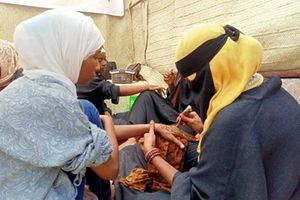
A hand decorated with henna in Lamu Old Town.

What you need to know:
- While traditional natural henna is safe, black henna has become an unregulated and dangerous mixture.
- It often contains para-phenylenediamine, a chemical intended for hair dye. Applying such substances to the skin can trigger severe and sometimes permanent reactions, leaving behind uncomfortable scars.
It is 8.30am at a skin clinic in Mvita, Mombasa. A young, modest Swahili woman wearing a long, flowing traditional black buibui enters the clinic. She is visibly distressed; trembling, restless, and frequently rubbing her arms and hands, which are decorated with intricate patterns that have taken on a dark, blistered appearance. It is immediately clear that the henna she applied is not the traditional, natural kind that leaves a reddish-brown or copper tint; this is a deep, artificial black.
Hurrying to the receptionist’s desk in the corner of the clinic, she speaks loudly: “I just want to see the dermatologist. I applied black henna three days ago, but the itching has been unbearable the whole time. Kindly connect me with the doctor as fast as possible,” she pleads, scratching the tips of her fingers.
The woman’s ordeal is just one of many similar cases seen recently as more women in the beauty industry turn to black henna or other artificial, instant-stain products. What begins as an effort to achieve beautiful body art and intricate designs soon transforms into a nightmare of pain, blistering, and lasting regret.

Hindu Salim, a traditional Swahili skin specialist, during the interview in Lamu Old Town on March 11, 2026. She advised women to use natural, plant-based products for better, long-lasting skin beauty, radiance and general health.
Dr Said Mzee, a specialist dermatologist at Mayfat Beta Medical and Skin Clinic in Mombasa, explains that while traditional natural henna is safe, black henna has become an unregulated and dangerous mixture. It often contains para-phenylenediamine (PPD), a chemical intended for hair dye. Applying such substances to the skin can trigger severe and sometimes permanent reactions, leaving behind uncomfortable scars.
Dr Mzee notes that his clinic has recently seen a surge in patients, mostly women, presenting with skin complications linked to black henna use. More than five such cases are now handled each month, a significant increase from the rare occurrences in the past.
Henna application remains a widespread tradition, particularly along the Kenyan Coast, the broader East African coast, and around the world. Traditional henna, or mehndi, is deeply embedded in Swahili culture and customs. This timeless art form, derived from the mehndi plant, produces a natural reddish-brown stain that develops over several hours.
Women of all ages in areas such as Mombasa’s Kibokoni, Mvita, Majengo, Changamwe, and Nyali; Kilifi’s Malindi, Shella, and Mambrui; Kwale’s Vanga, Msambweni, and Matuga; and as far as Lamu’s Old Town, Pate, Kizingitini, Faza, and surrounding regions continue to use henna for skin decoration. Body art like henna painting is also considered an essential part of wedding ceremonies and other social celebrations.
Dr Mzee recalls that in the past, natural henna, derived purely from plants, was the standard for body art. It is prepared by drying henna leaves and grinding them into a powder, which is then mixed with oil or water to form a paste. When applied to the skin, the dye migrates from the paste to the outermost layer. If left on for four to 12 hours, it produces an orange or reddish-brown stain. Natural henna causes no allergies or adverse skin reactions.
“But today, people want shortcuts. The same natural henna is mixed with chemicals like PPD to give an ebony colour, what we now call black henna,” he explains.
Another reason for adding PPD is to speed up the tattooing process. While natural henna requires four to 12 hours to stain the skin, the addition of PPD can reduce this time to just one or two hours. The additives also make the design last longer.
“People aren’t willing to sit in a henna salon for hours to get decorated with natural henna from plant leaves. They want faster results, so they opt for chemical henna. It dries quickly and produces a highly saturated, intense pigment that gives a deep, jet-black colour.”
Although henna painting remains a cherished tradition among many Coastal dwellers, especially women and young girls from the Swahili community, Dr Mzee raises serious concerns about the use of black henna, which often contains chemicals that pose significant health risks.
According to the specialist, henna mixed with PPD increases the risk of individuals developing adverse health effects, including acute allergic contact dermatitis, eczema, chemical burns, acute renal failure, severe angioneurotic edema, abdominal pain, and vomiting, among others.
He recounts that at his clinic, he has treated brides who sought help for skin irritation just days before their weddings. These women presented with intense itching, inflamed skin, and rashes or blisters on the face, elbows, and knees, all caused by chemical henna exposure, leading to considerable psychological stress.
Dr Mzee also expresses concern over the misuse of oxidative hair dyes as a substitute for temporary body skin dyes like henna or traditional skin paint. This practice, he notes, is common yet hazardous, particularly in coastal regions, underscoring the urgent need for public sensitisation on the associated dangers.
He highlights the risks of chronic skin reactions, permanent hypertrophic scars, and keloids resulting from severe reactions caused by prolonged or repeated use of chemical henna. Keloids are benign, firm, rubbery, and often itchy raised scars that extend beyond the original injury boundary, resulting from an overproduction of collagen during healing.
"Apart from allergic contact dermatitis such as rashes, itching, and swelling, you risk chemical burns, permanent skin pigmentation or scarring, bacterial or fungal infections from contaminated or unsterilised products, eczema flare-ups in sensitive skin, and many other complications," he warns.
He adds: "I have been a skin specialist since 2001. Although there is currently no evidence that black henna causes cancer, it is wise to take precautions. Persistent, long-term inflammation can eventually create an environment that increases the risk of developing skin cancer."
Dr Mzee advises that anyone who experiences unusual symptoms such as a burning or stinging sensation shortly after applying henna should remove it immediately and seek medical attention.
"The good news is that skin allergies caused by chemical henna or black henna containing PPD are generally treatable and curable. With prompt intervention, the skin often returns to normal. However, severe or neglected reactions can lead to long-term consequences, including permanent scarring, pigment changes, and disfigurement.”
But why do most henna artisans today end up using chemically prepared and dangerous henna products on their clients?
Nyebwana Fadhil, 37, a renowned henna artist in Lamu, dismisses the notion that artisans are to blame, noting that clients themselves are often the ones pressuring them to use black henna.
According to Fadhil, most clients who visit her salon specifically request chemically made or black henna because they want an instant, dark stain.
"I've been using both natural henna and black henna. Our clients are the ones who decide. Often, we are pushed to use black henna by the decision-makers: the clients. While natural henna produces a reddish-brown stain after many hours of waiting, black henna gives an immediate, darker, black colour. Most clients lack the patience, so they prefer faster results," says Fadhil.
Khadija Mwanamaka, another henna artist, adds that using black henna is advantageous for business as it allows her to serve many clients in a short time, unlike natural henna, which takes hours to dry.
"With natural henna, it takes me a whole day to decorate only two or three clients. You have to wait a long time for it to dry. But with modern black henna, I can paint between five and 10 clients in a day, which means good money. That's why we don't refuse clients who demand black henna. It works to our advantage," says Mwanamaka.
Hindu Salim, a traditional Swahili skin specialist in Malindi who is deeply rooted in Coastal cultures, stresss the importance of women seeking long-lasting beauty to use natural, plant-based products if they genuinely want to promote skin beauty, radiance, and overall health.
"I have always advised ladies to stop taking shortcuts, including the use of black henna to beautify themselves, only to end up crying due to allergies and other skin reactions. It is better to use simple skincare products with local ingredients like simsim oil, olive oil, honey, papaya, moringa oil, coconut oil, neem, and baobab as long as you remain safe. I have witnessed people crying after using so-called chemical henna, ending up with serious, permanent, and ugly scars on their skin.”
On why stress-free beauty matters in an individual's life, Hilda Zawadi, a beauty therapist, notes that beauty routines should always be a source of joy, self-care, and confidence rather than a cause of stress and embarrassment.
Zawadi further explains that if beautification methods such as complex regimens or societal pressures to look a certain way induce stress, then it is beneficial to abandon them in order to prioritise mental well-being and inner happiness.
"There are so many natural, therapeutic, and sustainable beauty solutions one can use in this world that are much safer than applying chemically manufactured products that end up stressing you. True beauty is all about feeling good in your own skin, which can, in turn, enhance overall life satisfaction," says Zawadi.