In a time where toddlers get make-up for photo shoots and pre-teens subscribe to beauty hacks reels on social media, the line between 'cute' and 'concerning' is growing thinner by the day.
From waxing before a cousin’s wedding to colouring hair for school events, children are increasingly being ushered into grooming practices once reserved for adults.
According to Dr Pauline Gacheri, a dermatologist at Meru Teaching and Referral Hospital, a child’s skin is very sensitive, especially before puberty.
Dr Pauline Gacheri, a dermatologist at Meru Teaching and Referral Hospital.
Photo credit: Pool
“It has a much higher ratio of surface area to body weight, holds more water, and its protective barrier is not fully developed,” she says.
“Because of these immature structures, children’s skin is far more permeable, easily irritated by the environment, prone to injury, and quick to dry out if it is not well moisturised.”
Puberty adds another layer of sensitivity. Dr Gacheri describes it as a stage where the skin is “very active,” responding to hormonal changes such as an increase in sebum production as the oil glands grow.
“This makes young people vulnerable to acne when other factors come into play. Beyond the skin, the whole body is in a phase of rapid change, which makes this period particularly delicate.”
It is for this reason that she strongly discourages beauty treatments such as waxing when it comes to children.
“Aside from the common risks such as burns, irritation, reactions to wax, and infections, waxing can lead to ingrown hairs and recurring folliculitis, which is infection and damage of the hair follicles. In some cases, the damage may result in permanent hair loss known as scarring alopecia. And this is because young skin is sensitive; there is also the possibility of scars such as keloids forming after injury.”
Hair dyeing raises similar concerns. She discourages the use of dyes on children because these products contain chemicals, and a child’s scalp, like the rest of their skin, lacks a fully mature barrier.
“This puts them at risk of scalp irritation, burns, wounds, hair damage, and breakage.”
Children are increasingly being ushered into grooming practices once reserved for adults
Photo credit: Shutterstock
While some dyes are advertised as child-friendly, such as chalk-based options, she warns that in an industry with limited regulation, it is difficult to verify such claims,” she says.
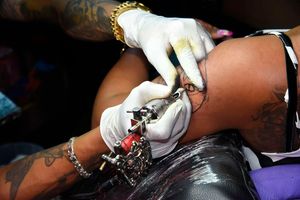
“Temporary tattoos work on the surface layers of the skin, like traditional henna, and fade within days or weeks, while permanent tattoos place pigment inside the deeper layer of the skin, which makes the risks much greater,” she explains.
Sensitivity and reactions
Temporary tattoos can still cause sensitivity and reactions, but a patch test before applying extensive designs on a child is recommended.
“Permanent tattoos, however, carry the possibility of scarring, including keloids, the spreading of ink under the skin, distortion of the tattoo as the child grows, and persistent inflammation as the body tries to break down the pigment,” she says.
Some inks may contain metals, which can remain in the body’s tissues and even complicate certain medical scans later in life
Photo credit: Shutterstock
She adds that some inks may contain metals, which can remain in the body’s tissues and even complicate certain medical scans later in life. Black henna is a no-go zone according to Dr Gacheri.
“Real henna is brown to orange; the substances added to make it black often include Para-phenylenediamine (PPD), a chemical found in hair dye but not approved for use on skin.”
So, is there a recommended minimum age for these cosmetic procedures? Dr Gacheri notes that there isn’t a specific age at which dyes, tattoos, or waxing suddenly become safe.
But in her view, these decisions are best left until adulthood, ideally after the age of 21, when individuals can choose for themselves.
She points out that she has seen regrets present in different ways in her practice, ranging from children developing keloids after piercings to young adults seeking tattoo removal because of work opportunities that require them to do so.
“If a child must try anything involving body alteration, lean toward temporary options, involve a qualified professional, and always ask for a patch test first,” she adds.