The quiet plague: Kenya's uphill battle against tropical diseases
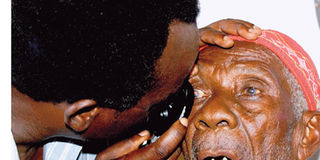
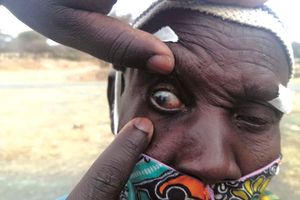
A specialist examines an old man’s eye to find out what he is suffering from. Some neglected tropical diseases such as trachoma and river blindness affect eyes and in some cases result in blindness. PHOTO | FILE

What you need to know:
- These diseases, often overshadowed by higher-profile health crises, have an outsized impact, reducing productivity, keeping children out of school, and perpetuating cycles of poverty.
In 2023, Kenya recorded a 44 per cent coverage rate for preventive chemotherapy against Neglected Tropical Diseases (NTDs); falling below the World Health Organisation (WHO) target of 75 per cent required for disease elimination. This is according to African Leaders Malaria Alliance NTD scorecard.
These diseases, often overshadowed by higher-profile health crises, have an outsized impact, reducing productivity, keeping children out of school, and perpetuating cycles of poverty.
Also read: Kala-azar still ravaging northern Kenya despite decades of warnings
Preventive chemotherapy involves giving safe and effective medicines to entire communities at risk of NTDs, even if they don’t show symptoms. These mass drug administration (MDA) campaigns—often held in schools, villages, and health centres—are designed to stop infections, cut transmission, and prevent lifelong disabilities.
Progress, however, is highly uneven. While Kenya has achieved 100 per cent treatment coverage for lymphatic filariasis, it lags severely for other diseases: 43 per cent for schistosomiasis, 41 per cent for trachoma, and only 22 per cent for soil-transmitted worms, according to the Africa Leaders Malaria Alliance. These figures reveal deep health inequalities, with rural and hard-to-reach communities bearing the heaviest burden.
Immense impact
“These infections don’t make headlines, but they have an immense impact,” said Samuel Ochieng, a public health specialist. “They reduce productivity, keep children out of school, and trap families in poverty. The good news is that Kenya is finally taking ownership of the fight.”
For many years, Kenya’s NTD control efforts depended largely on donor support. But in 2024, the government set aside a dedicated national budget for NTDs—a major turning point that gives the programme financial stability and strengthens domestic accountability.
The Ministry of Health’s Division of Vector-Borne and Neglected Tropical Diseases has also improved mapping and surveillance to target high-burden areas more effectively.
In Lake and Coastal regions such as Kilifi, Kwale, and Homa Bay, campaigns are focusing on schistosomiasis. In Northern counties like Turkana, Marsabit, and Isiolo, the focus is on trachoma control.
These interventions are supported by partners such as WHO, AMREF Health Africa, and the END Fund, who help supply medicines, provide technical expertise, and support logistics for mass drug administration.
One major success story is Kenya’s school-based deworming programme, jointly run by the ministries of Health and Education. Each year, it reaches millions of children, combining treatment with hygiene and nutrition education. However, despite this effort, coverage for soil-transmitted worms remains low, showing that more needs to be done to sustain participation and reach every child.
Climate change is also reshaping the landscape of disease in Kenya. Rising temperatures and unpredictable rainfall are expanding the habitats of disease-carrying organisms such as snails and flies. Recognising this, Kenya has included NTD control in its Nationally Determined Contributions under the Paris Climate Agreement, linking disease management with environmental action.
The government is also using the Kenya Health Information System to combine health and climate data—an innovation that helps predict outbreaks more accurately.
“We cannot separate disease control from environmental management,” said Mr Ochieng. “Climate data can help predict where and when outbreaks will occur, and that knowledge can save lives.”
Another game changer has been the use of national health scorecards to track NTD performance, which allow counties to monitor progress, identify gaps, and compare results in real time, creating greater transparency and accountability across the health system.
Despite progress, challenges persist. Insecurity, rough terrain, and population movement make it difficult to distribute medicines in some regions. Furthermore, misinformation about side effects and fatigue from repeated drug campaigns also discourage participation.