The rain they fear: Inside Mathare’s endless cycle of floods and diseases
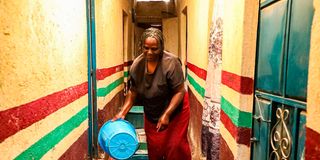
Jerita Amboko, a resident of Mathare North Area 1, during the interview in Nairobi on September 29, 2026.
What you need to know:
- Mathare River cuts through the densely populated neighbourhood, and many families live close to its banks.
- When heavy rain falls, the river swells quickly, overwhelms the drains and sends water into homes and businesses.
At 11pm on a Saturday in 2024, a sudden noise outside jolted Janet Moni awake. Water was already inside her house, and the power was out. In the darkness, she woke her children and, moving by touch alone, guided them to an empty house on the first floor. Then she went back downstairs to salvage what she could.
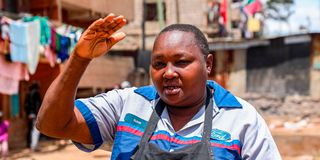
Janet Moni, a resident of Mathare North Area 1, during the interview in Nairobi on September 29, 2026.
That was when a nail sank into her foot. She pulled it free and ran to her children. In the turmoil of that night, she thought nothing of it.
Also read: Revealed: Where El Niño will hit hardest
By the third day, her leg had gone numb, and she was told her case was an emergency. “Whenever my children and I hear rain, we panic because we remember what we went through.
The rain no longer gives us peace,” she says.
That was 2024. Now, heavy El Nino rains are forecast again. For families on the banks of Mathare River, rain is no longer just weather. It is a warning.
The memories are still vivid: homes swallowed by floodwater, businesses destroyed, families forced to higher ground in the middle of the night. Now, residents of Area One are once again watching the skies with dread. For them, the coming rains are not a question of whether they will carry umbrellas or get wet. They are a question of survival.
This story was reported in Mathare, but it represents what happens in many parts of the country. Wherever floods meet poor drainage and poor sanitation, families pay the price with their health.
In Mathare Area One, residents who live along Mathare River are watching the skies. What they fear is not only the water. It is what the water carries into their bodies.
By day, Area One hums. Everyone is busy earning their daily bread, and children’s laughter carries down the pathways. But for families on the riverbank, the rains have reopened old wounds.
Janet is a single mother of three. She counts the stock in her shop, her source of income, but there is fear behind her eyes.
“It was at 11pm when I was startled by the noise from outside. Water had already entered. I had to wake my children up. Everyone was panicking as the water level kept increasing.”
The water had cut the electricity. In the dark, Janet and her neighbours moved by touch. She got her children to an empty house on the first floor. Then she went back down to save some belongings.
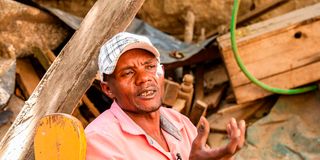
John Obaga, a resident of Mathare North Area, 1 during the interview in Nairobi on September 29.
“I stepped on a nail that was lodged in a piece of wood,” she says, staring at her leg. “Due to adrenaline, I just pulled it out of my leg and rushed to my children. I did not think anything of it.”
Chills came first. Then her injured left leg went numb. Fatigue and migraines followed. She thought it was malaria. “On the third day, I was in pain, and that is when I went to see a doctor. I was told my case was an emergency. I was about to lose my leg.”
She was referred. “I had to be admitted immediately. That is where my leg was saved. I was put on two spaced-out injections and I was on treatment for three months.”
She had delayed getting a tetanus injection, and she is also diabetic, which made the complications worse.
Janet’s youngest daughter, now six, also fell ill. “When we took my daughter to hospital, days after she had started coughing intensely, she was put on medication and the doctor told me to keep her warm.”
It did not end there.
“Her condition persisted, and eventually the doctor told us it had now turned into asthma,” Janet says, wiping tears from her cheeks. “She was never born with asthma, but now she has to use an inhaler for the rest of her life.”
Dr Emily Njuguna, a paediatrician and the regional lead for Maternal and Newborn Health at PATH, says one of the biggest risks to children in floods is pneumonia.
“If the infection is severe, it can sometimes distort the architecture of the lung, and then you can have other chronic conditions such as asthma. There is also a need to interrogate other environmental factors. If the house is cold, there could be mould, which can also cause asthma.”
John Obaga’s house sits on top of a sewer line. He says he had grown used to the smell. The apartment opposite his house opens its sewer through his house and into Mathare River.
In 2024, during the predicted El Nino rains, that changed his life.
“The water entered my house, and I was forced to take shelter on top of a cabinet from midnight to 3am as I waited for the water to recede. But that was not all. It was a mixture of raw sewage.”
The house was left uninhabitable, with sewage everywhere. When the water went down, he cleaned it with his bare hands, with no protection.
“The water is poisonous,” he says, shaking his head. “My hands started peeling. I looked like I had a skin disease, and I was constantly itching.”
John had no money to go to hospital. He went to a chemist and bought medicine over the counter.
The damage reached his social life and self-esteem. “I used to lock myself in my house because every time I went out, people would make fun of me and call me a guitar because of how I used to scratch myself.”
The effect of floods on the skin is often overlooked. Dr Pauline Gacheri, a dermatologist, says untreated sewage can contain disease-causing bacteria and toxins.
“We call this irritant contact dermatitis. This toxic water should not have come into contact with your skin. Those in industries will wear protective gear while handling such toxins. Skin peeling happens because these chemicals are toxic to the very upper layer of the skin.”
For 52-year-old Jerita Amboko, the Kenya Meteorological Department’s notice about the coming rains takes her back to the last season. The water began seeping into her home at 10pm.
“We were stranded with my four children in that water until 4am, when our landlord came to our rescue.”
Jerita was barefoot, and the water was near live wires.
“We waded through the water barefoot, and there were also electricity lines there. It is God who helped us.”
Electrocution is a danger in flooded low-income settlements, where faulty wiring and poles can meet rising water.
It was only the start of another cycle of illness for Jerita and her children.
“We were waist-deep in the water before we were rescued. That was also contaminated with sewage. My two daughters and I began itching profusely, even around our groin area.”
Every part of the house was under water. Like John, she had no money for professional help. She went to a chemist for an ointment.
Dr Gacheri says the groin area is very sensitive, especially for women.
“It is possible that this happened from the toxins. The acidity changed or the pH changed because they got overexposed. Candidiasis is a fungal infection, and yes, fungal infections do happen during flooding.”
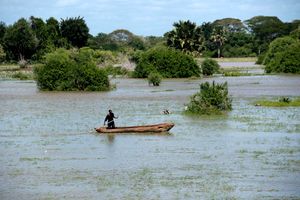
Mathare River cuts through the densely populated neighbourhood, and many families live close to its banks. When heavy rain falls, the river swells quickly, overwhelms the drains and sends water into homes and businesses.
Residents say the floodwater mixes with sewage, household waste and other contaminants. Homes around them release their waste and sewage straight into the river. Some residents have had persistent itching and skin irritation after contact with the water. They say they have asked the authorities to speed up cleaning of the river, to no avail.
“We went to see the district commissioner. We requested that the river be cleaned as the water levels have now risen. There is a lot of trash in the river, but no action has been taken,” John says.
The Ministry of Health’s El Nino Contingency Plan for 2026 to 2027 expects widespread flooding with a wide range of health effects. They include trauma and drowning, cholera, typhoid and other diarrhoeal diseases, malaria, dengue fever and Rift Valley fever, injuries, eye and skin diseases, and malnutrition. It also warns of food contamination. High humidity can grow mould on maize, peanuts and animal feed, leading to aflatoxin contamination.
Flooded roads and pathways can also delay patients reaching health facilities.
Dr Njuguna warns of what untreated cholera can do.
“Cholera, if not treated immediately, can cause profuse diarrhoea, which will also cause significant dehydration and end-organ damage. This means we will also see typhoid, dysentery, which is blood in the stool, and an increase in hepatitis cases.”
Pools of stagnant water left behind also breed mosquitoes, raising concerns about malaria and other mosquito-borne diseases.
Health experts also warn of a mental health toll.
“When children witness separation from their loved ones, destruction of property, even separation from their favourite toy and friends, they become withdrawn and anxious.
These are children who need a lot of support. These communities need a lot of support,” Dr Njuguna says.
The obvious question is why families do not simply move. Two flooding seasons in, they say the cost of relocating is too heavy to bear.
“Where will I get the money?” John asks. “I would rather brave the conditions and just pay rent of what I can afford, which is Sh2,000.”
“People have been told to relocate, yes! But I do not have the money. This place is cheap and this is what I can afford,” Janet says.
Most of the families say they did not receive the aid distributed to people affected by floods.
Experts warn that the greatest danger may come after the water has receded. Poor sanitation, contaminated drinking water and accumulated waste create conditions for disease outbreaks.
Dr Gacheri has advice for anyone who has been in the water.
“When one finds themselves exposed to contaminated water; maybe you walked barefoot or you were soaked, when you get home, rinse your body with clean water and moisturise. If something then develops on your body, do not ignore it. Go for a check-up.”
For the residents of Area One, preparing for El Nino must go beyond emergency response. They want the drains cleared before the rains intensify. They want proper waste disposal and better management of sewage. And they want health facilities in the area ready to respond to emergencies.
They know what the rising water can take away. They know the damage it can leave behind. But perhaps their greatest fear is what cannot be seen at first: the bacteria, parasites and disease-carrying mosquitoes that follow once the water goes.
For now, families stay on alert, watching the skies, watching the river, and hoping they will not once again be forced to choose between protecting their homes and protecting their lives.