The triple threat: Why Kenya’s youth remain at the epicenter of HIV epidemic

Teenage girls face the triple threat of unplanned pregnancies, gender-based violence and HIV infection.

What you need to know:
- Kenya currently has an estimated 1,481,853 people living with HIV: 1,412,523 adults aged 15 and above, and 69,330 children aged up to 14.
- National HIV prevalence among adults aged 15 to 49 stands at 3.22 per cent, with women bearing a higher burden at 4.28 per cent, compared with men at 2.14 per cent.
At 15, Farida Adero's world was defined by the daily struggle for survival in Dandora, an informal settlement on the outskirts of Nairobi known for its poverty and sprawling landfill.
Living with her mother, Farida watched her family strain constantly to secure basic necessities and cover her school fees. When her mother faced protracted periods without work, she told Farida she would need to start doing manual labour. She began taking in laundry, but the meagre income fell far short of supporting the household.
The financial pressure pushed Farida into early relationship choices that led to pregnancy at 15.
"Unable to stay at home, I moved in with my partner and his parents. While the boy offered initial support, his family resisted my presence entirely. His mother refused to speak to or engage with me, and over time, my partner adopted his family's hostility. Verbal disagreements turned into severe physical violence, culminating in an assault where my partner struck my hand with a glass wine bottle, leaving a deep fracture wound that required emergency hospital stitches," says Farida.
Following the assault, Farida was returned to her mother's care while suffering severe abdominal pain and physical distress. At the hospital, doctors informed her mother that Farida was suffering a miscarriage and required an urgent uterine evacuation. Too young to understand the medical procedures, Farida endured a painful surgical cleaning before returning home to recover.
"I didn't know I was in the process of losing my child. When I got to the hospital, the doctor told my mother, 'Your daughter is having a miscarriage.' It was my most painful experience yet," says Farida.
With her mother's laundry work dwindling, the family's poverty deepened, forcing Farida back onto the streets in search of income. Encouraged by peers to find commercial work in town, she entered survival sex work in Nairobi.
"Clients paid Sh500 for protected sex using condoms and Sh1,000 for unprotected encounters. Driven by economic necessity and my young age, I accepted unprotected clients for higher pay," she says.
A month into sex work, she encountered a mobile health team conducting community testing along a local road. Initially believing she was at no risk of contracting HIV because she did not match the emaciated physical appearance she culturally associated with the virus, she agreed to be screened alongside her friends.
"I said, 'I can't get HIV, I can't get HIV at all,' because I knew people with HIV look a certain way," she says.
Her initial rapid test returned two lines, indicating a positive result. Distressed and confused, she asked the healthcare worker whether the test was for pregnancy or HIV.
After two confirmatory re-tests yielded the same result, health workers moved her to a private room for post-test counselling, explaining that HIV could be effectively managed with medication. Her mother was notified and helped her enrol in comprehensive clinical care.
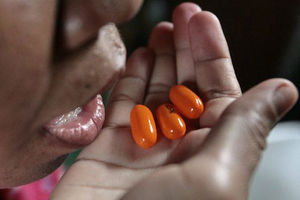
Farida was initiated on antiretroviral therapy (ART) and preventive tuberculosis (TB) treatment. The initial treatment phase brought severe drug side effects, causing significant physical discomfort. However, after she completed her TB regimen and maintained daily antiretroviral adherence, her health stabilised.
Today, 19-year-old Farida lives at home, managing her health while doing laundry and hair-braiding jobs to support herself and her mother. Reflecting on her journey, she actively speaks out against the social stigma, body shaming, and misconceptions surrounding people living with HIV.
"In our society, people like to talk negative. They say, 'Leave her alone, she will just die because she has HIV.' When you hear people talk like that, you have to take your mind completely away from it. Today, I look and feel healthy. I look just like anyone else, and those of us living with HIV are completely fine. You can live a full, normal life," she says.
Farida emphasises that daily medication allows individuals with HIV to live healthy, normal lives, and urges young people facing health challenges or societal prejudice to ignore negative gossip and prioritise their medical care.
She represents the many adolescents who face the triple threat , a term for the interconnected crisis of HIV, teenage pregnancy, and sexual and gender-based violence, which threatens to derail the country's 2030 public health targets.
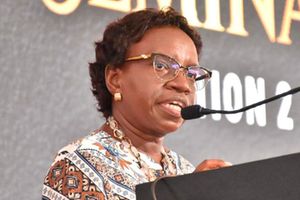
Presenting the official Kenya 2026 HIV Estimates, Dr Douglas Bosire, chief executive officer of the National Syndemic Diseases Control Council (NSDCC), highlighted significant overall progress alongside persistent gaps. Kenya currently has an estimated 1,481,853 people living with HIV: 1,412,523 adults aged 15 and above, and 69,330 children aged up to 14. National HIV prevalence among adults aged 15 to 49 stands at 3.22 per cent, with women bearing a higher burden at 4.28 per cent, compared with men at 2.14 per cent.
Overall new HIV infections fell 37 per cent, from 22,154 in 2022 to 13,936 in 2025. Among children aged 0 to 14, new infections dropped 24 per cent, from 4,474 to 3,396, while new infections among adolescents and young people aged 15 to 24 dropped 41 percent, from 7,307 to 4,322.
Total annual AIDS-related deaths, however, recorded a 5 percent increase, rising from 18,473 in 2022 to 19,434, including 17,167 adults and 2,226 children. Mother-to-child transmission rates improved slightly, from 8.6 percent to 8.04 percent, with prevention-of-mother-to-child-transmission services reaching 91.9 percent of the 42,265 mothers in need. The total number of people on antiretroviral treatment rose 4.2 per cent, to 1,348,486.
Across the national treatment cascade, 93 per cent of people living with HIV know their status, 91 percent of those diagnosed are on treatment, and 87 per cent of those on treatment are virally suppressed. Among adults, 93 per cent know their status, 93 per cent are on antiretroviral therapy, and 88 percent have achieved viral suppression.
Breaking the adult population down by sex shows that 96 per cent of adult females know their status, 96 per cent are on treatment, and 92 per cent are virally suppressed, compared with adult males, among whom 90 percent know their status, 88 percent are on treatment, and 80 percent are virally suppressed. Paediatric care continues to lag sharply behind: only 79 per cent of HIV-positive children know their status, 60 per cent are on treatment, and just 52 per cent have achieved viral suppression.
The data presented by Dr Bosire show that Kenya's HIV epidemic remains heavily concentrated among young people. Of 10,540 new adult infections among people aged 15 and older, 41 per cent; 4,321 cases occurred among adolescents and young people aged 15 to 24. When the cohort is expanded to include young adults up to age 34, it accounts for 72 per cent of all new adult infections.
Gender disparities within this age bracket are stark: adolescent girls and young women aged 15 to 24 recorded three times more new infections than young men of the same age.
Women and girls carry the heaviest burden of Kenya's 13,936 new HIV infections, accounting for nearly two-thirds (9,044) of all cases, compared with 4,891 among males.
Children aged under 15 recorded 3,396 new infections, almost evenly distributed between boys (1,715) and girls (1,681).
A drastic gender gap, however, emerges in young adulthood: adolescents and young adults aged 15 to 24 accounted for 4,321 new cases, with young women (3,332) suffering more than three times as many infections as young men (989). This pattern of higher female vulnerability continues across older age groups, with women accounting for 2,027 of the 3,288 cases among adults aged 25 to 34, 1,447 of the 2,210 cases among adults aged 35 to 49, and 377 of the 541 cases among adults aged 50 and above.
"These figures reflect underlying behavioural exposure, noting that evidence shows young people are engaging in unsafe sex and placing themselves at risk. In 2025, 236,136 children aged 10 to 19 presented at health facilities with pregnancies, translating to an average of 640 school-aged children becoming pregnant every single day," said Dr Bosire.
Just 10 counties, led by Nairobi, Kakamega and Narok, accounted for 41 percent of all adolescent pregnancies nationally. Alarmingly, 11,710 girls aged 10 to 14 attended antenatal care clinics, with the heaviest child pregnancy burdens logged in Kajiado (936 cases), Garissa (726), Homa Bay (564), Turkana (562) and Meru (548).
In addition to teenage pregnancies, 14,641 cases of sexual and gender-based violence were formally reported among adolescents aged 10 to 17 in 2025, representing 38 percent of all reported gender-based violence cases nationally. While new HIV infections among adolescents aged 10 to 19 dropped 59 percent, from 5,123 in 2021 to 2,075 in 2025, and adolescent pregnancies fell 25 percent, from 315,550 to 236,136 over the same period, reported sexual violence cases among adolescents also fell 11 percent, from 16,476 cases in 2021.
Dr Bosire stressed that sex with minors constitutes defilement, a criminal offence and a severe form of gender-based violence.
"The drivers of early pregnancies and violence extend far beyond health into complex social, economic and cultural dynamics, making a multi-sectoral response mandatory.
Adolescent pregnancies disrupt schooling and have a significant impact on various health and socio-economic development indicators," said Dr Bosire.
Addressing delegates, First Lady Rachel Ruto pledged to continue championing adolescent protection and health across national, regional and continental spheres. She affirmed that her office had listened to difficult stories of stigma, violence and poverty during regional listening tours, praising the courage of young people and promising to bring their solutions to the national table.
Economic modelling presented by a United Nations representative, Dr Richard Emenya, emphasised the fiscal urgency of action, revealing that every dollar invested in adolescent sexual and reproductive health yields a 24-dollar return, whereas failure to act costs Kenya US$1.2 billion annually, equivalent to 1.1 percent of gross domestic product.
Marking World Sexual Health Day, the AIDS Healthcare Foundation (AHF) simultaneously urged governments to preserve essential sexual health budgets amid declining global health assistance. AHF warned that reduced condom distribution and shrinking screening services risk driving up rates of sexually transmitted infections globally, where more than one million infections are acquired every day.
Terri Ford, AHF's chief of global advocacy, policy and marketing, emphasised that sexual health deserves the same investment as any other part of healthcare, advocating expanded routine screening, low-cost condoms and stigma-free integrated care.
To achieve the country's 2030 targets of ending new HIV infections in adolescents, halving teenage pregnancies to under 120,000 annually, and addressing all cases of gender-based violence, the NSDCC called on county governments, development partners and civil society to deploy disaggregated data, strengthen child protection frameworks, and integrate sexual health services into primary healthcare facilities.