The unspoken struggle of living with epilepsy
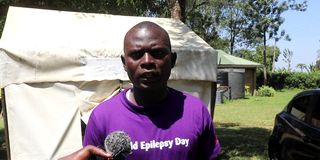
David Ouma, a 22-year-old secondary school student in Homa Bay. He lost five years of education when his family, believing his condition was caused by evil spirits, sought spiritual intervention instead of medical treatment.


What you need to know:
- Epilepsy affects approximately 50 million people worldwide, making it one of the most common neurological conditions globally.
In a modest two-bedroom house in Trans Nzoia County's Sitatunga Ward, Florah Chepkemoi hurriedly checks on her 25-year-old son during her lunch break.
Florah’s son, Elly Kiplagat, lies on a sofa, recovering from yesterday's seizure. The house is meticulously organised – sharp objects are carefully hidden, and furniture is arranged to minimise injury risks. This has been their daily routine since Elly was diagnosed with epilepsy at the age of four in 2004.
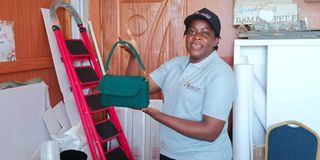
Diana Wakhusama, who is epileptic, during the interview, in Kitale.
Florah lets us into her first-born child’s world, sharing how she has struggled to raise him. It is a mix of both pain and joy and as a mother - she is happy seeing her son improve every day.
“I am proud of my son and I will support him till the end. I am very prayerful and that has kept me going,” she tells Healthy Nation.
Growing up, Elly was a hyperactive child.
His mother recalls that he continued to be hyper until one night when his hands and legs started shaking vigorously before he broke into a sweat.
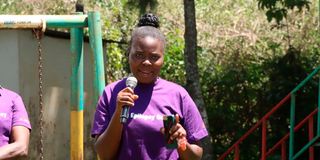
Levina Magambo during the International Epilepsy Day at Marindi Sub-county Hospital in Homa Bay County on February 10, 2025. The day was marked to raise awareness about the condition and demystify myths surrounding it.
“When I went to hospital, they said he had malaria, and he got treated. But after two months, he fell ill again, and we took him back. That time round, doctors said he had no malaria and asked about our family history, and whether we had any history of epilepsy,” she narrates.
At the age of four, his condition worsened and one day he fell down while in school. When he was taken to hospital, he underwent an electroencephalogram test, where it was detected that he was suffering from epilepsy. This would then change the life of Elly and his mother.
Florah says that after the diagnosis, her husband disowned them, leaving their son under her care.
According to the World Health Organization, epilepsy is a chronic non-communicable disease of the brain that affects around 50 million people worldwide
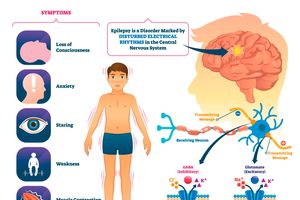
The condition, characterised by recurrent, unprovoked seizures, results from abnormal electrical activity in the brain, notes Dr Ben Otieno, a medical officer in Homa Bay County.
Florah says raising an epileptic child has not been a walk in the, especially with cost considerations for medical care given her little earnings.
“The cost of medication is too high. He has to take drugs every day,” she says, adding that she spends over Sh200 daily on drugs, exclusive of other related expenses.
Florah urges the government to consider free medical support for epileptic children when they attend clinics.
She adds that it has also not been easy for her to get a house help to assist in caring for her son given the superstitious beliefs associated with the condition.
“My son lives a lonely life. I have to lock him in the house when I am at work because I have no one to take care of him,” she says.
She also has to hide sharp items in the house that can be dangerous to him when he is alone.
Raising Elly has come with a fair share of stigma and discrimination. “Some people still think that this disease is caused by curses or evil spirits.”
In Kitale town, the Healthy Nation team meets Diana Wakhusama, 30, an epileptic mother of a four-year-old daughter.
She recalls being expelled from two schools and asked to seek spiritual deliverance. “It has not been easy growing up with the condition. Many people do not believe that epilepsy is a medical condition. They associate it with spiritual and cultural beliefs.”
However, her story offers hope – she manages her condition while running a successful crocheting business alongside her marketing job.
Diana has learned some life skills, including crocheting, where she earns a living from making garments on part time. She is also currently employed as a marketer at a printing firm in Kitale town.
An epilepsy champion and advocate for better care for epileptic patients, she calls for more sensitisation of communities on the condition to ensure patients receive timely medical assistance and reduce stigma and misinformation associated with the condition.
“The important part is to help patients accept themselves and help them live a positive life. The challenge of stigma is still very alive,” she says, noting that the government and community should be ready to help patients.
She adds that most patients living normal lives still suffer discrimination, especially in employment, where getting hired proves to be difficult.
“I thank God because I can live a normal life, and this is because I attend my clinic sessions and adhere to my medication. I know when I am about to have a seizure so I prepare and make sure I am in a safe place even when I fall,” she explains..
"The important part is to help patients accept themselves and help them live a positive life. With proper medical care and support, epilepsy doesn't have to define who you are."
Three hundred kilometres away in Homa Bay town, we meet Levina Magambo, 26, who faces a different kind of struggle.
She narrates to Healthy Nation that she had just moved to a new house after getting a job as a secretary at a government office in the town.
After settling for a few weeks, her son befriended other children from neighbouring houses. Levina, who is epileptic, remembers a day she invited the other children for a meal in her house when her neighbours confronted her with accusations of trying to make their children sick. Her gesture of giving the children a meal was not taken lightly by a group of women who accused her of trying to “transfer” her condition to their children.
Levina says she been finding it hard to be accepted in different set-ups, including her own family.
“A lot of people do not know how the condition is acquired. Some believe it is communicable, and that is why my neighbours did not want their children to interact with me,” she says.
Others avoid shaking her hands, thinking they might contract epilepsy.
Levina recalls that growing up, she was rejected by her peers at school and suspended by the administration for disrupting classes whenever she had seizures..
“Whenever I felt down, other children would run away thinking I would die. This could affect the normal school proceedings because a lot of my classmates were interested in seeing me when I gained consciousness.”
Her problems followed her into adulthood. After Form Four, she got pregnant but her boyfriend was not ready to bear the responsibility.
“He said he could not marry me since his parents would reject me because of my condition. He wanted me to get rid of the pregnancy,” says Levina.
She adds that when she was looking for a job, some potential employers rejected her, arguing that she would not work effectively.
“I decided to become an advocate for people living with epilepsy. I fight for their rights and try to demystify myths surrounding the condition
Her work, along with that of other advocates, is slowly changing perceptions.
Levina spends Sh7,200 monthly on medication – a significant portion of her secretary's salary.
"The cost is draining me financially," she admits. "But I can't stop taking the drugs. They keep me functional."
The impact of epilepsy extends far beyond medical challenges.
David Ouma, a 22-year-old secondary school student in Homa Bay, lost five years of education when his family, believing his condition was caused by evil spirits, sought spiritual intervention instead of medical treatment.
"Instead of taking me to hospital, they chose to take me to places of worship. I had to suspend school for five years as they were looking for the cure from clergymen."
These stories represent just four of the more than one million Kenyans living with epilepsy, a condition that the Ministry of Health reports is severely undertreated, with 70 per cent of patients not receiving appropriate care.
Understanding epilepsy
Dr Otieno explains that causes of epilepsy range from genetic factors to head injuries, with the latter being the most common trigger in Kenya.
"When severe head injury occurs, it can lead to epilepsy," Dr Otieno explains, emphasising why safety measures like wearing helmets while riding motorcycles are crucial. The condition can also be triggered by infections, birth complications, and in some cases, substance abuse.
While epilepsy cannot be cured, it can be effectively managed with proper medical care. However, the reality of accessing this care in Kenya presents numerous challenges.
Several anti-epileptic drugs show efficacy in managing the seizures. The most commonly prescribed include carbamazepine, phenobarbital, and sodium valproate. But affordability remains a challenge for many who need these drugs.
The cost of these medications varies significantly. While some government hospitals provide subsidised drugs, the supply is often inconsistent. Private pharmacies charge anywhere from Sh2,000 to Sh15,000 per month for different drug combinations.
In Homa Bay County, many patients rely on Médecins Sans Frontières (MSF) for free medication. The organisation supports 190 epilepsy patients through its facilities at Marindi and Nyalkinyi sub-county hospitals. However, this represents just a fraction of those needing help.
"We're seeing patients travel from all corners of the county to access these services," says Bright Mukhuna, MSF project coordinator. "The demand far exceeds our capacity."
The role of culture and traditional beliefs
Cultural anthropology studies suggest that traditional beliefs about epilepsy vary across diverse communities.
"In some communities, epilepsy is seen as a curse, in others as possession by spirits. These beliefs often prevent people from seeking medical treatment," says a study.
The intersection of traditional and modern medicine presents both challenges and opportunities. Some traditional healers are now working with medical professionals to ensure patients receive comprehensive care.
A 2022 study by the Kenya Medical Research Institute found that approximately 70 per cent of epilepsy patients in rural Kenya consulted traditional healers before seeking conventional medical treatment.
“The biggest challenge is misinformation and cultural beliefs associated with the condition. That has seen many victims shy away from seeking medical assistance, and they are suffering at home," said Sylas Wambulwa, Trans Nzoia County coordinator of Non-Communicable Diseases.
Research published in the East African Medical Journal reveals distinct cultural interpretations of epilepsy across different Kenyan communities:
• In many coastal communities, epilepsy is often viewed as a spiritual condition requiring ritual cleansing
• Among some Nilotic communities, it's sometimes associated with ancestral displeasure
• In parts of Central Kenya, certain communities historically linked epilepsy to familial curses
These beliefs significantly influence treatment-seeking behaviour. A longitudinal study conducted by the University of Nairobi between 2018-2023 found that cultural beliefs were the primary reason for delayed medical treatment in 65 per cent of cases.
Government's response and policy framework
The Kenya National Strategy for Epilepsy Care, launched in 2021, aims to improve access to treatment and reduce stigma. However, implementation remains a challenge.
"The government focuses more on communicable diseases like TB and Malaria," Dr Otieno observes. "Non-communicable diseases, including epilepsy, receive less attention despite their significant impact."
Community support and innovation
Despite these challenges, innovative solutions are emerging. The Epilepsy Foundation Kenya has launched a mobile health programme using SMS reminders to help patients maintain their medication schedules. Community health workers play a crucial role in patient support and education.
Janet Nekesa, a community health worker in Trans Nzoia, describes her work: "We go door to door, talking to families, explaining that epilepsy is manageable. Sometimes we have to convince parents to bring their children out of hiding."
The Beacon Study, a partnership between Moi Teaching and Referral Hospital and Moi University, offers hope through its community awareness programmes and subsidised medicine initiative. However, experts agree that more comprehensive solutions are needed.
Recommendations include government subsidies for anti-epileptic drugs, integration of epilepsy care into primary healthcare, mandatory insurance coverage for epilepsy treatment, enhanced public education programmes and support for research and specialist training.