The unsung heroes securing our girls' future against cervical cancer
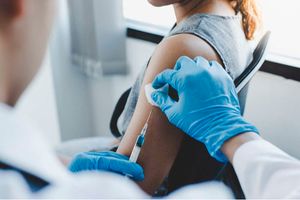
A girl reacts after receiving the HPV vaccine.

What you need to know:
- Investment in the HPV vaccine started in 2013 when the Health ministry did a trial run in Kitui County, vaccinating girls aged 10 years by giving two doses, six months apart, with good success.
- Lessons learnt included use of the school-based approach to deliver the vaccine; and this encouraged the launch of the vaccine across the country in 2019.
Last week was an amazing moment for advocacy in healthcare and a big win for girls in West Pokot County. What started out an effort to sensitise the community about the importance of the Human papillomavirus (HPV)vaccine unexpectedly culminated into a defining moment for women and girls when their top leadership made a commitment to securing their future against cervical cancer.
Why is this important? In 2019, the Ministry of Health, in a bid to ensure that Kenya remained on target to achieve the World Health Organization (WHO) 2030 goal of eliminating cervical cancer, introduced the HPV vaccine for girls aged 10 years in Kenya. WHO set three targets to be met by 2030: i) that 90 per cent of girls are vaccinated for HPV by age 15; ii) that 70 per cent of women are screened with a high-performance test by age 35 and again by age 45; and iii) that 90 per cent of women with cervical cancer are treated.
Also read: Muslim leaders make U-turn, advocate for HPV vaccination to protect girls from cervical cancer
It is a tough goal to meet for any country as these are extremely resource-intensive strategies. The HPV vaccine is NOT cheap; a high-performance test means testing for the presence of the actual HPV in the cervix, another expensive exercise; and finally, cervical cancer treatment requires surgery, radiotherapy and chemotherapy.
These are heavy investments to make for any country, but we must commend our government for the effort made in the past decade. Kenya has improved access to cervical cancer treatment through expansion of comprehensive cancer care to regional level; and basic care to county level. High performance HPV testing is still a work in progress but it is available in some county health facilities.
Investment in the HPV vaccine started in 2013 when the Health ministry did a trial run in Kitui County, vaccinating girls aged 10 years by giving two doses, six months apart, with good success. Lessons learnt included use of the school-based approach to deliver the vaccine; and this encouraged the launch of the vaccine across the country in 2019.
The uptake was decent but shortly after, the Covid-19 pandemic heavily disrupted not only the health systems, but also the education sector as children stayed home in an effort to contain the spread. Restoring the programme has been challenging, with vaccine hesitancy, poor access and lack of information resulting in a huge claw-back in the progress made. This is the reason why as part of our efforts as HPV vaccine advocates, we were in West Pokot County last week.
Militant people
For many, West Pokot brings images of a militant people, armed with guns, protecting their cattle, ready to shoot at minimal provocation. It conjures images of cattle rustling, insecurity; and a high index of women disempowerment driven by female genital mutilation. Let’s just say that devolution unmasked this little jewel of hidden treasures, working to develop its potential and secure equity for its residents amidst tough cultural and geographic barriers, inadequate resourcing, and a diversity that require unique approaches to delivering quality healthcare.
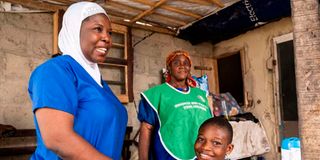
The impact of community health promoters (CHPs) may be restricted to the urban informal settlement populations, but in the rural areas, it is the lifeline for most residents. In West Pokot, every person knows their area CHP. For a community perennially served by external healthcare workers, years of mistrust have led to poor utilisation of the health systems.
This is changing, with most nurses, especially those serving the far-to-reach areas, being from the community; as do several doctors, including specialists. But the game-changer is the community health promoters. Having been selected from the community, speaking the language, understanding the culture and trained to respond to the most urgent need of health education and awareness-creation, they have made inroads that were impossible before.
This was why our project as the Kenya Paediatric Research Consortium (Keprecon) focused on empowering these CHPs with the correct information about the HPV vaccine to boost community awareness, dispel myths and create demand for the same. Why is this? Data from the Kenya Health Information Systems shows that the period April 2024 – March 2025, out of the almost 100,000 eligible girls for vaccination, only four per cent were vaccinated. This statistic simply implies that our investment in vaccines is going to waste as they expire in the health facilities.
The HPV sensitisation for CHPs was a great eye-opener. With cervical cancer affecting an organ that is anatomically hidden out of sight, where culture considers it inappropriate to openly talk about genital anatomy. The cervix does not have a name in all local dialects in Kenya. We had to start by giving the cervix a name! The CHPs need to know how to explain cervical cancer; its linkage to the causative virus, the HPV; and how the vaccine steps in to build immunity to protect the cervix against this virus, keeping it safe from cervical cancer. This is sorely needed in all communities.
The crowning glory of the week was the congregation of the county first ladies from 12 counties, through their association, the County First Ladies Association (CFLA), coming together to support the host First Lady, Ms Scovia Kachapin, in declaring the county’s commitment to eradicating cervical cancer in West Pokot.
In true Pokot cultural style, the host went all out, draping the first ladies in the ceremonial cultural attire and celebrating them with song and dance. During the event, the governor himself, Simon Kachapin, committed to championing the WHO strategies in ending cervical cancer, having lost his mother to the same.
The CFLA team has partnered with Keprecon in health advocacy for the past four years. They all made a passionate appeal to the parents of girls eligible for the vaccine to discard the myths that have held them back, and have their young ones vaccinated. They urged the county to support their CHPs, as they were their best asset in winning the war against cervical cancer.
The chairperson of CFLA, Ms Alamitu Jattani, left me in awe. A banker by profession, she spoke like a health scientist. She had the cancer and HPV uptake statistics on her fingertips, the science behind the virus, cervical cancer and the vaccine, her lived experiences and her commitment to increasing awareness about the vaccine. She appealed to the parents as a mother to help secure their children’s future.
Health advocacy is not a sprint; it is a long-term commitment to the course, even when the goal is out of sight. Devolution helped unmask just how varied and unique our populations are in healthcare; demonstrating how policies made with a one-size-fits-all approach fail to bear fruit. Broad policy guidance is necessary, but ultimately, the implementers on the ground must be able to figure out what works best for their setting.
As the the Health ministry gears up to launch the new single dose schedule for the HPV vaccine, where local evidence has proven that just a single shot is enough to protect a child for life; I am inspired by the words of Ms Emmy Chesire, the Baringo County first lady: “Vaccinating your child is the most important gift you can give them!”
The writer is a gynaecologist/obstetrician