Urgent action required as Kenya’s hunger crisis hits 3.3 million
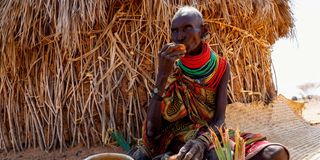
Echakan Amaja Namoni, 76, eats wild doum palm fruit (Hyphaene thebaica) outside tukul shelter in Loperot village near Lokichar in Turkana County n February 16, 2026. The county has been hit by severe drought.

What you need to know:
- A new report from the Integrated Food Security Phase Classification reveals that the number of people facing crisis-level hunger has surged by 52 per cent in just one year, reaching 3.3 million.
- Among them, 400,000 are now in the emergency phase, requiring immediate, life-saving assistance.
Across Kenya’s northern and north-eastern counties, families are watching their livestock perish, children are growing weaker, and critical water sources are running dry.
A new report from the Integrated Food Security Phase Classification (IPC) reveals that the number of people facing crisis-level hunger has surged by 52 per cent in just one year, reaching 3.3 million. Among them, 400,000 are now in the emergency phase, requiring immediate, life-saving assistance.
"Acute food insecurity and acute malnutrition have reached severe levels across Kenya's 23 Arid and Semi-Arid Lands (ASALs) and surrounding areas," the report states. "An urgent, large-scale, multisectoral response is required to prevent further deaths."
To stem the crisis, the IPC calls for expanded food distributions and targeted cash transfers for vulnerable households, alongside strengthened social protection programmes such as the Cash Transfer for Orphans and Vulnerable Children. “For the 400,000 already at emergency hunger levels, where food gaps are large and lives are at immediate risk, this support is not optional; it is life-saving,” said IPC.
The malnutrition crisis is equally alarming. Nearly 810,900 children under five require treatment for acute malnutrition this year, up from 760,488 last year, with over 202,000 suffering from the most severe form. The proportion of children at risk has also climbed from 13.1 per cent to 16 per cent, a sign that drought stress is penetrating deeper into communities. An additional 116,800 pregnant and breastfeeding women also need nutritional support.
"That these thresholds are being crossed now at the outset of the lean season signals that conditions in Kenya's arid and semi-arid land counties are already deeply serious," said Getrude Misango, CARE Kenya's country director. "When communities have no time to recover between one drought and the next, the cumulative damage is severe."
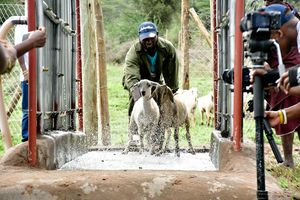
Yet food handouts alone will not fix what is broken. The IPC is also calling for livestock destocking programmes; initiatives that help pastoralist families sell weakened animals before they die, converting whatever value remains into cash for food. In Mandera, the impact of livestock collapse is stark: daily household milk consumption has plummeted from 0.9 litres in October 2025 to just 0.1 litres by January 2026, pushing children into acute malnutrition.
Beyond food, the land and water that pastoral communities depend on also need urgent attention. Pasture conditions across the ASALs are poor, with grazing resources projected to last just two months instead of the usual three. Mandera and Wajir are the worst hit. Without restoring grasses, controlling invasive species, and building feed reserves, the report warns that the next dry season will find communities just as exposed as this one.
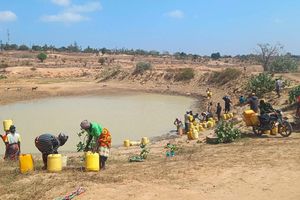
Water is perhaps the most pressing concern of all. Hundreds of boreholes have broken down across the region, including 302 in Turkana alone, 168 in Kitui, and 73 in Tharaka due to worn-out parts and damaged pumps that no one has had the funds to replace. The IPC recommends a combination of emergency water trucking, desilting of water pans, borehole rehabilitation, and investment in rainwater harvesting systems to give communities a buffer during dry spells.
On malnutrition, the IPC urges authorities to "treat it like the medical emergency it is." Mandera has over 86,000 children needing treatment; Turkana has nearly 96,000, the highest of any county. Three areas —Mandera, North Horr in Marsabit, and Turkana South and East — have already hit Phase 5, the most critical level on the scale, where at least one in three children is acutely malnourished. Laisamis is expected to reach the same level by mid-year, compounded by disease outbreaks of cholera, measles, and kala-azar already active across the region.
Yet, treatment commodities have been out of stock in many facilities since mid-2025. Community outreach sites in Turkana South dropped from 430 to just 50 last year, meaning most sick children simply cannot get help. The IPC calls for restocking supplies, mass community screening to find children before their condition becomes critical, and a scale-up of outreach services reaching the most remote families.
"Waiting for hunger levels to become catastrophic before acting is unconscionable," Ms Misango added.
CARE Kenya and its partners are calling on donors to dramatically increase funding and to direct support to local organisations already present in the hardest-hit areas. The 1.76 million people currently in need of humanitarian assistance are projected to grow to over 2.1 million by mid-2026.