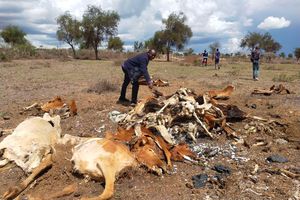
When a prolonged drought struck Kenya’s arid and semi-arid lands in 2021 and 2022, herdsman Elisha Shapara watched helplessly as livestock across the region died from lack of pasture and water.
In Oloirimirimiri village in Nairraballa Sub-location, Kajiado Central, Kajiado County, dry seasons have always been challenging. But the drought—widely described as one of the worst Kenya has experienced in four decades—pushed pastoral communities to the brink.
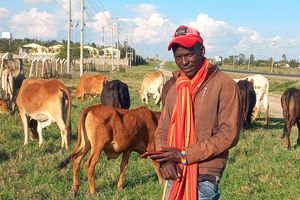
“The shortage of water and pasture is the biggest challenge in dry areas,” says Mr Shapara, who keeps cattle, goats and sheep.
For decades, livestock keepers in Arid and Semi-Arid Land (ASAL) regions have relied almost entirely on natural pasture. But increasingly erratic weather patterns linked to climate change have made traditional grazing unreliable.
Determined to avoid the devastating losses witnessed during previous droughts, Mr Shapara has adopted a new strategy. On part of his land, he now grows drought-resilient fodder grasses such as Boma Rhodes and Maasai lovegrass.
The grasses are harvested and stored as hay, which he feeds to livestock during dry spells. Across pastoral landscapes in Kajiado, Narok, Laikipia and Samburu counties, more livestock keepers are embracing similar climate-resilient practices to shield their animals from drought and other climate shocks.
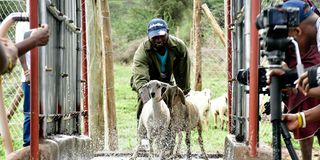
Veterinary specialist assisted by animal herders vaccinate some of the animals kept by the pastoral community who live around Illbsil Kajiado County on March 05, 2026.
Photo credit: Francis Nderitu | Nation
According to the Food and Agriculture Organization (FAO), Kenya is among the Horn of Africa countries severely affected by climate change, with pastoral communities among the most vulnerable.
Alongside government livestock offtake programmes, development partners are supporting initiatives aimed at cushioning pastoralists from recurring drought.
One such effort is the Kenya Pastoral Market Development (KPMD) programme, funded by Strathmore University in collaboration with private sector companies.
Launched in 2023 and expected to run until 2029, the initiative is being implemented in Kajiado, Narok and Samburu counties.
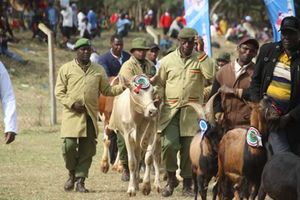
The programme aims to address long-standing challenges facing pastoral communities by linking herders directly with livestock offtake companies that buy animals for both local and export markets. Participating companies have established livestock aggregation centres near pastoral settlements, enabling farmers to sell animals without travelling long distances.
Climate resilience is also central to the initiative. Pastoralists are encouraged to grow drought-tolerant fodder during the rainy season, which is later harvested and stored as hay for use during dry spells.
The Ilbisil Livestock Market, located in Kajiado County on March 05, 2026, which offers a market for pastoralist to sell their animals on Fridays only.
Photo credit: Francis Nderitu | Nation
“Animal health services form another pillar of the programme,” says Prof Ruth Kiraka, a lecturer at Strathmore University and lead of the initiative. “Veterinary teams provide vaccinations against major livestock diseases, helping to reduce mortality during drought periods when animals are already weakened by poor nutrition.”
The project is also promoting improved livestock breeding to boost productivity. Some participating companies, including LiveMo, have introduced pedigree Boer goat bucks imported from South Africa to improve the genetics of local breeds. “The breeding programme allows pastoralists to produce higher-quality animals that mature faster and fetch better market prices,” Prof Kiraka explains.
The 2021–2022 drought was particularly devastating. Millions of livestock across the country died after successive failed rainy seasons, wiping out herds worth billions of shillings and plunging many pastoral households into economic distress.
Simon Shapara, another pastoralist from Kajiado, remembers the losses vividly. At the time, he owned 50 cattle and about 150 goats and sheep. As pasture dried up and water sources disappeared, animals began dying one after another.
By the time the drought eased, he had lost 28 cattle and about 70 goats and sheep. “It was very painful. You watch your animals die and there is nothing you can do,” he recalls. Today, his herd is slowly recovering. He now keeps about 25 cattle and around 110 goats and sheep, supported by improved animal health services and better market access. Through the KPMD programme, livestock vaccination campaigns are conducted closer to villages, protecting animals against diseases such as foot and mouth disease (FMD), contagious caprine pleuropneumonia (CCPP), peste des petits ruminants (PPR) and sheep and goat pox.
Healthy animals, Mr Shapara says, are more resilient during harsh seasons.
Farmers are also benefiting from a livestock aggregation system that connects them to reliable buyers. Under the arrangement, animals are delivered to nearby collection centres where buyers purchase them regularly.
Some of the animals kept by the pastoral community who live around Illbsil Kajiado County on March 05, 2026.
Photo credit: Francis Nderitu | Nation
“Now a goat or sheep can sell for up to Sh5,000,” he says.
The initiative has already reached more than 13,000 households in Kajiado, Narok and Samburu counties, with incomes among participating pastoralists rising significantly.
For private sector partners implementing these interventions, fodder production has become central to building resilience against drought.
George Ndung’u, who oversees fodder production at livestock company LiveMo, says storing hay has helped cushion farmers during extreme dry seasons.
The company has established about 868 acres of Boma Rhodes grass and works with small-scale farmers who collectively cultivate more than 600 additional acres.
“One facility alone can store about 20,000 bales of hay,” says Mr Ndung’u. “We store the grass so that it can be used during drought.”
During this year’s drought, LiveMo had already produced more than 80,000 bales of hay, enabling farmers to access fodder when pasture disappeared.
“It takes about 40 to 50 days before grass is ready for grazing after rains. During that period farmers still need hay to feed their animals,” he notes.
Climate change, Mr Ndung’u adds, has made livestock production increasingly unpredictable.
“You can move from a prolonged drought to heavy rains within a few days. These extreme weather patterns affect animals and pasture.”
However, interventions such as fodder production, improved breeding, vaccination and reliable markets are helping pastoralists adapt to the growing climate challenges. Each bale of hay stored today, farmers say, is insurance for the next drought.