What to do in an emergency: A guide to saving life
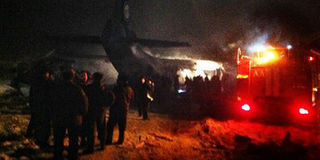
Firefighters and rescuers respond to a military plane crash near the Siberian city of Irkutsk, on December 26, 2013.

What you need to know:
- Kenya Red Cross expert shares practical, life-saving steps everyone should know before facing sudden emergencies anywhere.
- From choking to road crashes, knowing what not to do can be just as life-saving.
An emergency does not knock. It shows up. Most of the time, it finds you unprepared. What you do after is what will make a difference between life and death. We speak with Monica Orero, the director in charge of training and capacity building at the Kenya Red Cross. She shares a detailed explanation of what to do in case of an emergency.
First step to take
Stay calm. It may sound impossible in a crisis, but staying calm is the single most important first step. It goes a long way to just pause, think and do the right thing that can save a life. The steps that follow depend on the type of emergency, whether it is a fire, a road accident, choking, or a fall. But one principle applies across the board: check that you are safe before doing anything else. Once you are, call for help, especially if you are not trained to provide first aid.
Know emergency numbers
The easiest way is to dial emergency lines, which are mostly toll-free. The most common emergency lines include Kenya Red Cross 1199, National Police Service 999, 112, and 911 or any ambulance providers. If there are trained personnel who can support you, then let them help you in an emergency.
Don't intervene if you are not trained
We discourage the public from trying to perform any intervention, especially when they are not trained. Some interventions may end up damaging the patients even more. In an accident scene, for instance, most of the victims either end up not being able to walk or having a spinal injury because of how they are managed at the scene. It could be something as simple as how the public carries this person. If you are unsure of any intervention, it is advisable not to touch.
In the event of a fire
Every household should keep a fire blanket in the kitchen, available at most supermarkets in the household section. If a fire breaks out, crawl low to the ground as you move towards the exit and call for help immediately. Anytime you get to a new environment, always look for escape routes. One common mistake: pouring water on a fire. Different types of fires require different responses, and water is not always appropriate.
What Kenyans get wrong on accident scenes
In case of an unfortunate accident, Kenyans are fond of pulling victims from the vehicle. Sometimes that could worsen the situation. We have skills and specific equipment that we use to remove these patients from the vehicle. We call the process extrication. We have extrication devices that should be able to then help skilled people remove this person from the vehicle.
First, you need to do a primary assessment. You have to hold the neck and the back properly, and also check if there is any bleeding. You have to check whether there are any fractures before you even move this patient. Most Kenyans rush to the scene and they just want to move this person and they end up damaging them completely. Checking if the person is bleeding is also important, an assessment can help prevent them from bleeding to death.
Colour-coded triage system
When on an accident scene, you'll see some people are tagged red, others yellow, and some tagged green or black. Red refers to those who are most critical and need urgent attention for their lives to be saved. Yellow is the second priority. This means that they have serious injuries, but not life-threatening. Green means that the patient has minor injuries, but they can walk. A black tag means that someone is already deceased.
If someone is choking
When you call the toll-free numbers, it is important that you first stay calm and then you identify yourself and clearly explain the situation at hand. You have to specify if it is a bone or fish, a seed or even a stone. The person on the other side will guide you on what interventions to do before they arrive. Alternatively, depending on the proximity, you could also go to the nearest hospital for skilled care.
When help is slow to arrive
There are many reasons why that could happen, one of them could be because of traffic, or that the ambulance is not very near you. That is why we say it is important to have basic first aid skills in any household. When people have such skills, they will know what to do when the emergency lines are slow.
The basics every Kenyans should know
Three skills, she says, can make all the difference: how to stop bleeding, how to assist someone who is choking, and what to do in the event of a burn or fire. All three can be learned in a single day of training.