Why migratory animals are at risk of extinction
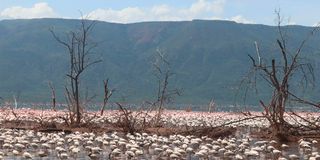
Flamingoes in Lake Bogia in 2024. The number of flamingos in the lake has declined from millions to about 400,000.


What you need to know:
- New report shows that about 44 per cent of migratory species across the world are in decline; while one in five faces the threat of all-out extinction, with fishing and hunting overtaking habitat loss as the leading threat.
Lake Bogoria was once a spectacle. In the 1980s, according to 82-year-old Richard Yegon, the lake was home to thousands of flamingos. “There existed Kesubo swamp along River Waseges that drained its water into the lake. It was evergreen and served as a grazing field for dozens of villages adjacent to it. But locals converted it to farmland, reducing the number of flamingos,” he explains.
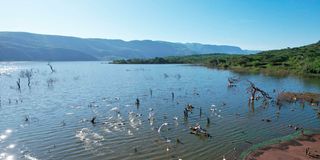
Some of the flamingoes remaining at Lake Bogoria on April 15,2025.
When the residents gather, they also talk about something else that has been happening. Over the years, the lake has steadily expanded, submerging areas that were once occupied by farms and homesteads. This rising water has displaced many families, forcing them to seek refuge in nearby shopping centres. “
We are not just suffering the loss of property but also the encroachment of wildlife such as snakes. Additionally, the sightings of the iconic birds are no longer as common,” offers Yegon.
Dr Oliver Nasirwa, a senior research scientist at the National Museums of Kenya, attributes the decline in flamingo numbers to persistent flooding. He notes that the population has been decreasing since 2014.
“Rising water levels change the habitat such that when they go up, the shoreline gets submerged in water and covers the vegetation. For flamingos to wade in a place where it is bare, they will have to go into the water. The flooding had also diluted the salinity, which controls the formation of algae, food for the birds, ”says Dr Nasirwa, then continues:
“When the alkaline levels go down and the conditions are not optimal, the flamingos will struggle while feeding, and they will start migrating to look for a place where they can easily get food. When the water birds are well fed, they will turn pink because of pigmentation. The number of flamingos in the lake has declined from millions to about 400,000.”
Peter Mwangi, an environmental expert at the Kenya Wildlife Service (KWS), echoes Dr Nasirwa’s sentiments and calls for restoration activities around the lake. We have observed that the river draining to the lake is greatly affected by human activities like farming, which brings siltation to the lake, ultimately reducing the volumes of water that the lake can hold,” said Mr Mwangi.
According to the expert, if there is less algae in the lake, it will affect the number of flamingos flocking there.
“We should also look at waste management, like how much people have encroached on the critical habitats of wildlife. What is happening upstream is important for what is happening downstream. When drought comes, if the ecosystem is very healthy, it will not have an impact on the biodiversity. Also, what needs to be done is to ensure that farming is done sustainably to avert erosion. The use of agrochemicals on farms poses a serious risk as these substances eventually make their way into the lake. This not only disrupts the natural balance by promoting algae formation but also threatens the health and survival of flamingos,” adds the environment expert.
Heritage sites
Faith Manthi, project coordinator at Unesco, says the alkaline lakes, which comprise Lake Bogoria, Nakuru and Elementaita have been classified as world heritage sites because of the bird species they host.
“In 2021, a water bird census revealed Lake Bogoria had lost 252,000 flamingoes. In 2022, there were 92,000 lesser flamingos. This shows a danger in the Kenya lake system because the birds are a major tourist attraction. We engaged the community to sensitise them on the importance of safeguarding the heritage sites,” she says.
According to James Kimaru, senior warden at Lake Bogoria National Reserve, the drastic rise in the lake’s water levels has triggered a mass exodus and resulted in the death of thousands of flamingos. “Lake Bogoria is globally recognised as a premier tourist destination, renowned for its dense flocks of flamingos, hot springs, diverse wildlife, and more than 373 species of birds. Unfortunately, persistent flooding has taken a toll on this world-renowned ecological site,” offers Mr Kimaru. Experts say the decline of these birds, a reflection of what is happening in other lakes, including Lake Nakuru, is just the tip of the iceberg. Globally, migratory species are on a sharp decline.
Every year, the first-ever State of the World’s Migratory Species report notes, billions of animals are on the move, from one habitat to another, during different times of the year. Think of wildebeest, butterflies, birds and elephants, among others. “They are a vital part of global ecosystems, linking continents and playing key roles in biodiversity,” the report observes.
However, these species are on the decline, and the threats they face are growing. Despite decades of protection efforts under the Convention on Migratory Species (CMS), the overall conservation status of migratory animals is worsening. Almost half of the listed species (44 per cent) have already seen population declines, while 97 per cent of all fish species are threatened with extinction.
Of all the marine and freshwater fish species listed under CMS, 79 per cent are under threat. For marine turtles, that figure stands at 43 per cent. Nearly 400 additional threatened migratory species are not yet covered by CMS.
Among the most striking findings in the report is the fact that over-exploitation has overtaken habitat loss as the leading threat to migratory species. This includes the direct and intentional removal of species from the wild, such as through hunting and fishing, as well as the incidental capture of non-target animals—commonly known as bycatch—which remains a major cause of death, especially for many marine species listed under CMS.
Habitat loss, fragmentation, and the erection of physical barriers along migratory routes continue to pose serious challenges. Although 49 per cent of identified critical sites for CMS-listed species benefit from some level of protection, many essential sites have yet to be mapped. Even within the protected areas, over half are facing unsustainable human-caused stress.
The report calls for stronger and more effective action at a broader scale, with renewed urgency, especially for species that are already listed as critically endangered or endangered.
Other threats identified include pollution, ranging from chemical runoff to light and noise pollution, climate change, and invasive species.