Why smart farming is non-negotiable for Kenya
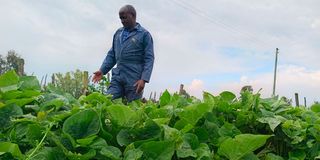
Sweet potato vines, a drought-tolerant fodder crop cultivated by Anthony Kiarie Muigai in Nyandarua County.
What you need to know:
- Kenyan scientists have developed climate-smart crop varieties such as the high-yielding drought-tolerant maize seeds, which can produce up to 30 per cent better harvests under water stress, directly safeguarding food security and farmers' incomes.
Kenyan farmers are steering a new, hostile climate reality. The predictable rhythms of rain and sun have been replaced by a disruptive pattern of drought and deluge, silently leaching vitality from the soil. This degradation directly escalates the cost of cultivation and puts the very food on our tables at risk.
Our soil is under pressure
Soils, as the very foundation of our agriculture, are crumbling; the heart of the farm is basically failing under climate stress. We often see intense rains wash away the fertile topsoil, which was built over generations. This is followed by stark droughts that bake the earth, destroying its biological vitality. In drier regions, evaporation compellingly brings toxic salts to the surface.
This triple assault of erosion, desiccation, and salinisation poses an existential threat to our food systems and requires an
immediate, strategic response.
The fertiliser dilemma
Farmers are increasingly using more fertilisers to combat soil depletion, but climate change undermines its effectiveness. During droughts, nutrient uptake efficiency can drop by over 50 per cent, wasting costly inputs.
Heavy rainfall washes away unused fertiliser, leading to environmental pollution. Additionally, high temperatures cause nitrogen—a key ingredient in fertilisers—to volatilise, resulting in a 30-50 per cent loss to the atmosphere. This results in direct financial losses for farmers, reducing both productivity and profitability.
What are our options?
We need to move away from a compartmentalised approach to achieve the goals of the National Climate Change Action Plan and fulfil our commitments under the Paris Agreement.
Breaking down institutional silos and fostering collaboration among the public and private sectors, research institutions, and local communities is vital. Kenyan researchers and agri-tech companies are leading the way in innovative, accessible solutions. By leveraging smart seeds, precision inputs, digital tools, and nature-based strategies, farmers can improve yields, reduce costs, and create sustainable futures.
The future of farming in Kenya is in your hands (and on your phone)
Forget the old image of farming. The future isn't about back-breaking labour; it's about brain-powered innovation. For you- the tech-savvy, digitally native, connected young men and women, this isn't just a change, it's your opportunity to build, code, and cultivate a more profitable and resilient Kenya. For example, opportunities abound in areas such as:
Revolution of smart seeds
Kenyan scientists have developed climate-smart crop varieties such as the high-yielding Drought-Tolerant maize seeds, which can produce up to 30 per cent better harvests under water stress, directly safeguarding food security and farmers' incomes.
This is complemented by the revitalisation of indigenous crops like sorghum and millet through modern processing, creating new markets for nutritious, climate-resilient flours and foods.
Application of smarter inputs
To reduce nutrient loss caused by heavy rains and evaporation, Enhanced Efficiency Fertilizers (EEFs) are now available. These advanced fertilisers use polymer coatings to slowly release nutrients in accordance with a crop’s growth cycle.
This precise delivery method greatly reduces waste, prevents environmental runoff, and improves nutrient absorption. Although the initial cost is higher, studies show that EEFs can lower the total expenditure per harvest by ensuring farmers get the full value from each input.
Precision agriculture
The digital revolution is democratising access to expert knowledge. Mobile platforms like DigiFarm and iShamba deliver hyper-localised, data-driven advice directly to farmers via SMS or smartphone. This includes precise planting alerts based on real-time weather data, soil-specific fertiliser recommendations, and access to credit and markets.
This turnkey technology transforms a basic mobile phone into a powerful decision-making tool, maximising productivity on any-sized farm.
Use of nature’s own technology: bio-inoculants
Bio-inoculants are natural, beneficial bacteria applied to seeds to enable crops like beans and cowpeas to self-fertilise by drawing nitrogen directly from the air. This dramatically reduces, and in some cases eliminates, the need for expensive synthetic nitrogen fertilisers. This low-cost, environmentally sustainable technology is particularly transformative for smallholder farmers, slashing input costs and improving soil health for seasons to come.
Innovators and consumers
Your role is vital in supporting Kenya's agricultural ecosystem: I encourage you to support local agri-tech startups and collaborate with agri-hubs and cooperatives to connect tech-savvy farmers to markets. Also, prioritise products made from drought-tolerant crops like sorghum and millet.
To the national government: implement policies that promote innovation, incentivise the private sector, and support climate-smart crop research.
To county leadership: Incorporate agri-hubs into your development strategies and work with cooperatives.
To the private sector: Your investments can turn promising startups into success stories.
To innovators and consumers: Continue to innovate and support the purchase of drought-tolerant crops, as your choices sustain these efforts.
Together, we can create an ecosystem where young Kenyans see agriculture as an exciting career path. While climate change poses challenges, we can face them with the spirit of "Twaweza" (we can). Let's grow together.
Dr Magenya is a science and policy analyst