Why women in Homa Bay are turning to private facilities for family planning
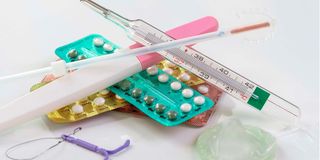
Privacy, respectful treatment and shorter queues are drawing women to private pharmacies.

What you need to know:
- Privacy, respectful treatment and shorter queues are drawing women to private pharmacies.
- Community pharmacies are bridging gaps in access to contraceptives in rural Homa Bay.
For Lucy Awuor, a resident of Rodi Kopany in Homa Bay, the decision on where to seek family planning services is not just about the method but about how she is treated.
Lucy is a regular client at Japhil Pharmacy on the Rodi Kopany-Sori road. The small private clinic has become a haven for women seeking reproductive health services away from the glare of public hospitals. Some say they prefer the pharmacy because of the services offered there – access to contraception is quick and private.
Whoever goes for contraceptives is also counselled, this being the first procedure that all women who seek services there are taken through. Lucy uses Depo-Provera, the three-month injection, one of the most popular short-term methods among women in the region. But what keeps her going back is not just the commodity but the services she gets.
“Before the injection, I have a counselling session, which is not a guarantee in public hospitals. Besides, public hospitals have staff with bad attitudes and can sometimes utter words that do not sound well,” she says.
Her story mirrors that of many women in Homa Bay who are now shunning public hospitals for private pharmacies and clinics when it comes to contraceptives, with most of them saying they like the privacy and convenience.
“Going to the pharmacy is more convenient than going to public hospitals where it takes time because of the long queues. The treatment at private hospitals or pharmacies is much better than the one we receive at government hospitals because these people do it with care,” Lucy explains.
But beyond time and better customer care is a deeper, more silent driver: stigma. In the crowded corridors of public hospitals, Lucy says, everyone sees women in the queue. And in small areas like Rodi Kopany where everyone knows everyone, that visibility can be costly.
She says there is stigma in public hospitals, so she prefers private facilities where nobody knows what she is up to. “In public, you may find people who know you. They would later start telling stories about things that are not true,” Lucy says.
At Japhil Pharmacy, she is taken to a separate room for counselling, treated with respect and without judgment, and even given a reminder card for her next visit. “The reception is always good and service is also respectable. They show me love because when I came, they did not judge me,” she notes.
Lucy's preference points to a growing shift in Homa Bay, where private pharmacies operating late into the evening and offering one-on-one counselling are increasingly becoming the go-to for women seeking to plan their families quietly, respectfully and on their own terms.
Philip Ochieng’, the pharmacist at Japhil, says he has limited services. But before offering any service, whoever visits him is counselled on the best method to use for family planning. Different people have different choices, including condoms, oral contraceptives and short-term injectables.
Philip notes that most of his clients are young women who sometimes ask for emergency pills used within 72 hours after intercourse. “We advise clients how to use some injectable at home because it can be self-administered. It is convenient for some of the young women aged between 20 and 29,” he says.
Also read: Contraception: African girls have the right to protection and choices, not stigma and silence!
The healthcare provider notes that a lot of women visit him in the evening. During the recent health workers' strike, he helped a number of women who previously sought services from government facilities. During that time, some faith-based facilities that were still operating were sending women away if they asked for contraceptives.
Stella Atieno recalls when she went to a faith-based organisation for postnatal care when public hospitals shut their doors because of a nurses’ strike. “I thought that I should ask for contraceptives during the visit. The response I got embarrassed me in front of other women,” she says.
Philip explains that private pharmacies like his have become more popular because they are the lowest level where patients can easily access services at any time they want and are sure that they will not face any embarrassment.
Women are also more likely to get emergency pills in private pharmacies than in public hospitals. “Most of the clients come in the evening when the other facilities are already closed,” Philip says.
10 to 12 years
The same situation is at Homa Bay Central Medical Clinic where clinical officer Jared Juma says he offers different family planning services, including the Intrauterine Copper Device, which can be used for 10 to 12 years.
Just like Philip, he takes his clients through counselling before they are allowed to choose and be supported in their choice of contraception. The two medical centres are among 40 private pharmacies that collaborate with KMET and the Ministry of Health to improve services.
According to the 2022 Kenya Demographic and Health Survey, 57 per cent of married women aged 15 to 49 years in Homa Bay use any family planning method against the national average of 63 per cent. The same data shows that 54 per cent of women aged 15 to 49 years in the county have used a modern method of family planning, compared to the national average of 57 per cent.
Meanwhile, 17 per cent of women in the same age group have an unmet need for family planning, against the national average of 14 per cent. The survey further shows that 77 per cent of women aged 15 to 49 in Homa Bay have their demand for family planning satisfied by modern methods, against the national average of 75 per cent.
Data from Homa Bay County Referral Hospital shows that 64 people sought counselling on contraceptives in September, against 124, 192, 191 in August, July and June respectively. The highest number of people seeking counselling was recorded in February when the hospital received 229 clients.
Records show that 43 women were given emergency contraceptive pills between October 2025 and September 2026. During the same period, 1,328 women sought the removal of implants while another 6,821 women were injected with DMPA- IM.
One hundred and four women went for IUCD insertion hormonal while 490 went for IUCD Insertion Non-Hormonal. Homa Bay County Reproductive Health Officer Jacob Odhawa says private facilities play a critical role in ensuring women can access contraceptives at the grassroots level.
He explains that health centres and dispensaries, which can easily be accessed by the public at the village level, are closed after 5pm and over the weekend. Private facilities on the other hand are open most of the time and women can access them at their convenient time.
“We are working hand in hand to ensure the services are not interrupted. Level two facilities are closed after 5 pm making the private pharmacies the only place where contraceptives can be offered at the grassroots level,” Jacob says.
KMET is working with both private and public health facilities to expand access to Sexual and Reproductive Health (SRH) services at the community level in Homa Bay County. Speaking on the organisation's family planning programme, Maurine Mobasi, the coordinator for Adolescent and Sexual Reproductive Health Services at KMET, says the organisation trains providers at pharmacy sites, referral care centres and at the community level to ensure clients can access safe, quality and timely services.
“We conduct training for our newly on-boarded providers. We also do annual refresher training to equip them with skills and improve their proficiency as well as conducting mentorship,” Maurine notes.
She says the training and mentorship are done jointly with the county government through trainers of trainers drawn from county SRH coordinators to ascertain the quality of services offered. KMET also uses a whole-facility approach where all staff are trained in SRH to ensure continuity of services in case of staff transition, coupled with routine support supervision using a standard checklist to ensure quality improvement and assurance.
“We also train them on national guidelines and safeguarding so that they can be aware of any updates from the national level,” she adds.
Partnerships
In Homa Bay, KMET is working with 40 licensed pharmacy sites across six sub-counties, staffed by registered pharmaceutical technologists. The pharmacies are linked to nine private facilities and eight government facilities. “At the pharmacy, they feel like they are in a safe space. Nobody will be able to tell the kind of services that they have gone for which makes them prefer the private operators,” Maurine says.
She adds that friendly costs due to good rapport, central location of pharmacies and operating hours that extend to odd hours, unlike dispensaries that close after 8 hours, are more accessible. “For the private facilities, there's a lot of counselling and follow-up to these clients to assure adherence,” she says.
Besides, the organisation has established referral pathways by training 83 Community Health Promoters (CHPs) who interact with adolescent girls and women of reproductive age at the community level, sensitising them to age-appropriate information and referring them to pharmacy sites for short-term family planning and counselling.
The pharmacy sites are in turn linked to private and government facilities for long-acting reversible contraceptives, which are beyond the scope of pharmacies. “At the pharmacy level, their scope does not allow them to do long-acting, so they just do according to their scope, which is short-term family planning. In long-term cases, they have to refer to the linked facilities,” Maurine explains.
After referral, clients are followed up by providers and CHPs to ensure they return for their next dose. Maurine says the program has helped demystify misconceptions surrounding family planning through community awareness. She notes a lot of misconceptions in the community, with some people believing that family planning is not good.
However, through the integration with the county and training CHPs, a lot of misinformation has been demystified. She attributes the preference for pharmacy sites among young girls to privacy, confidentiality, cost and proximity.
Elizabeth Akelo, a CHP from Wakunga in Kasgunga, Suba North, says she engages in offering lessons to residents of her village about contraceptives. She uses manuals that have pictures and writing that she reads out to her clients who are aged 15 to 24.
“The group accounts for the highest rate of pregnancy in the county. We tell them the different methods available for family planning. We also engage pharmacies identified by KMET where we can refer some of the people we engage,” Elizabeth says, noting that women in rural areas cite difficulties in accessing hospitals as a major barrier that prevents women from seeking family planning services.
Faith Awuor, a CHP from Mbita, says she attends to at least 130 households, which she should engage in every month. Her work involves referring women to clinics and ensuring they get the best reproductive healthcare services. “We attend refresher training offered by KMET, which also offers support supervision. This enables us to pass the right messages to the community,” she says.
When attending to clients, she gives women a card with a number which they can call to get help on reproductive health. Faith says involvement of CHP has made many women and girls open up about their reproductive health. She notes that perennial health workers’ strike is the main challenge that women in rural communities face as they fail to get services when hospitals close their doors when workers are seeking better remuneration.