Wristband study reveals universal exposure to hormone-disrupting chemicals across occupations
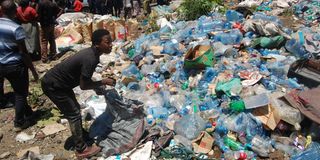
Plastic bottles at Gioto dumpsite in Nakuru town in this 2020 photo. Scientists warn 16,000 plastic-related chemicals threaten human health from cradle to grave.

What you need to know:
- Study urges urgent treaty action as plastics chemicals, including hormone disruptors, harm both waste workers and office staff.
- Scientists warn plastics chemicals cross borders, disrupt hormones, and threaten health from womb to womb worldwide.
In Geneva, Switzerland
A new report has revealed that exposure to toxic chemicals from plastics is not limited to those handling waste in dumpsites and recycling centres.
It shows that even workers in offices are exposed to harmful chemicals from plastics. The report was released on Wednesday evening during a press briefing by the International Pollutants Elimination Network (Ipen). They analysed samples from wristbands given to participants of the study from Kenya and Thailand mid-last year.
The participants were categorised into plastic recycling workers, plastic waste workers, and workers in other settings without occupational exposures to plastic waste. Separately, United Nations delegations attending the negotiations were given the same wristbands to check their level of exposure.
For five days, study participants wore the wristbands, after which, an independent lab analysed to check the presence of known harmful chemicals that they were exposed to during the study period. From a range of 73 chemicals, the scientists grouped them into six chemical groups known to be hazardous.
One of the six chemicals include phthalates, also known as everywhere chemicals, used in the production of plastics to make them flexible and soft. The study indicates that these chemicals are known endocrine (or hormone) disrupting chemicals.
The report shows that they were detected at the highest concentrations of all the chemicals and that participants in Kenya were generally exposed to higher levels than participants from the same groups in Thailand.
Dr Leonardo Trasande of the New York University School of Medicine explained at the press briefing on Wednesday that Chemicals used in plastics “hack our hormones”.
“Our natural signalling molecules that underlie practically every biological function known to mankind: temperature, metabolism, salt, sugar and even sex,” he said. “It’s not surprising that the effects on plastics to human life run from cradle to grave and womb to womb.”
Extent of exposure
They are used to make plastics flexible and soft. “Plastic waste and recycling workers were exposed to more chemicals than the other workers. Plastic recycling workers were exposed to the highest number of chemicals in Thailand and plastic waste workers to the highest number of chemicals in Kenya,” shows the report.
Dr Therese Karlson, Ipen’s technical adviser, said yesterday that analysing only 73 chemicals does not show the full picture. “All participants were exposed to at least 21 chemicals, in just five days. We know that there are more than 16,000 chemicals that have been identified as being associated with plastics. This is really just a snapshot and it shows that everyone is exposed globally,” she explained.
The other chemicals analysed include Polycyclic aromatic hydrocarbons (Pahs) that are known to be cancer-causing. They are found in plastics and are mostly generated when burning plastics and other materials. The organophosphate flame retardant chemicals are linked to brain developmental issues.
In the treaty negotiations, a proposal from Switzerland and Mexico highlights the need for global controls, transparency of chemicals used in plastic production and a requirement to list all the chemicals. It also provides for a mechanism to review future chemicals that are hazardous.
Dorothy Otieno, programme officer at the Centre for Environment Justice and Development, termed it extremely concerning that the difference in exposure to chemicals was so small and that it doesn’t matter where a person is. “Our expectations were that there would be a difference in terms of level of exposure for the waste workers and compared to the control group (those in offices),” she said.
“Waste workers deserve to work in a good, clean and safe environment and this is part of the just transition discussion that has to feature in the discussions of the plastics treaty.”
Dr Maria Neira, the director of Environment, Climate Change and Health at the World Health Organization, said in a statement that exposure to chemicals used in plastics that have long been regulated, like certain phthalates, is a public health concern.
“These chemicals are known to disrupt our bodies’ natural hormones and demonstrate the urgent need for strong global protection for our health and the environment. The Plastics Treaty should be a key global agreement to protect human health and future generations,” she said.
Sara Brosché, Ipen science adviser and the study’s lead author, is worried that most plastic chemicals are not regulated by international agreements and would not be covered by current global conventions.
“Since chemicals from plastics and plastic wastes cross national boundaries, controls on hazardous chemicals should be an essential component of the Plastics Treaty,” she said.
“Plastics and plastic chemicals cross national borders without control, so national policies alone cannot solve the plastics crisis. We encourage the Plastics Treaty delegates to follow the science and develop a meaningful agreement to protect the human right to a clean, healthy and sustainable environment, including a safe and healthy working environment.”