Your questions on measles-rubella and typhoid vaccines answered
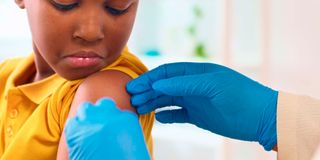
Failing to vaccinate your child means that they will be more likely to get vaccine-preventable diseases such as hepatitis, tuberculosis, whooping cough and diphtheria.

What you need to know:
- The Measles-Rubella vaccine helps in the prevention of two highly contagious diseases that can cause severe health complications, especially among children
- The measles rubella vaccine is already part of the routine immunisation schedule, given to children at 9 and 18 months of age.
- The typhoid vaccine offers vital protection against typhoid fever, a serious bacterial infection that is commonly spread through contaminated food and water
It started with one concerned parent on social media, and then another who replied to their post, sharing their experience. Before you knew it, word had spread that vaccines are harmful. A flurry of comments shared different sentiments, and, after all, a vaccination campaign kept rolling. A voluntary one. An important one. A timely one.
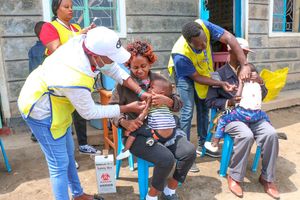
Some parents whose children got the jab still have questions, even after the official end of the vaccination drive.
Our science reporter Hellen Shikanda reached out to experts from different organisations, including the World Health Organisation, the Ministry of Health and UNICEF.
Here is what you need to know.
Why is the Measles Rubella vaccine important?
The Measles-Rubella vaccine helps in the prevention of two highly contagious diseases that can cause severe health complications, especially among children.
Measles can result in complications such as pneumonia, brain damage, and even death. A Rubella infection during pregnancy can result in health issues in newborns called the congenital rubella syndrome, which leads to birth defects, miscarriages, stillbirths, and fetal deaths.
By increasing vaccination coverage, Kenya can reduce the incidence of these diseases, protect vulnerable populations, and move closer to eliminating outbreaks. Widespread immunisation contributes to herd immunity, ultimately strengthening the nation's overall health system and ensuring a healthier future for its children.
(Dr. Boston Zimba, Immunisation Lead, WHO Kenya)
Please share more information on the benefits of the typhoid vaccine, which was recently introduced
The typhoid vaccine offers vital protection against typhoid fever, a serious bacterial infection that is commonly spread through contaminated food and water. Vaccination helps reduce the risk of contracting the disease, which can cause high fever, weakness, abdominal pain, and complications such as tears/holes in the intestine (intestinal perforation) and death.
By immunising the most vulnerable populations, the vaccine plays a key role in preventing outbreaks and saving lives. Additionally, widespread use of the typhoid vaccine can help decrease the transmission of the bacteria within communities, contributing to improved public health and overall disease control.
Kenya has an increasing emergence and spread of antimicrobial-resistant (AMR) Salmonella typhi. The Typhoid Conjugate Vaccines (TCVs) are a crucial tool in combating drug-resistant typhoid. Studies show that they are 97 per cent effective against multidrug-resistant and extreme drug-resistant typhoid fever.
(Dr. Boston Zimba, Immunisation Lead, WHO Kenya)
What decisions have informed the MR vaccine to be rolled out now? Please explain the choice of the particular age group up to 14 years. What are the efficacy rates of the MR vaccine in preventing measles and rubella?
Surveillance data show that the Rubella virus is circulating widely in Kenya, primarily infecting young children. In addition, five per cent of reported rubella cases occur in women of reproductive age.
Measles cases have been increasing globally since 2021, with significant surges in 2022 and 2023. In 2025, at least 1,417 confirmed measles cases have been reported, up from 895 in 2024. The trend has been attributed to low vaccination coverage rates and immunity gaps and has been exacerbated by the Covid-19 pandemic.
Even after administering two doses of the measles rubella vaccine with high coverage, about 15 per cent of those vaccinated still do not develop strong enough immunity, leading to a build-up of a population at risk of contracting measles and rubella over time.
There is an especially high risk of outbreak when the number of susceptible populations accumulates over time to be higher than or almost as many as the number of babies born each year. For this reason, WHO recommends nationwide campaigns every three to five years to rapidly increase population immunity and interrupt measles and rubella transmission.
Kenya currently provides the first dose of the Measles Vaccine at nine months and the second dose at 18 months for free, in all public health facilities. The efficacy rate of the measles rubella vaccine is approximately 85 per cent.
(Dr Rose Jalang’o, Head, National Vaccines & Immunisation Program)
Why are religious leaders and other opinion shapers at the community level critical for the success of this campaign?
Religious leaders and other community opinion shapers are critical for the success of this campaign because they hold significant influence and trust within their communities.
Their endorsement can help address concerns, dispel myths, and promote positive attitudes toward vaccination.
When these leaders are capacity built and openly support the campaign and advocate for immunisation, they can motivate community members to participate, especially in areas where cultural or religious beliefs may otherwise hinder vaccine acceptance.
Their involvement fosters community acceptance, enhances communication, and helps build confidence in the safety and importance of vaccines, ultimately increasing vaccination coverage and contributing to this campaign’s success.
(Dr. Collins Tabu, Immunisation Specialist, UNICEF Kenya)
Please provide more insight on natural immunity versus vaccine-induced immunity specific to the MR vaccine? How does the herd immunity concept influence the current campaign to ensure that a critical number of children get the vaccine during this campaign?
Natural immunity to measles and rubella develops when a person is infected with the measles or rubella viruses, leading to lifelong protection in most cases. However, this approach comes with significant risks, as the infection can cause severe complications, including pneumonia, encephalitis (brain inflammation), death and congenital defects in rubella. In contrast, vaccine-induced immunity provides a safe and effective way to achieve protection without experiencing the illness itself.
The Measles Rubella vaccine stimulates the immune system to produce antibodies against both viruses, offering long-lasting immunity with minimal side effects. Unlike natural infection, vaccination helps prevent the disease and its potentially serious complications, making it a safer and more controlled method of disease prevention for individuals and communities.
Herd immunity occurs when a sufficient proportion of the population is vaccinated against a disease, reducing its spread and protecting even those who are not vaccinated. In vaccination campaigns, this concept emphasises the importance of reaching a critical number of children to create a protective barrier within the community.
By ensuring high vaccination coverage, the transmission of diseases like measles and rubella is minimised, preventing outbreaks and safeguarding vulnerable groups such as infants and individuals who have compromised immunity due to underlying conditions (immunocompromised). This collective immunity is essential for the success of vaccination efforts and for maintaining good overall public health.
( Dr. Collins Tabu, Immunisation Specialist, UNICEF Kenya)
How many children were vaccinated in the recent campaigns?
The vaccination campaign reached 5.39 million (84 per cent) children aged 9 to 59 months with Measles Rubella vaccines, and 16.69 million (87 per cent) children aged 9 months to 14 years with Typhoid Conjugate Vaccines. In addition, 74,000 children who had never received any Measles Rubella vaccines were identified and vaccinated.
What's next? Are there plans to incorporate the vaccines into the routine immunisation plan? If so, how will this be done and for what age groups?
The measles rubella vaccine is already part of the routine immunisation schedule, given to children at 9 and 18 months of age. After the campaign, the Typhoid Conjugate Vaccine (TCV), which is jointly funded by Gavi (the Vaccine Alliance) and the Government of Kenya, will continue to be offered to all children as they turn 9 months of age, as part of the routine immunisation schedule.
(Dr Rose Jalang’o, Head, National Vaccines & Immunisation Program)
What are some of the challenges faced in the field during this campaign, including common myths and misconceptions associated? Please demystify. How do you address these information differences?
During the implementation of the integrated Measles Rubella and Typhoid Conjugate Vaccine vaccination campaigns in Kenya, a number of challenges have been encountered in the field.
These include logistical issues in reaching remote and hard-to-access areas, ensuring adequate staffing and resources for the campaign, and disruptions caused by the recent political protests.
Additionally, vaccine hesitancy fueled by myths and misconceptions poses a significant barrier; some community members believe that the vaccine causes infertility, contains harmful substances, or is part of a conspiracy.
These misconceptions lead to hesitancy or delay in vaccination, undermining coverage goals. Other challenges include the spread of misinformation through social networks and cultural beliefs that discourage vaccination.
Dr Rose Jalang’o, Head, National Vaccines & Immunisation Program
Some parents have expressed concern that the children are getting too many vaccines within a very short period. Please explain the importance of explaining the life-saving aspects of these vaccines.
Understandably, some parents may be concerned about the number of vaccines their children receive in a short period.
However, these multiple vaccines are crucial because they protect children from several life-threatening diseases, such as measles, rubella, polio, diphtheria, pneumonia, meningitis, cancers, including cervical cancer, and cancer of the liver, among others. Administering these vaccines according to recommended schedules ensures that children develop immunity early in life when they are most vulnerable. The vaccines are thoroughly tested for safety and are given in a way that minimises discomfort. Protecting children from these preventable diseases not only saves lives but also reduces illness, disability, and the burden on families and the healthcare system. Ultimately, these vaccines are essential tools for ensuring healthy, thriving children and a healthier community.
( Dr Boston Zimba, Immunisation Lead, WHO Kenya)
What mechanism is in place to manage the adverse vaccine reactions reported? Please explain this reporting chain and how that is handled.
During the campaign in Kenya, mechanisms were put in place to effectively manage adverse vaccine reactions. These included establishing a robust surveillance system to detect, report, and monitor any Adverse Events Following Immunisation (AEFI).
(Dr Rose Jalang’o, Head, National Vaccines & Immunisation Program)
Notably, health workers have been trained to identify symptoms of adverse reactions and provide immediate care if needed.
The Ministry of Health also maintains a national AEFI committee comprising experts in vaccines, child health and pharmaceuticals, responsible for investigating all reports, assessing causality, and ensuring proper response and remedial actions are taken.
Community members and caregivers are encouraged to report any side effects through health facilities, which then transmit the same to the County and National levels for action, or through an online link: https://pv.pharmacyboardkenya.org.
These measures help ensure that any adverse reactions are promptly managed, maintaining public trust and safety during the campaign.