In his prime in the 2000s, the singing sensation that is Lenson Njuki, more popularly known as Mr Lenny, was an unstoppable force in the Kenyan musical scene. Every song he jumped on was an instant hit, earning him the moniker the ‘King of Collabos’.
His musical journey started in 1997 just as soon as he cleared high school, a quiet entrance egged on by his friend Dr Pepper, who saw him before the rest of the industry did.
After a few singles which never saw the light of day, he walked into the studios of Ogopa Deejays under the patronage of Lucas, and from then on a legend was born. He boasts of a rich catalogue of timeless singles and collaborations like ‘Leo’, ‘Cash Money’, ‘Githurai’ with Mr Googz and Vinny Banton, ‘Juju’ with Nameless, ‘Kamata’ with the late E-Sir, ‘African Woman’ and ‘Baby Don’t Go’ with Kunguru, ‘M.O.U’ with Indiginas and more.
Mr Lenny had a midas touch with his collaborations. He speaks to Nation Lifestyle on his sonic voyage and upcoming album.
Did you grow up in music?
Despite my father being a musician, and having his own band and dance troupe called Afro Sunset, I had no clue that I could sing. My father would have rehearsals with his band members in the house, but he wasn’t that keen to introduce us to music. Growing up, my dad and I were also not very close. We always had tension between us because I found him very harsh. His marriage to my mother was strained, leading to their separation.
Your childhood seems to have been tumultuous
It was both good and bad. Good in the sense that we had a normal childhood living in a metropolitan neighbourhood. I grew up with all kinds of people and races, but my family had a lot of things going on. My dad was a jack of all trades; he was a taxi driver, then at some point he started learning medicine all by himself.
Mr Lenny performs during the event dubbed 'The Plot' on October 24, 2015 at the Carnivore Grounds Nairobi.
Photo credit: File | Nation
And so how did you get into music?
Because of the strained relationship I had with my father, I never wanted to be anything like him, but God had his plans. Amongst my siblings, I had the most difficult relationship with him. Yet, musicianship is something I inherently picked from him. When I cleared high school, I had no plan to further my education because my parents were not financially stable. My sisters catered for all my financial needs. I had a friend I grew up in Eastleigh with called Kiama. He was a rapper who called himself Dr Pepper, and every time we met, he piqued an interest in music in me.
What changed your musical fortunes?
Most people came to know of me when I joined Ogopa Deejays under Lucas, whom I consider a legend. People like Bebe Cool, Redsan, Jose Chameleone, Nameless, E-Sir and I all came to limelight because of Lucas. Before I joined him, he was recording all these names that were making waves in the entertainment scene. He had made a name for himself and everyone wanted to work with him.
Which of your songs changed your life?
“Githurai” with Mr Googz and Vinny Banton changed my life completely. I had recorded several songs before I joined Ogopa Deejays but I had never had a hit. What people don’t know is that I participated in the remix version of the song. I met Mr Googz and Vinny Banton at a studio where we were burning our CDs (writing digital data onto a recordable blank disc) to sell. It was Vinny who informed me that they were planning to do a remix and they invited me onboard, the rest is history. We knew the song was going to be a hit even before we left the studio but we didn’t know how big a hit it would be.
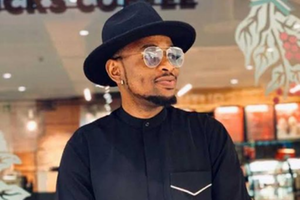
Musician Mr. Lenny during an interview on June 17, 2026 at Nation Centre in Nairobi.
Photo credit: Billy Ogada | Nation
How were you picking these collaborations?
The funny thing is that I was never picking them. Lucas was the one who usually picked the songs I would feature in. After we had done Githurai, he gave me a call one day and told me that he had a young man in his studio called Kunguru, who had an interesting style that would be a perfect fit for my voice. We started with “African Woman” then “Baby Don’t Go”, which was an even bigger hit. Later on, I met E-Sir ,who was the first person to produce an album under Ogopa. We became friends and, before I knew it, I was on “Kamata” with him. It was at this same time that I also met with Indiginas, introduced to me by Lucas, and we recorded “M.O.U”.
Did music change your life?
It absolutely did. I came from a very humble background that depended on our two elder sisters to sustain us throughout high school. When I finished high school, I saw myself as a man who needed to hustle and find his way around. Before I got into music, I would go to Gikomba to get clothes which I would sell to survive. Another time, I sold mandazis and samosas just to get along. God put me into music almost as a happenstance, but it would become my very destiny.
Do you have any regrets from your career?
My only regret is that we didn’t have social media. If we had social media back then, the mainstream music would have been as big as Naija music.
The music industry can be both rewarding and punishing for many an artiste. As a veteran, what advice would you give to an up-and-coming artiste?
Do not believe the hype. Fame can kill if you don’t learn how to master it. It makes you feel like a god and you may become too big, even for yourself. You will not always remain famous forever. Fame has messed up so many people I know, not just in music but even in sports and politics.
Why did you then take a musical break?
I started a family; my wife had given birth to my first-born son and I was newly married. I decided to put all my focus on my family. Music has a lot of distractions: drugs, women and attention that can easily derail a man. I didn’t want to be a part of the statistics.
How did you manage to stay grounded despite the distractions?
In my days with Ogopa, I was a teetotaler, I only started drinking recently. Even then, I wouldn’t call it my thing. I listen to my body when it refuses something, because I know it is trying to safeguard me. I have never smoked or done any hard drugs, they are just not for me.
The late musician E-Sir
Photo credit: File | Nation
I have an album that I have been working on for some years now, and I feel it is ready. It has 20 tracks, mainly different collaborations and works with different producers, which I want to share with my fans. I will be launching it on the 1st of August at Bla Bla nightclub in Westlands. The album is called Hisia Zangu and has collaborations with artistes like Kidum, Sage, Habib (the late E-Sir’s brother), a lady called Veryl Mkali Wao and a reggae artiste from Kisumu called Shamir just to name a few. It is a very diverse album from my perspective.
Which was your favourite collaboration?
I have to give all the artistes I worked with their flowers. Each brought a different kind of flavour to a song. But there are some that stood out for me. Mr Googz and Vinny Banton had some mad talent. They got saved and stopped singing secular music, but we keep in touch, especially with Vinny. E-Sir was an exceptional talent, there was a reason why Lucas had decided that he would be the first artiste under Ogopa Deejays to have an album.