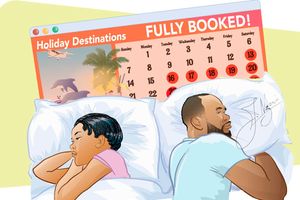
Marriage vows promise loyalty in sickness and in health, but little is said about what happens when the sickness persists into a permanent problem, consuming finances, intimacy, and identity.
Bogged down by the emotional, financial, and physical strain of caregiving, can a spouse be allowed to quit the relationship?
In Kenya, the answer is both firm and complicated. Illness on its own, is not a legal ground for divorce, but its consequences - how it reshapes behaviour and affects emotional and financial safety - can, in certain circumstances, open the door to a legal separation.
“Divorce is the dissolution of a marriage,” says Festus Muteti, an advocate of the High Court of Kenya and Managing Partner at F.M Muteti & Company Advocates. “The Kenyan divorce system is fault-based. You have to show a fault in the marriage that is recognised by law.”
These reasons include infidelity, desertion (where a spouse leaves the matrimonial home for at least three years), cruelty (which can be physical, emotional, or even financial), and what many people describe as an irretrievable breakdown of marriage.
This last ground applies when a relationship has lost affection, communication, intimacy, and shared decision-making to the point that it no longer functions as a marriage.
There is also the ground of exceptional depravity, which involves conduct that is intolerable.
“This one is assessed on a case-by-case basis,” Mr Muteti explains. “It could be conduct that is immoral, abusive, corrupt, or even against one’s religious or cultural beliefs.”
That said, illness cannot be a standalone reason for divorce.
“The courts have been very clear,” says Mr Muteti. “Claiming a sick spouse as a ground for divorce will not take you anywhere, nor will framing their illness as an exceptional depravity.”
What might be considered, however, is the conduct arising from the illness. For instance, if a medical or mental condition leads to persistent violence, emotional abuse, or intolerable behaviour, the law allows a spouse to rely on that conduct to petition for divorce.
Sharon Shisia, another advocate of the High Court of Kenya who is practising in Mombasa, agrees.
“The illness itself is not enough,” she says. “It needs to be shown that because of the illness, the marriage has reached a point where a recognised legal ground exists.”
What happens when 'happily ever after' starts to crumble?
Photo credit: Shuuterstocck
Insisting on the proof, she says that if caregiving has drained a spouse and pushed the marriage into some sort of strain, this may contribute to a claim that the marriage has irretrievably broken down.
“But the court must be shown the marriage has reached this point as a result of the illness,” she presses. “Concrete evidence is very important.”
And in the case where a divorce petition goes through and the divorce is granted, the experts say that obligations to keep giving care to the ill spouse do not automatically continue. According to Mr Muteti, while post-divorce maintenance (commonly known as alimony) exists in Kenyan Law, it is rare and strictly limited, especially on account of Article 45 of the Constitution, which states that parties to marriage are equal before, during, and after marriage.
“Alimony is an area where our courts have been very hesitant to recognise,” he expounds. “One has to demonstrate that they have been really disenfranchised by their partner in one way or the other and cannot be left as they are. But even when it is granted, it is time-bound - usually to allow someone to stabilise and stand on their own, not to support them indefinitely.”
Ms Shisia also adds that once a divorce is finalised, former spouses have to go through a different process of determining matrimonial property and, where applicable, child custody and support.
Interestingly, both lawyers note that sick spouses may sometimes have stronger legal grounds to seek divorce than their healthy partners.
“If a spouse is sick and they feel that their partner is not offering them the right care or emotional support, maybe they are being taunted, emotionally abused, or denied care, that would be sufficient ground for divorce,” Mr Muteti says. “In that case, the biggest ground would be emotional cruelty, but they have to provide admissible proof.”
Ms Shisia echoes this, noting that abandonment or desertion of an ailing spouse may itself become a basis for dissolving the marriage, provided it is properly and sufficiently proven.
In some cases, she adds, if the ailing spouse files for a divorce and the other spouse denies the claims and shows a willingness to mend the marriage, they might end up settling or agreeing on another way forward, rather than divorcing.
One final reality that the Mombasa-based advocate mentions is the fact that without a marriage certificate, there is no legal marriage and therefore, no divorce.
“One of the main documents they look at when you are filing for divorce is the marriage certificate,” she says. “If you did a traditional marriage and you do not have a certificate, your marriage is not legally recorded, so you cannot file for a divorce.”