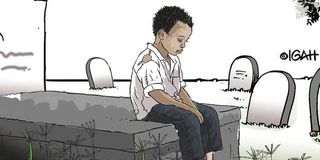
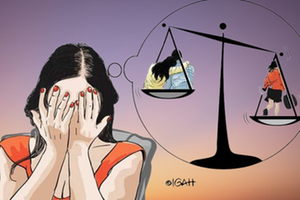
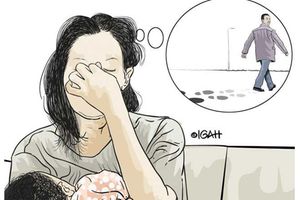
What should happen when a child who enters a marriage through the mother—meaning the child is not biologically related to the stepfather—is disinherited from the mother’s estate after her death, and the stepfather proceeds to use the mother’s assets and property to benefit only his biological children, excluding the child she brought into the union?
Children in blended families are recognised in Kenyan law as equal to all other children, regardless of biological connection. A child who enters a marriage through either parent is not a lesser member of the family; they deserve full recognition and protection. The Constitution places their rights at the centre of family and succession matters, and Article 53(2) makes the best interests of the child a non‑negotiable principle guiding all decisions affecting them. When read together with Article 27, the law’s commitment to protecting vulnerable children becomes clear: All children must be treated equally, and equality must be demonstrated through non‑discriminatory actions regardless of background, parentage, or circumstances of birth.
Dignity is the equaliser and the measure by which every person’s life must be valued. Accessing and sharing a deceased person’s estate is not only a final act of respect to the departed but often the beginning of hope for surviving children. Article 28 is therefore central to inheritance conversations, as it demands recognition of inherent human dignity. This means that posthumous care of a child through an estate must be anchored in Article 53(1)(e), read together with Article 28, ensuring that dignity and parental care continue even after death.
The Children Act obligates parents to adopt parenting measures that reinforce healthy child‑rearing, regardless of a child’s temperament or behaviour. It recognises children as equal members of the family and prohibits prejudice in access to family resources. It also requires children to balance their rights with responsibilities that support accountable parenting. Importantly, it places a duty on parents and guardians—including step‑parents—to act in the best interests of every child under their care.
Succession matters fall under the Law of Succession Act, which clearly defines who qualifies as a child for inheritance purposes. Section 3(2) includes biological children, children born outside marriage, adopted children, and children whom the deceased took into their family and treated as their own. A child brought into a marriage through the mother is unquestionably her child and must benefit from her estate. Such a child may also qualify as a dependant of the stepfather if, by conduct, they were treated as belonging to the family. Inheritance rights do not depend on the step‑parent’s approval, DNA, or personal relationship.
If the mother dies intestate, Section 35 of the Law of Succession Act governs distribution. The surviving spouse receives a life interest, not ownership, and cannot dispose of the estate as he wishes. All children of the deceased, whether from the current marriage or a previous one, are entitled to equal shares. It is unlawful for a surviving spouse to use the deceased’s property to benefit only his biological children while excluding the child who entered the union through the mother.
Assets acquired before the marriage remain the exclusive property of the spouse who acquired them, meaning a child from a previous relationship may inherit 100 per cent of such property. Assets acquired during the marriage belong jointly to the couple according to their contributions. In both cases, the surviving spouse holds the estate in trust for all children, and any contrary action amounts to a breach of trust and duty of care.
If a child is disinherited, the child or their guardian may file succession proceedings seeking recognition as a beneficiary and redistribution of the estate. If the stepfather obtained a grant without disclosing the child, the court may revoke it under Section 76 of the Law of Succession Act. The child may also apply for reasonable provision as a dependant under Sections 26 to 29. If the stepfather disposed of the mother’s property without authority, he may be reported for intermeddling, a criminal offence under Section 45.
Judge Benjamin Njoroge’s decision in Kuria v Irungu (Succession Appeal E028 of 2022), delivered on 13 March 2025, provides helpful judicial guidance. He discusses who qualifies as a child of a deceased person and clarifies the meaning of dependency in cases where estate management is conducted intestate. His reasoning affirms that children in blended families are entitled to full legal protection and cannot be excluded from inheritance based on biological ties alone.