We are eager to understand who is accountable for the tragic loss of life and property damage in Nairobi last Friday during the heavy rains. Your insights into the legal avenues available for us to engage the appropriate authorities would be immensely appreciated.
Disaster management and response are primarily the government's job and require teamwork from different fields and sectors.
The rainfall and sludge incident on March 6 highlights the challenges in governance, shaped by laws and organisational roles. While alternative dispute resolution methods can be more effective in achieving justice, it is not easy to single out and blame one specific government agency or department, making the Courts the best platform to pursue matters of this nature.
Article 1 of the Constitution asserts that all sovereign power in Kenya belongs to the people, who, by social contract, delegate this authority to state agencies.
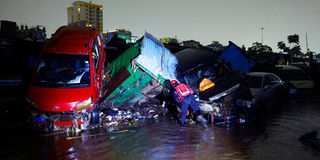
Members of the Kenya Red Cross search for bodies trapped in the wreckages of vehicles destroyed following heavy rainfall in the Grogan area, popular for automotive workshops and secondhand spare parts in downtown Nairobi, Kenya, March 7, 2026.
Photo credit: Thomas Mukoya | Reuters
The Constitution distributes power through duties and rights, ensuring individual rights do not infringe upon others. Rights compromised during the incident are safeguarded by the Bill of Rights. Article 22, Clause 1 grants individuals the right to pursue legal action against the government or others for breaches of these rights. Therefore, every person can hold the government accountable for failing to implement effective measures to prevent adverse outcomes.
In court, three key elements must be emphasised for each ground on which a petitioner seeks to proceed. First, the petitioner must provide clear evidence that supports their allegations.
According to Section 107 of the Evidence Act, whoever makes an allegation is responsible for providing proof. In rare cases, particularly in matters involving expert ecological issues, some judicial officers have deviated from this principle by requiring the accused party to demonstrate that their actions—whether through omission or commission—do not pose a threat to people or the environment.
Second, the petitioner should identify and target relevant government departments and agencies at both the county and national levels that are responsible for disaster preparedness and response. This is crucial for illustrating the necessary processes to the court and for emphasising any preventive measures that were overlooked.
Third, the petitioner must connect their allegations to specific agencies and their representatives, linking justice claims to those responsible, while quoting relevant laws and policies. This petition will be a call for improved city planning by including environmental principles that balance human and nature needs.
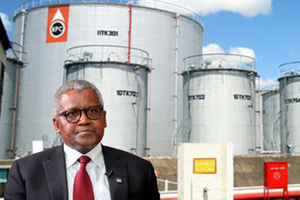
Printwell Industries Limited Managing Director Sharmila D'Cunha at the company premises on March 9, 2026. The firm incurred losses running into millions of shillings after last week’s heavy rains.
Photo credit: Bonface Bogita | Nation Media Group
The petitioners will urge the court to examine how development agencies’ anthropocentric approaches have harmed the environment. They will refer to Article 42(a), which guarantees the right to a clean and healthy environment, and Articles 69 and 70, which address natural resource management and environmental integrity. Additionally, they will demand accountability of State agencies, particularly the National Environmental Management Authority, regarding the duty of approving Environmental Impact Assessments.
Every government must provide social protection for all individuals, ensure their safety, and protect their inherent dignity. The petitioners will present clear evidence indicting the government, particularly the Ministry of Social Protection and related agencies, for failing to execute its responsibilities.
This claim will be based on Articles 43, 53, and 56 of the Constitution, which require the protection of children, besides the marginalised and vulnerable groups. Therefore, the government will be called out for not implementing important safety measures, thus exposing people to avoidable risk. Article 29 of the Constitution supports this by demanding effective safety systems and specific laws to close gaps in protection.
A man uses a rope to pull a container from flood water after heavy rains flooded a quarry within Kamulu area of Nairobi County, Kenya, March 6, 2026.
Photo credit: Monicah Mwangi | Nation Media Group
The petitioners will have to show the government’s four main legal responsibilities when creating and providing public services, especially in building supportive infrastructure. They will ask the court to rule that the government had a duty to all people who suffered losses, such as death, injury, or property damage.
They will submit that the government needed to ensure the disaster prevention and response system worked well and could help reduce the damage experienced. The petitioners will have to prove the government failed in this duty by not keeping the systems in good working order, coordination, and recovery.
Most importantly, they will have to show that this failure directly caused the incident. Additionally, the petitioners will need to point out that injuries can be both visible and invisible, including mental trauma from the event.
Under the law of torts, the government must show why strict liability principles cannot be applied, since infrastructure development is its initiative or is approved by it. This means the government's liability is nontransferable, even in the absence of intent to cause harm, because it concerns the public's interest.
In their closing arguments, the petitioners will ask the court to consider three main issues: The poor condition of the drainage system, the poor condition of the roads, and the ineffective disaster response. These problems are serious and have significant consequences.