Towards the end of 2019, Montessori Learning Centre (MLC), an educational institution based in Nairobi, approached the Kyuna Neighbours Association with a proposal to put up a branch in the area.
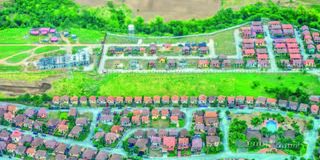
Located northwest of Nairobi, Kyuna is one of the few neighbourhoods near the city that has managed to maintain its leafy, serene features amid unprecedented urban sprawl witnessed lately with high rise structures.
Unlike nearby estates such as Westlands where tall buildings have become the norm, most of the homes in Kyuna still sit on half-acre plots with limited commercial activity.
When they received the proposal from MLC to put up a school, residents of Kyuna, through their association opposed the plan as it would be out of character with the neighbourhood.
They expressed concern that the school would result in traffic congestion, particularly in the morning and evening when students would be going to or from school, as well as noise pollution, due to construction.
“The investors were proposing to renovate an existing home and transform it into classrooms, then build a swimming pool and a football pitch,” said a resident who spoke to DN2 Property in confidence.
“If you build a football pitch, you are going to use it, if not for games, for other events such as weddings. I live near the school and so I was very worried about the noise that could emanate from such,” said the resident.
Since there were already several other schools within the neighbourhood, residents said the institution would not be of much value to them.
Despite their disapproval, the school went ahead to clear the land which they had acquired for the project, having received approval from the National Environment Management Authority (Nema) to cut a few trees.
“Nema allowed the school to cut about 14 trees, but they went ahead to cut more than 50 trees, so we took the matter up to the National Environment Tribunal (NET),” said another resident, who also spoke in confidence.
An architect drawing house plans at architecture studio.
Photo credit: Shutterstock
Whereas the nature of the proposed project required an Environmental Impact Assessment (EIA) Study and elaborate public participation to be done, residents told the tribunal that an EIA was never done and that instead of engaging the residents, the school invited parents of the enrolled students for their public participation event.
Subsequently, on July 5, 2021, NET issued restraining orders barring MLC from cutting down decades’ old trees. But according to the residents’ association, the school did not obey the orders, and proceeded to clear the land.
This prompted them to escalate the matter to the Environment and Land Court, where through their chairman Kimani Mathu, they asked the courts to issue a stay order, preventing the school from proceeding with the project, on grounds that it would not only harm the environment, but also materially alter the user of the land from a single residential to an educational use.
Based on court documents seen by DN2 Property, the residents association said excavating and construction would cause irreparable harm for which damages cannot be an adequate remedy. They claimed the issue was not monetary, but rather about protection and preservation of the environment.
While MLC was required to conduct a full Environmental Impact Assessment Study pursuant to Section 58(2] of the Environment Management and Co-ordination Act, residents claimed the school did not take that route.
According to home owners, despite the fact that the impugned approvals were dubiously obtained, in contravention of the Physical and Land Use Planning Act, MLC continued with excavation works and construction occasioning noise and excessive vibration making the neighbourhood un-inhabitable.
However, MLC, through its director Sahil Dodhia, said in proposing the project, the school had duly complied with all relevant laws and regulations and obtained all necessary approvals, including a change of user and approval of building plans by the Nairobi City County.
Additionally, the director said following a full Environmental Impact Assessment study by Greendime Consultants Ltd (a Nema accredited EIA/Audit Firm), Nema issued MLC a license on March 26, 2021, permitting the school to proceed with the project. Dodhia also claimed that as opposed to building a new structure all together, the school would simply renovate and transform an existing house in the neighbourhood into a classroom. This would ensure that the land use is not altered.
With 60 per cent of the renovation being done on an already existing structure and 80 per cent of the three acres of the subject property being left as green open space, the director said the project would be eco-friendly.
On the assertion that the proposed project would cause great loss and prejudice to the residents and the environment, the director said mitigation measures were submitted by the school in its EIA report before obtaining its Nema license.
Dodhia said the Kyuna association grossly violated the school’s legitimate expectation to conclude its construction project without disturbance, having obtained all the relevant approvals, permits and licenses from the requisite authorities.
This interference would result in financial losses to the tune of Sh120 million for the school, as it would lose existing students and would not be able to accommodate new ones.
The director further said halting of construction works would cause a loss of livelihood for about 26 employees who were employed in preparation of the daily running of the institution.
Since Kyuna residents had filed a similar case against the decision of the National Environment Tribunal over the construction, the High Court rejected their petition for a stay order.
While acknowledging the importance of the right of access to justice, the court emphasised that litigation must be conducted in good faith and within the confines of procedural and substantive legal rules.
The court found that there was no evidence to show that the Kyuna Neighbors Association took any steps to challenge the approval of the development through the appropriate statutory mechanisms under the Physical and Land Use Planning Act.
Rather, they first elected to proceed before the National Environment Tribunal, focusing singularly on the alleged irregular Nema issuance and attendant constitutional breaches.
The court found that the factual basis of the petition remained substantially unchanged from what was before the tribunal; thus the filing of the petition amounted to forum shopping and an abuse of the court process.
As such, allowing what the residents' association sought to do, which was to gamble with the judicial system and test their case in different courts, would set a dangerous precedent, opening the floodgates for litigants who, having failed to meet the strict procedural requirements under specialised statutory frameworks, would simply recast their grievances to circumvent lawful timelines.
This would undermine the finality of decisions made through statutory forums and weaken the structure of Kenya’s environmental and planning adjudication regime, bringing the administration of justice into disrepute.
Having spent more than three years back and forth in court fighting to save a place which they called home for years from turning into a concrete jungle, many of the residents of Kyuna were ordinarily not satisfied with the court’s decision.
To their reprieve, however, on the 5th of November this year, the residents received a ruling from the National Environment Tribunal (NET) barring MLC from proceeding with tree cutting and excavation until a final ruling on the matter was given.
Despite this, the residents allege that the school continues to chop trees, particularly in the evening, when they cannot be detected.
“We don't know what to do anymore because the courts issue a ruling, but the school continues to do what they are cautioned against. Our president talks about planting trees, yet here we have the authorities allowing trees to be cut, soon we are going to be a city without trees,” said a resident.
The dispute between Montessori Learning Centre and Kyuna Resident’s Association is not an isolated incident. Lately, as developers have rushed to capitalise on the increasing demand for space to live and do business in the city, cases of unplanned and unsustainable development have become far too common in the once leafy suburbs of Nairobi.
As air pollution and climate change increasingly become realities in the city, Roberta Maio, a Digital Rights and Inclusion Officer at UN-Habitat, says there is a need to balance the need for housing and infrastructure and the need to safeguard the invaluable ecological heritage that makes the city unique.
This balance can only be achieved through strong policy, transparent governance and active community participation. A multipronged approach centred on enforcing existing zoning laws and promoting sustainable development practices can help prevent unplanned development and safeguard the city’s biodiversity.
“Unplanned construction often results from weak enforcement or variances granted without due environmental consideration,” said Maio.
“Ensuring strict adherence to the Nairobi Physical Planning Handbook and other master plans, as well as establishing a transparent, digital permitting system, can minimise loopholes and track compliance efficiently,” she added.
The public, through their neighbourhood associations, should be granted access to these plans, so that they can act as watchdogs, ensuring proposed developments respect designated green belts and sensitive ecological areas.
Beryl Khanyile, Head of Country Program Office (Kenya) at UN-Habitat, says integrating a strong ecological component into all urban planning is essential, to achieving sustainable growth of our cities. This may involve incentivising green building designs that incorporate rooftop gardens, rainwater harvesting and permeable pavements.
"When residents feel a sense of ownership over local natural assets, they are more likely to protect them," said Beryl.
"Programmes that support local tree planting and ecological education within schools can strengthen the community's resolve to maintain biodiversity," she added.