For years, Kenya's property market appeared to move in one direction. Apartments dominated skylines in Nairobi's prime suburbs, promising investors quick returns while offering buyers an affordable entry into home ownership.
Today, however, the story is different. While cranes continue to dot neighbourhoods such as Kilimani, Westlands and Kileleshwa, buyers are increasingly looking beyond high-rise developments in search of space, privacy and a stronger sense of community.
The shift is now reflected in the latest data from the Kenya National Bureau of Statistics (KNBS), which shows standalone houses significantly outperforming apartments in price growth.
According to the Residential Property Price Index (RPPI), the average price of residential properties increased by 4.8 per cent between the first quarter of 2025 and the first quarter of 2026, driven largely by an 8.5 per cent increase in standalone house prices.
KNBS data shows that prices of standalone houses have risen by 20.4 per cent between the first quarter of 2025 and the corresponding quarter in 2026, while apartment prices have recorded only modest gains over the same period.
The figures point to a changing market where buyers are placing greater value on quality of life than proximity to the city centre.
Speaking to DN2 Property , Wambui Gaitha, Chief Executive Officer of Regal Africa Properties and Chairperson of the Estate Agents Networking Group, says today's buyers are no longer making decisions based solely on location. “They are looking for community. They want to know who their neighbours are, have outdoor space for their children and enjoy greenery. Those are things many modern apartment developments are struggling to provide,” she says.
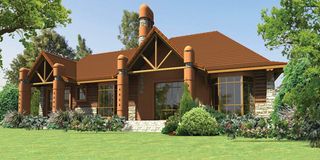
Walking on its lush green lawns, it feels like you are touching the heavens.
The growing demand, however, is meeting limited supply. For nearly a decade, developers channelled billions of shillings into apartment construction, particularly in Nairobi's high-demand suburbs.
As a result, relatively few new standalone houses entered the market. “The demand for standalone homes has increased, but developers have concentrated on apartments. That imbalance naturally pushes prices higher because supply is limited,” Ms Gaitha explains.
The oversupply of apartments, particularly one and two-bedroom units targeting investors rather than owner-occupiers, is producing the opposite effect.
“There are so many apartments coming up in Kilimani, Westlands and neighbouring areas that buyers now have plenty of options. Developers are finding it harder to sell units compared to a few years ago. Families are redefining value; unlike apartments, which are increasingly purchased as investment properties, standalone homes are largely bought for occupation. Young families are becoming more willing to trade shorter commutes for larger living spaces in satellite towns such as Kitengela, Ruiru, Kikuyu and Juja. Instead of paying premium prices for compact apartments, many buyers prefer houses with compounds, gardens and room for future expansion. Comfort has become an important factor.
The aerial view of Kitengela town in Kajiado County on December 1, 2025.
Photo credit: Stanley Ngotho | Nation Media Group
“People are willing to pay more for space, greenery, security and privacy. Many of today's apartments are designed for single professionals or young couples. Families with children want something different,” says Ms Gaitha.
Since many professionals no longer commute to the office daily, living 30 or even 40 kilometres from Nairobi's Central Business District has become increasingly practical. Longer travel distances are being exchanged for better quality of life.
Architects see a shift in priorities
Architect Vincent Ouma says the changing buyer behaviour reflects a broader evolution in how Kenyans perceive housing. “For many years, success in residential development was measured by density, how many units could fit on a piece of land. However, today, buyers are asking different questions. They want natural lighting, ventilation, outdoor spaces, flexible rooms for working from home and neighbourhoods where children can safely play,” says Mr Ouma.
He notes that the Covid-19 pandemic permanently altered housing preferences by exposing the limitations of cramped living spaces.
“People realised that a home is no longer just a place to sleep. It is also an office, a classroom, a recreation space and sometimes even a business location. Standalone houses naturally accommodate these multiple functions much better than compact apartments.”
Although a maisonette takes considerable space on the ground, it is still better than a bungalow.
Photo credit: Fotosearch
Mr Ouma believes developers will need to rethink future projects if they hope to remain competitive. “The apartment market is not disappearing, but future developments must focus more on liveability than simply maximising the number of units. Buyers are becoming more discerning.”
Expatriates adding to demand
The appetite for standalone homes is not limited to local buyers. Ms Ouma says expatriates relocating to Kenya increasingly prefer standalone homes because they offer experiences that are becoming rare in major global cities.
“Nairobi still offers leafy suburbs with mature trees and private gardens. Many expatriates appreciate that lifestyle and are willing to pay premium rents or purchase homes because they cannot easily get the same environment elsewhere.”
These buyers are particularly active in neighbourhoods such as Lavington, Nyari, Muthaiga, Runda, Loresho and Lower Kabete, where limited supply continues to support property values. Accessibility also plays a major role.
Neighbourhoods connected to the Nairobi Expressway, Waiyaki Way and the Northern Bypass remain attractive because residents enjoy relatively easier access to business districts while retaining spacious living environments. The changing dynamics are also reshaping investment decisions.