Hello

Your subscription is almost coming to an end. Don’t miss out on the great content on Nation.Africa

Ready to continue your informative journey with us?

Hello

Your premium access has ended, but the best of Nation.Africa is still within reach. Renew now to unlock exclusive stories and in-depth features.

Reclaim your full access. Click below to renew.

New Content Item (1)
Caption for the landscape image:

Why property investors are losing money and where returns still hold

Scroll down to read the article

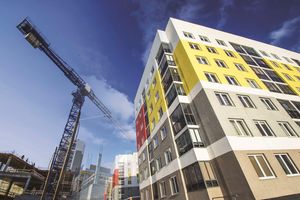
Overcrowded developments, poor layouts, limited natural light, and inadequate parking are making some apartments less attractive to tenants.

Photo credit: Shutterstock

For years, real estate in Nairobi was seen as a safe bet; buy, rent, and watch the value grow.

But that equation is increasingly under strain.

Across popular investment zones such as Kilimani, Kileleshwa, and Westlands, a growing number of investors are facing a harsh reality: rising vacancies, escalating service charges, and shrinking returns.

According to Roy M. Githaiga, founder of MUDA Design and board member at the Kenya Green Building Society, the problem goes beyond demand and supply.

“The Nairobi apartment market is not failing because of weak demand; it is underperforming because of systemic misalignment,” he says.

One of the biggest drains on returns today is high service charges, particularly in high-density apartment blocks.

Githaiga explains that many developments are designed with a short-term mindset.

“Most developments are optimised for capital expenditure rather than operational efficiency. Developers focus on minimising construction costs and maximising sale value, often neglecting long-term building performance,” he says, noting that this results in buildings that are expensive to run.

Poor ventilation, he says, increases reliance on electricity, inefficient water systems drive up utility costs, and poorly chosen finishes require constant maintenance.

Githaiga says shared amenities such as gyms and rooftop spaces often add to the burden.

“Features included for marketability are frequently underutilised and expensive to maintain, with investors ultimately absorbing the cost through elevated service charges,” he says.

Vacancies are another growing concern, even in prime locations. While demand for housing remains, many units are struggling to attract or retain tenants due to design flaws and pricing distortions.

New Content Item (1)

High land costs are also playing a significant role in shaping market outcomes.

Photo credit: Shutterstock

“A notable portion of vacancies can be attributed to design shortcomings and market structure issues rather than demand alone,” Githaiga notes.

Overcrowded developments, poor layouts, limited natural light, and inadequate parking are making some apartments less attractive to tenants. At the same time, pricing has become detached from reality.

“Units are often priced based on projected future value rather than current usability or rental performance. The result is a mismatch, prices exceed what the design quality justifies,” Githaiga says.

This results in empty units, tenant turnover, and declining yields.

“Investors inherit unpriced risk. Service charge inflation, maintenance burdens, and tenant churn are not factored into acquisition decisions, but they define actual return,” Githaiga says

In effect, what appears to be a premium investment can quickly turn into a cost-heavy asset with weak income performance.

According to Kenya Mortgage Refinance Company (KMRC) Chief Executive Officer Johnstone Oltetia, buy-to-let investments financed through commercial mortgages have become increasingly vulnerable.

Johnstone Oltetia.

Kenya Mortgage Refinance Company Chief Executive Officer Johnstone Oltetia.

Photo credit: File | Nation Media Group

“Buy-to-let on a commercial mortgage is one of the unsafe positions a household investor can take today,” he says.

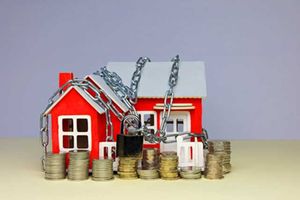
This, he says, is because such investments are exposed to multiple layers of risk simultaneously. Interest rate fluctuations can increase monthly repayments, while vacancies or tenant defaults can disrupt income flows.

When these risks materialise at the same time, the financial strain on investors can be significant. “Once rental income is interrupted, the mortgage obligation remains,” Oltetia says, adding that rising interest rates have amplified this pressure.

For investors on variable-rate mortgages, even small increases in interest rates can lead to substantial increases in monthly repayments.

“For a property owner on a variable-rate mortgage, every one per cent rate rise can push monthly repayments up sharply and erode disposable income,” he says.

This creates a scenario where investors are forced to cover shortfalls out of pocket, particularly when rental income is inconsistent.

In such cases, properties that were initially seen as income-generating assets can quickly become financial liabilities. The failure to account for the full cost of property ownership is also a big challenge.

Beyond the purchase price and expected rental income, investors must contend with service charge inflation, maintenance expenses, financing costs, and periods of vacancy.

“Investors inherit unpriced risk. Service charge inflation, maintenance burdens, and tenant churn are not factored into acquisition decisions, but they define actual return,” Githaiga says.

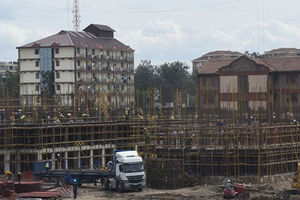
From a development perspective, high land costs are also playing a significant role in shaping market outcomes.

In prime urban areas, the cost of land has risen to levels that make it difficult to achieve attractive returns without pushing prices higher.

Kenya Property Developers Association (KPDA) Director Gikonyo Gitonga says that this has contributed to a slowdown in high-end residential segments.

“Where the market has slowed down is in high-income, high-value residential areas. The reduction of expatriates and international staff has affected demand,” he says.

He adds that while service charges are often cited as a concern, they are not necessarily the primary factor affecting returns. Instead, he notes, the high cost of land has a more direct impact on project viability.

“The value of land is high. So when you do a development, the land cost can be quite high, and it reduces your returns,” he says.

At the same time, not all developments are aligned with market demand. In some cases, developers proceed without sufficient market research, leading to a mismatch between supply and demand.

“Sometimes there is a mismatch, especially when developers have not undertaken sufficient market research to understand what is in demand,” he says.

Despite these challenges, the real estate market is not uniformly underperforming. It is becoming increasingly segmented, with a clear distinction emerging between performing and non-performing assets.

Performing properties tend to share a set of characteristics that align closely with tenant needs and long-term cost efficiency.

These include efficient layouts, good natural lighting and ventilation, moderate density, and the use of durable, low-maintenance materials. Such features help reduce operating costs while enhancing tenant satisfaction and retention.

“Tenant retention is driven by low daily friction, not visual appeal,” Githaiga says.

This marks a shift in tenant preferences, away from luxury and aesthetics toward practicality and affordability.

Location also continues to play a critical role, but in different ways than before. While high-end neighbourhoods are experiencing slower demand, lower- and middle-income segments are showing greater resilience.

According to Gitonga, suburban areas such as Ruiru, Kiambu, and Ruaka are still delivering steady returns.

“Low- to middle-income areas in the suburbs of Nairobi are still performing,” he says, pointing to consistent demand driven by local populations.

This trend reflects broader demographic and economic shifts, including rapid urbanisation and the expansion of the middle class. It also highlights the growing importance of affordability in shaping housing demand.

From a financing perspective, the strongest opportunities lie in addressing this underserved segment of the market.

Oltetia emphasises that while the property market has historically focused on high-end developments, the majority of demand comes from low- and middle-income households.

“Low- and middle-income households represent the largest share of effective housing demand, yet they remain underserved,” Oltetia says.

With Kenya facing a housing deficit estimated at approximately over two million units, and growing by hundreds of thousands each year, this segment offers significant potential for long-term growth.

“Resilience lies not only in the stability of current demand, but also in the scale of unmet need,” Oltetia says.

For investors on variable-rate mortgages, even small increases in interest rates can lead to substantial increases in monthly repayments.

Photo credit: Shutterstock

As the market evolves, it is becoming clear that the traditional model of building, selling, and exiting is no longer sufficient.

Increasingly, properties need to be viewed not just as products to be sold, but as assets that must perform over time.

“Projects are being conceived as financial products to be sold, not assets to be operated efficiently over time,” Githaiga says.

This shift in perspective is forcing both developers and investors to rethink their strategies. Efficiency, sustainability, and alignment with market demand are becoming more important than ever. At the same time, financing structures are evolving to support a more stable housing market.

KMRC is playing a key role by providing long-term funding to banks and saccos, introducing fixed-rate mortgage products, and ensuring liquidity during periods of market stress.

“Fixed-rate mortgages give households certainty over repayments, insulating them from interest rate fluctuations,” Oltetia explains.

Ultimately, the Kenyan real estate market is entering a more mature phase, one where returns are no longer guaranteed and must be carefully earned.

For investors, success will depend not just on location, but on a deeper understanding of how properties perform over time.

Design efficiency, cost management, financing structure, and alignment with real demand will determine whether an investment succeeds or struggles.

Follow our WhatsApp channel for breaking news updates and more stories like this.