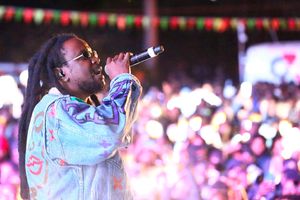
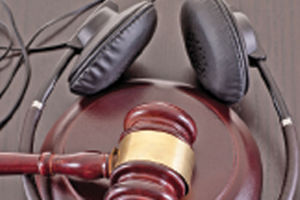
Kenyan musicians say they could lose up to Sh100 million after the High Court ruled that collecting royalties from hospitals is unconstitutional.
On January 29, 2023, then Youth Affairs, Arts and Sports Cabinet Secretary Ababu Namwamba issued a legal notice under the Copyright Act introducing a new consolidated music tariff that required hospitals and medical institutions to pay annual fees based on their classification.
The hospitals were required to pay from Sh50,000 to Sh1 million, depending on whether they were Level 1 or 6 hospital. Clinics, regardless of size, were charged a flat rate of Sh25,000.
In February 2024, the president of the Kenya Dental Association, Dr Kahura Mundia, filed a suit against the Cabinet Secretary, the Kenya Copyright Board (Kecobo), and three collective management organisations (CMOs), Kenya Association of Music Producers, Music Copyright Society of Kenya (MCSK), and Performing and Audio Visual Rights Society of Kenya.
Dr Kahura, backed by various medical professional bodies, including the Kenya Medical Association, Pharmaceutical Society of Kenya, the Kenya Medical Practitioners, Pharmacists and Dentists Union, the Kenya Healthcare Federation, the Kenya Association of Private Hospitals and the Rural Private Hospital Associations, claimed that since the tariffs were approved, health facilities had faced aggressive enforcement from officials identifying as CMO agents.
“Our members have received invoices from these bodies, sometimes accompanied by conduct that breached patient privacy and dignity,” Dr Kahura told the court.
He further argued that the CMOs had no legal basis to impose such fees as public participation had not taken place, and that the tariffs unfairly burdened hospitals with fees even higher than those paid by licensed professionals in the health sector.
“Having considered the pleadings and arguments by parties, the conclusion I come to is that the enactment of the tariffs did not comply with the requirements of public participation. The notice calling for comments was not published in a manner that would reach a wide section of the public. There was no evidence that the notice reached the public, and the three working days the notice gave the public and stakeholders within which to receive, read and submit comments were insufficient for a reasonable, meaningful and effective public participation. Thus, the process failed a vital constitutional requirement of public participation.”
He also found that the legal notice approving the tariffs had not been tabled in Parliament, violating a key legal step in the implementation of statutory instruments.
George Nyakweba, Kecobo’s acting executive director, countered that the tariff-setting process had been above board.
He cited a public notice published on November 18, 2022, inviting feedback on the proposed tariffs for 2023-2024. According to him, several stakeholders responded, but none from the health sector.
Maurice Okoth, CEO of the music producers association, backed Kecobo’s defence, citing the constitutional right of musicians to benefit from their intellectual property.
“Artists deserve to be compensated wherever their music is used, even in hospitals,” he said.
MCSK, the collective management organisation with the lion's share of members representing 16,000 musicians, denied accusations of harassment, while the Performing and Audio Visual Rights Society maintained that the public notice had been issued.
The CMOs say they understand the court's decision, but they face a sudden loss of revenue.
“We respect the court's decision, but it’s left us in a very bad place,” Mr Okoth told Nation , adding that the directive has stalled scheduled royalty distribution to members this month.
“We had already prepared the internal memos for disbursement. We’ve been forced to put the brakes on for now. This judgment changes everything.”
Mr Okoth laments that public performance licensing, which essentially is music played in public spaces such as hospitals, malls, bars and hotels, is the lifeblood of CMO revenue.
“Roughly 70 to 80 percent of our collections come from public performance. With hospitals out of the picture, we’re looking at a shortfall of no less than Sh50 million to Sh100 million. That’s money meant for producers, composers, and performers,” he said.
According to the World Intellectual Property Organisation (Wipo) Copyright Treaty, an international agreement that updates copyright for the digital age, even a TV playing music in a hospital waiting area qualifies as a public performance requiring a licence.
This is because it's a performance of copyrighted music intended for the enjoyment of staff, patients and visitors.
“We're planning to go back to court and seek a 60-day suspension of the judgment. Meanwhile, we’re reviewing the tariffs to reflect inflation and engaging new stakeholders, including pubs, bars, hotels, and yes, even hospitals again. Because the truth is, music can’t be free,” said Mr Okoth.
The MCSK acting chief executive, Richard Sereti, who took over following the ouster of Dr Ezekiel Mutua, blames Kecobo, the State copyright regulator.
“Kecobo is mismanaging CMOs, and this is yet another example of their failings that will create a crisis unless the Court of Appeal suspends the decision to allow collections to continue,” he said.
“Kecobo has made music be treated like government property to determine how much should be paid as royalties, yet this should be for copyright owners and users. The moment they changed the law to make the process pass through them, it meant that it had to go for public participation, yet they didn't have the resources and capacity to conduct a meaningful process that meets the Constitutional thresholds, and they didn't take the process seriously. For such a serious issue that concerns the welfare of musicians, there ought to be more time than the three days for an effective public participation to be conducted,” he adds.
But Mr Nyakweba, Kecobo’s acting executive director, defended the board.
“Our role is oversight. CMOs don’t operate in a vacuum. The judgment revoked the specific tariffs in use, not the collection of royalties entirely. The ruling means that until new tariffs are set, collection cannot proceed under the previous rates. We’ll issue a comprehensive interpretation once our legal team interrogates the judgment.”