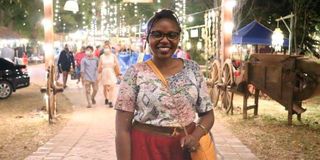
Eunice Wanjiku is a respectable name in Dublin, Ireland. At 36, she is a senior engineer at RPS Tetra Tech, overseeing mega water and sanitation projects in the country.
Before she went to Kenyatta University to study civil engineering, she wanted to pursue medicine. As a student at Loreto Girls’ High School, Matunda, she believed that medicine was her calling.
It is a thing of destiny, partly shaped by her family background—she comes from a family of engineers—and partly shaped by providence. Eunice believes that her path to the top is divine.
Once at Kenyatta University, she quickly discovered her passion.
“I wanted to work at the World Bank, specifically in sanitation,” she says. “I was very passionate about water, hygiene, and how that affects people’s health.”
Like many of her peers, she woke up to a sobering reality met by many graduates upon completion of college education.
“When I graduated, the reality was different. The World Bank wasn’t hiring fresh graduates like me. I first worked at a local consultancy, which gave me a start, but it wasn’t quite the global development work I had imagined.”
Her turning point came at the Nairobi Water and Sewerage Company, where she truly got immersed in her future career and the human connection of her work.
“At Nairobi Water and Sewerage Company, I was suddenly in the thick of it. It wasn’t about theories anymore; it was a full immersion into real systems, real people, and very real challenges.”
She was part of projects focused on urban water supply and sewerage networks in a city whose demand always outstrips supply.
“I worked with teams handling pipeline extensions, repairing burst mains, and improving access to water in informal settlements,” she adds. “It was eye-opening because sanitation issues in Nairobi are not just technical, they’re social, economic, and even political.”
Eunice Wanjiku, 36, a water and sanitation engineer in Bangkok, Thailand.
Photo credit: Pool | Nation Media Group
Beyond engineering, she found herself engaging with communities.
“You realise very quickly that clean water isn’t just infrastructure. It’s about trust. People want to know that when they pay their bill, water will flow, and that when there’s a sewer overflow, someone will come. I saw firsthand how critical sanitation is to people’s dignity.”
A few years into practice, Eunice desired to widen her expertise. She got a scholarship and took a study leave from work to further her education in Europe and Asia.
“I joined IHE Delft Institute for Water Education in the Netherlands, where I took my Master’s degree in water and sanitation.”
“We were people from everywhere — Asia, Africa, Europe, Latin America. It goes beyond classroom theories on engineering; it is also about how different societies approach water and sanitation, it is like having a front seat at everything I had wanted to learn and know about my path. It really broadened my global outlook.”
As part of the programme, she also studied in Thailand, which gave her firsthand insight into water challenges in Southeast Asia.
“Being in Thailand was different from Kenya or Europe,” says Eunice. “I saw how communities there were adapting to different water and sanitation issues. It made me realise that while the contexts are different, the underlying human need is the same — safe, reliable water and sanitation.”
Even with her new global perspective, leaving Kenya was not an immediate plan for Eunice. She wanted to use her newly acquired skills and knowledge in Kenya.
“I completed my Master’s degree during the Covid period, so I had to go back home. Additionally, since my employer had allowed me to go and pursue my Master’s, I had to first of all complete my bonding equivalent to the time I had been away.”
While serving her bond, conversations with classmates began to open new doors.
“My Master’s classmates mentioned that there are opportunities in Ireland, and they’re looking for engineers. At first, I didn’t think about it — I just wanted to be home and help my people. But then I started warming up to the idea.”
“I first discussed with my husband, who saw my vision and supported the idea.”
In 2023, as her bond was ending, opportunity came knocking.
Dublin wasn’t without challenges
“One time, I had just come from the office, and I saw a pop-up on my email — they were looking for engineers in Ireland. I just applied. Within a week, I had gotten an interview, and within two or three days, I’d gotten a confirmation that I had the job. It was that simple.”
She references providence again and credits God for a path that seemed already set up for her to follow.
“I keep saying my journey is about God, not by my own strength. It looks unreal for so many people, but that’s how I got the job.”
Once the job offer in Dublin came through, the next step was paperwork.
“Once I accepted the offer, they proceeded to process my work permit,” Eunice explains. “That allowed me to apply for my visa at the Irish embassy.”
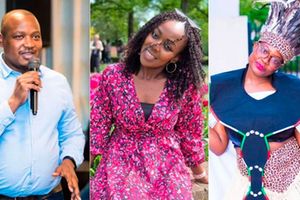
Eunice Wanjiku, 36, is a water and sanitation engineer in Delft, in the Netherlands.
Photo credit: Pool
She was granted a critical skills visa, designed to fast-track professionals in demand.
“It meant my family could join me immediately. The process didn’t take long, because with a critical skills visa, even the processing of documents is faster compared to, say, a student or tourist visa.”
Throughout, she kept her prospective employer updated.
“I kept informing them — this is where we are, this is when I have my visa appointment — and once I got my visa processed, we were in communication.”
By March 2024, she had relocated to Dublin and started her new role at RPS Tetra Tech.
“It was after my bonding period,” she adds. “So, I started the process of quitting in Nairobi and getting ready to relocate.”
The employer made arrangements for the first three months of her relocation. “It was a shared housing arrangement. I didn’t struggle with this because back when I was a student in the Netherlands, we had such a plan.”
Settling her family in Dublin wasn’t without challenges. Housing, she admits, was the hardest part.
“My husband and daughter joined me later in August. Housing in Dublin is a bit different from Kenya,” she says.
“Viewing houses is like applying for a job. You go, you get rejected, you don’t get the house, and it’s frustrating because you’re looking forward to having a place to settle.”
The experience was a shock. What made it bearable, she adds, was the support system she found in fellow Kenyans who had already relocated.
“They could point you in the right direction. If there’s a house, they’ll tell you, apply for this one. They helped me spread the word, and that support really buffered me. You don’t fall too hard when you have people walking the journey with you.”
Her next challenge would be finding a school for her daughter, which is tied to housing.
“Finding a place, however, was not straightforward because placement depends highly on your location.”
It took months of uncertainty, but eventually a slot opened up.
“We got an opportunity this September, and she was able to join in. The majority of schools here are government-funded, even daycare. You only start paying when they get to campus.”
A new continent and a fulfilling career, does Eunice have a tug toward home? “Yes, I miss home. I miss my family, especially my brothers and my dad.”
Eunice laughs, remembering a recent moment of nostalgia.
“One time we were at a mall nearby, and they were playing a Kikuyu song. I was so happy, I almost stood up to dance. It felt like I was back home.”
“I miss nyama choma, I miss Nairobi malls, and just being able to randomly speak Kiswahili and everyone understands you. And of course, I miss the sun. Those tiny things you take for granted at home, you realise they mean a lot when you’re away.”
To young engineers and girls chasing big dreams, she has this to say: “Dream. Write down your visions. Whatever vision you have, God will answer it. Don’t limit yourself.”