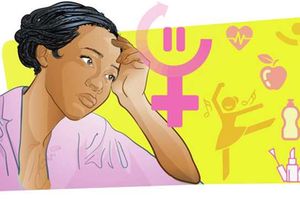
As hormonal levels change during menopause, they can affect the skin and how you sweat. As the body adjusts to this new phase, some women may notice that their usual body odour has changed.
But is there really a “menopause smell”? Or is the term simply an oversimplification of the changes that can happen to body odour during perimenopause and menopause?
“There isn't actually a medically recognised menopause smell, and there isn't one particular smell that women develop. But some women do notice that their body odour changes during perimenopause and menopause. Hormonal changes affect the skin and sweating, while hot flushes and night sweats can make you sweat much more than before,” explains consultant dermatologist Dr Roop Saini.
“The change that women notice can be very real, but it's more accurate to describe it as a change in body odour rather than a specific menopause smell.”
Dr Saini notes that oestrogen plays an important role in keeping the skin healthy. During perimenopause and menopause, oestrogen levels fall, leaving the skin drier and producing less natural oil.
The pH of the skin can also change. “This affects the environment in which the normal bacteria on the skin live, meaning the balance of these bacteria can change as well. At the same time, hot flushes and night sweats can cause sudden and sometimes quite heavy sweating,” she says.
Changes in the skin itself, the bacteria living on the skin, and how much a woman sweats can all influence body odour.
“Fresh sweat itself has very little smell. Body odour develops mainly when bacteria that normally live on the skin break down substances in sweat. Because menopause can change the skin’s natural oils, moisture and acidity, the balance of these bacteria can change too.”
As the body adjusts to this new phase, some women may notice that their usual body odour has changed.
Photo credit: Shutterstock
She explains that different bacteria produce different odour-causing substances when they break down sweat. “Add the more frequent sweating that can come with hot flushes, and it becomes easier to understand why a woman may suddenly notice that her usual body odour is stronger or simply different during perimenopause and menopause,” she says.
Does applying lemon juice to the skin help reduce the smell? “There isn't any good scientific evidence that it rebalances the skin bacteria or treats menopausal body odour,” she says. “Lemon juice is acidic and can irritate the skin, particularly sensitive skin or skin that has recently been shaved, such as the underarms. Citrus juice on the skin can also react with sunlight and cause a burn-like reaction, which can result in darker pigmentation being left on the skin.”
“Something being natural doesn't necessarily mean it's safe or beneficial for the skin,” she cautions.
Instead, she recommends keeping things simple. Gentle washing once or twice a day is usually enough. Pay attention to areas where sweat tends to collect, such as the underarms and skin folds, and make sure they are properly dried after bathing or showering.
Hormonal level changes during menopause can affect the skin and how you sweat.
Photo credit: Shutterstock
“If excessive sweating is the main problem, an antiperspirant can be useful,” she adds.
Dr Saini advises against repeatedly scrubbing the skin or using strong soaps and antiseptics, as these can irritate the skin and damage its natural protective barrier, potentially making the problem worse.
Still, she notes a change in body odour does not always mean menopause is the cause.
“If the change is sudden and very noticeable, persists despite normal hygiene practices, or is accompanied by other symptoms such as a rash, it is worth having the skin checked rather than simply assuming it is related to menopause,” she warns.
Sometimes a bacterial or fungal skin infection, or excessive sweating, can result in a change in body odour. Certain medicines and medical conditions such as diabetes and thyroid disease can also affect sweating or body odour.
“If there is a fever, rash, unexplained weight loss, excessive thirst or a general feeling of being unwell, see a dermatologist for a proper skin examination and evaluation to determine whether there is another cause for the change in body odour,” she advises.
She says body odour can change with age as the skin, natural oils and amount of sweating change. Menopause adds another layer because of the hormonal changes that occur, with some women also beginning to sweat more because of hot flushes.
“There is also considerable variation from one woman to another. Genetics, diet, medications, body weight, exercise, clothing, personal hygiene and climate can all influence body odour. In a hot climate, for example, sweating naturally plays a bigger role.”
Some women notice a significant change around menopause, while others notice very little or no change at all.
“Changes in body odour can happen around menopause, but a new or unusual smell should not automatically be blamed on hormones. If the change is sudden or persistent or particularly strong and is accompanied by other symptoms such as a rash, a fever or excessive sweating, it should be assessed by a dermatologist,” Dr Saini adds.