In his early thirties, Stephen ‘Waziri’ Giro speaks with the energy of a man who still has plenty of plans for his life. He is ambitious, passionate about his work, and determined to help young people struggling with addiction, a cause rooted in his own experience.
Stephen is the fifth-born in a family of seven and was raised in Kericho town. His father worked at a tea factory and was a hard-working, no-nonsense man who made sure his children went to school and had clothes to wear.
“One thing I admire about him is that he was a no-nonsense person because he believed in education and empowered us enough,” he recalls.
Stephen completed Form Four in 2014. Although he had scored a mean grade above C plus, financial constraints at home meant he could not join university. The following year, in 2015, a friend from his village invited him to Nairobi. With no college education or work experience, the jobs available to him were mostly casual, working as a watchman, construction worker and doing other similar jobs.
In September that year, his friend took him to a construction site in Westlands. He worked there for three months, earning about Sh400 a day. It was there that a friend introduced him to something that would gradually take over his life: betting.
“I’ve never been a drug addict, whether smoking or drinking, but a friend of mine at the site introduced me to betting.”
At the time, betting had not yet become as deeply integrated into smartphones as it is today. Every Saturday, after receiving their pay, the workers would look at the newspaper, select teams and place bets.
Stephen's first bet was Sh100 on 11 teams. He won Sh4,800. That win changed the way he looked at betting. Every weekend, after receiving his pay, he would place a bet. Eventually, because different teams were playing almost every day, betting became a daily activity.
By 2016, he had moved into his own house and was deeply involved in gambling. “I could not even buy a shoe for myself,” he says.
“One thing I have learnt with wealth is that it doesn’t come overnight. If there is a gambler who thinks they will get up today or tomorrow so rich, then they need to change their mindset. There is nothing that comes from gambling,” he says.
His gambling also began affecting his work. He started missing casual jobs. In 2017, he found another job at a hardware shop, earning Sh18,000 a month, but instead of becoming more financially stable, the new income allowed him to gamble with larger amounts.
“I used to go to work and influence my other colleagues into betting. I would help them analyse the teams and give them ideas on how to bet. So even at work you would get everyone on their phones betting, and no work was being done.”
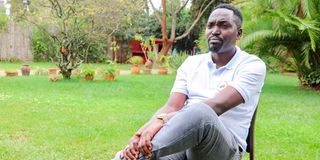
Stephen Giro, a recovered gambling addict and founder of the Waziri Organisation, during an interview in Gigiri on September 23, 2026.
Photo credit: Dennis Osongo | Nation Media Group
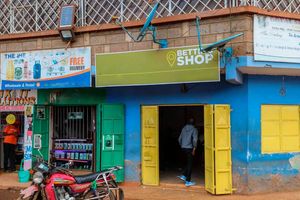
In 2020, he lost his job. Without an income, he lost his house because he could no longer pay the rent. He would still visit betting shops in the neighbourhood. By then, he had developed a group of friends through betting. When he had no money, he would stand around the betting shops and wait for someone to win.
“If someone won a bet, they would lend me like Sh50, and I would place a bet. If I won, I would return the money and place another bet, and the cycle would continue.”
Around this period, he met the woman who would become his wife. She was then his girlfriend and hosted him in her house. For almost two years, he continued gambling without her knowing how deeply involved he had become.
In 2021, he got another job, this time as a security officer, earning about Sh45,000 a month. It was a better salary, but his gambling followed him to the new workplace. He introduced others to the habit, and by then they were playing games such as “Paka Kumi” and Aviator. He says he would sometimes put half of his salary into betting. In 2023, after his wife delivered their first child, the job ended. This time, there was no savings to fall back on and no money to meet the needs of his family. His wife realised the extent of his gambling, and the two separated.
“Betting comes with a very strong feeling. You develop a weird lying character trait. You can even call a friend and tell them that you have been arrested so as to get money for betting. My family members even got tired and disconnected from me.”
At one point, he told his wife that thieves had broken into their house and stolen everything. The truth is, he had sold the household items for Sh25,000 and used the money to place a bet that he lost.
“You see, when you deposit money and it’s in your phone, that’s your money, but when a gambler puts money in his phone, he looks at the money, deposits it in a betting account to get more money.”
He says that when gambling takes hold, even a phone can become a source of money.
“If I had a phone today, I’d sell it tomorrow, so it’s very hard for gamblers to even have a phone,” he adds.
In 2024, during the Gen Z protests, he took to the streets to protest. He describes himself at the time as rowdy and careless. His intention, he says, was to cause chaos, get paid and use the money to gamble. One night, he began thinking about where his habit had taken him.
Stephen Giro, a recovered gambling addict and founder of the Waziri Organisation, during an interview in Gigiri on September 23, 2026.
Photo credit: Dennis Osongo | Nation Media Group
By then, he says, his hair had turned grey, and he would sweat at night because of depression.
“I tried not once, twice, or three times - I almost committed suicide because I saw that no one wanted me. I was alone.”
Kicking the addictive habit did not happen overnight. If he had been placing a Sh1,000 bet, he gradually reduced the amount until he reached a point where having money no longer meant putting it into a betting account.
Additionally, he went to the Betting Control and Licensing Board offices and blocked his betting accounts. He also asked to have his picture taken for identification at betting shops so that he would not be allowed to gamble there.
“That’s how I started the Waziri organisation in August 2024 with six of my friends whom I would bet with.”
The community-based organisation now has almost 300 members, some of whom are still recovering from different addictions. Its work includes empowering young people through civic education, mental health awareness, gambling and drug and substance abuse.
But even after starting the organisation, his own recovery was not linear. He relapsed in February 2025, after getting another job. He placed a bet worth Sh40,000, only to lose all of it. In March, he relapsed again. Since then, he says, he has not looked back.
He also reconciled with his wife. They are now raising their two children together and serving together in the organisation.
Looking ahead, Stephen says he wants to leave a legacy for future generations and sees himself becoming a leader. That ambition has also taken him back to school, where he has enrolled on a course in community development and project management.