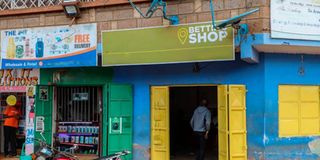
It is 11am on a Tuesday in Congo, a low-income area in Nairobi’s Kawangware. Within a radius of 150 metres, there are about 10 betting shops. Hundreds of littered ticket papers are the first things you notice on the floor of these shops. Huge screens are mounted on walls and computers placed on top of dirty tables, most of them in higher positions for the bettors to stand while indulging in this vice. The queues are disturbingly long, a mixture of old and young people.
About 95 per cent of the bettors are men. In the first betting shop, we count over 100 people aged between 20 and 60, queuing both inside and outside the shop.
Sadly, for a sector where gamblers were paid Sh269.3 billion in the year ended December 2019, according to regulatory data, and the monies rising year on year, the bettors look like paupers and desperate.
Almost everyone in here has unkempt hair, and the dressing is shabby, save for the women who are working as betting cashiers.
The bettors are all glued to the screens, watching the matches and patiently waiting for a win. This is our first time in a betting shop and our first-time gambling.
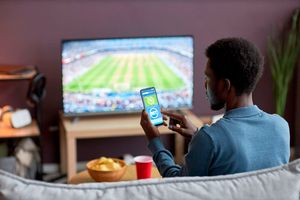
Gambling is presented as a form of entertainment and comes with a disclaimer to ‘indulge responsibly.’
Photo credit: Shutterstock
A cashier is standing at the door. She picks only cash. For those who have no cash, there is an M-Pesa conveniently just next to the betting shop.
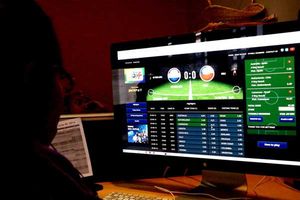
We knew nothing about betting, so we asked the men, who, in an overfriendly manner, explained the nuts and bolts of how one wagers on a match. We had the option to pick between football, aviator, basketball and a draft game. We picked live football matches.
One man happily explained what 1, X, and 2 meant. For context, 1 means home, X means draw, and 2 means away.
Just like the rest of the men, we sat and waited for a bonanza. You either shout your picks (selections) to the cashier or, if you are a gambler, note your predictions down in a notebook. I opted for the former. The games are usually displayed for five minutes. There are 17 games in total, from different leagues, the English Premier League, Serie A, Bundesliga, name them. After five minutes, the games on your screen go into a three-minute countdown. Split into two, first half and second half, just like a normal match, the only difference is the time. They play for those minutes, and in three minutes, you will know your outcome (s). If you win, you claim your winnings from the cashier. However, there is a disclaimer; they cap your winnings.
We lost, but wondered what if we add more money, perhaps the odds will be in our favour?
It is this hope that one minute or one day you will wager and win millions of shillings, often advertised, that keeps drawing many Kenyans to these betting shops.
With over 200 licensed betting firms in Kenya as of the end of 2024, more than double the number in 2021, thousands of shops have now been set up at the doorsteps of gullible Kenyans. You walk in, and no one checks your ID or age, so even teenagers can easily get involved in this vice.
Of concern, counsellors warn that many bettors fail to recognise when casual gambling quietly slips into addiction.
Gloria Bande, a gambling addiction counsellor at Fountain of Hope in Nairobi, says she is most concerned about Kenyans aged 25 to 35.
As the head of counselling and rehabilitation services, she has seen a growing number of addicts.
“Many people are suffering in silence,” she says. “They do not know that help exists, and some situations end in very painful outcomes like suicide,” she says.
According to her, a National Problem Gambling Awareness Month could shine a spotlight on the issue and end the silence around addiction.
“We see about five cases in a week, though the number could be higher. Stigma pushes many into hiding. People fear being judged or seen differently, so they choose to keep quiet instead of seeking help,” she says.
So, how do you know betting is turning into an addiction?
Unlicensed gambling dens have mushroomed across towns.
Photo credit: File | Nation Media Group
“This person stops paying bills or uses his savings,” she says. Another sign is chasing losses. “They lose money and try again, hoping to win it back, but it becomes a cycle.” Over time, secrecy follows. “They start hiding what they are doing. If you ask about money, they give excuses instead of telling the truth.”
“Betting may look fun, but it can become harmful very quickly. If you’re not an addict, you should be okay whether you win or lose. And you should be able to stop.”
Addicts’ behaviour changes. “They isolate themselves, either to gamble in secret or because they are dealing with losses,” she explains. Mood changes often follow. “They may become more irritable, stressed or angry.”
Helping addicts is not always easy, especially if they do not accept that there is a problem.
However, Gloria says there is hope, and the first step is to guide them towards counselling. “In counselling, they learn to see their patterns and understand what is happening,” she explains.
Simple steps can help, such as planning how money is used and having someone to talk to when the betting urge feels strong. “You can pause and ask yourself, do I really need to do this?” she says.