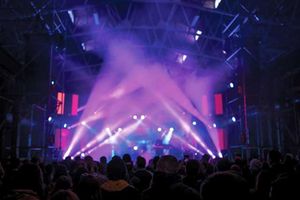
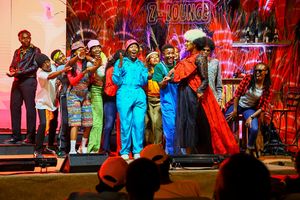
On Thursday and Friday last week at 11 pm on Nairobi’s Uhuru Highway, the streets were unusually lively.
A wave of young men and women, some with red hair, short hair, in crisp shirts and trendy fits, were making their way into the Central Business District (CBD), their voices rising above the late-night traffic. “Receive grace.” “Jesus loves you.” “Say thank you.” “Sorry”.
They were echoing words from the closing teachings by Joshua Selman, a renowned Nigerian preacher, at the finale of Rhema Feast, a Christian festival that felt more like a cultural awakening.
Hours earlier, many of them had packed their water bottles, Bibles, and highlighters into tote bags, closed their businesses, skipped office shifts, or stepped away from nail parlours and TikTok screens, all to gather at Uhuru Park for the five-day revival. Others tucked things like court papers, job applications, passports and even bridal veils into their bags –symbols of prayers they hoped would be answered during the “Hallelujah Challenge.”
For a generation that is often accused of drifting away from church, from morning to midnight, they came in their thousands, turning up in full force for the joint ministry of Nigerian gospel stars Nathanael Bassey and Joshua Selman.
Faithful attendees at the Rhema Feast event held at Uhuru Park in Nairobi on September 5, 2025.
Photo credit: Bonface Bogita | Nation Media Group
Smartphones were raised high for TikTok, Instagram, and YouTube lives. And the spiritual fervour collided seamlessly with Nairobi’s hustle. Hawkers sold food, bottled water, and flags of Kenya, Tanzania, and Nigeria, while boda boda riders made brisk business ferrying worshippers from the CBD to Uhuru Park.
One such trader, Mark Kariuki, stood with just two whistles left out of the 100 he had brought by 7am. “I wish this event would come again next year. I have never seen such sales in such a short time,” he said.
When the young people streamed into Uhuru Park for Rhema Feast 2025, the mood was nothing like a routine Sunday service. The revival ran for five days, mixing worship, prayer, business forums, and even charity drives.
For many in the crowd, it was their first taste of a gathering that has quickly become one of the biggest fixtures in Kenya’s Christian calendar.
The surge of interest in revivals like Rhema Feast speaks to a shift in how young people are engaging with faith.
Gospel Singer Jackline Medza performs during the Rhema Feast event at Uhuru Park in Nairobi on September 5, 2025
Photo credit: Bonface Bogita | Nation Media Group
Many say the gatherings gave them what traditional church no longer does: a sense of belonging, an encounter with God that feels alive, and a space where their struggles and hopes are understood. In a time of uncertainty and social pressure, the revival is fast becoming a refuge and a rallying point for Kenya’s youth.
Faith Manyonge was one among the many youth who have attended a revival ministry for the first time. She admits she cannot quite explain how she ended up there.
“Maybe I was spiritually led,” she says. But what she does know is that the five-day gathering at Uhuru Park left her changed. She arrived with “a heart troubled with a lot of anger and bitterness,” but by the time the revival was over, she says she had found “absolute peace” and a new mindset.
Faith recalls the atmosphere as “electric… divine,” filled with worship, prayers, business forums, counselling sessions, and donations to the vulnerable.
Unlike an ordinary Sunday service where the programme feels predictable, she describes Rhema Feast as “a changeover meal” — a moment of renewal. She remembers the music most vividly, especially when Nigerian singer Nathaniel Bassey blew the trumpet. “Oh my goodness, you could feel like heaven was touching earth,” she says.
The service, she adds, was more than just a spectacle. It shifted how she viewed the church and its ministers. “It was no longer transactional, not about giving to receive,” Faith explains.
“The intentions were pure. My perception of things changed — about the church, about ministers, about prayer life, which had long died. I can say revivals are deeper, carrying a different weight compared to ordinary events.”
To her, the draw for young people is clear: revivals offer belonging and authenticity.
“The ministers relate the word in such a way that we find it palatable,” she says.
“We feel understood, not judged. Tomorrow’s church is based on our generation, and the earlier we find belonging in revivals like this, the better. Rhema Feast was no hype — it was truth, clarity, and a confrontation with Christ.”
For Roy Mwangi, the pull of Rhema Feast was not new. He had first attended the revival in 2022 when it was held at Nairobi’s Kasarani, and even when he couldn’t make it in person in 2023 and 2024, he followed the services online. This year, the decision to show up at Uhuru Park felt inevitable. “I have always known the excellence and the standards to expect,” he said.
“The depth of the teaching, the quality of the worship, the different ministers and music ministers that are invited, the sense of community it fosters — all that made me want to experience it first-hand. And having it right at Uhuru Park, which is accessible to anyone, even someone coming from as far as Rongai, made it easy to be there.” For him, it was more than just an event. It was a chance to step away from routine life and immerse himself in an atmosphere that felt alive.
“Compared to a normal Sunday service, Rhema Feast is like shifting into a higher gear,” Roy explained.
“The joy and unity in that huge crowd, the thousands gathering with so much expectation, you could tell the hunger in the room, how people really wanted to experience their God. People even took a whole week off work, like I did, because it’s more of a festival of faith than just another service.”
There were moments that stayed with him long after the revival ended. One of them was Kathy Kiuna’s sermon, the bishop of JCC Parklands. She brought together representatives from Kenya’s 42 tribes to emphasise unity in diversity.
“That stood out for me,” Roy said. “She reminded us that diversity is there to be enjoyed and not to be fought. In a country where elections always drag us back into tribalism, that message was powerful. I even shared the clip on my socials because I felt every Kenyan needed to hear it.”
For Roy, revivals like Rhema Feast strike a chord with young people in ways that traditional churches often don’t. “Rhema Feast addresses the realities of young people, purpose, faith, and navigating challenges in today’s world, in a language we understand,” he said. “In most churches, youth are treated like a department, separate from the mainstream congregation. But here, the message speaks to everyone. The sermons are relatable, and having youthful ministers like Tim Wangi, a pastor, makes a difference because he speaks from a place we can connect with.”
The blend of worship, preaching, and community was what transformed the experience into something deeper. “I can’t really separate them,” Roy admitted.
“The preaching gives wisdom and direction, the worship connects me to God, and the community reminds me that faith is not a solo journey. You leave with practical tools for life, not just an emotional high.”
That sense of belonging, of being part of something bigger, is what keeps him coming back. “It reminds you that you are not walking alone,” he said. “In a world where many young people feel lonely, Rhema Feast makes you part of a bigger story. You show up and realise thousands of others are on the same faith journey. That sense of belonging is priceless.”
For Roy, the impact goes beyond the event itself. He left Uhuru Park with a renewed resolve to be intentional about prayer, fellowship, and living with purpose. “It drew me closer to God,” he said. “The messages, the miracles, the atmosphere, all of it confronted me with the reality of God’s love. It’s not just hype, because hype fades quickly. But when you see thousands staying at Uhuru Park until 11 pm in prayer, when you witness lives being transformed, you know it’s real.”
And it’s not just about him. He believes many young Kenyans are turning up at revivals for the same reason: “People are hungry for authenticity,” he said.
“They’re looking for meaning, for excellence, for community, without the drama that sometimes surrounds church. Rhema Feast offers all that. It’s a place to reset, to regain hope, and to find practical wisdom for life. That’s why young people keep showing up.”
As for next year? Roy has no doubt. “I’ll be back,” he said firmly. “Every year has been impactful in a unique way. Rhema Feast is not something you outgrow. It’s where you go for renewal.”
Among the tens of thousands who were present was June Emma, aged 22. Her week had been bad; she lost her job. The weight of joblessness disturbed her. She spent hours online, scrolling, looking for something to take her mind off her problems.
“I didn’t even know Rhema Festival was happening until Wednesday,” she said.
“Then, on Thursday, I saw it streaming live. On Friday, I just kind of thought to myself, why not go? Maybe this is what I need right now.”
She sat quietly at first, not sure she should be there. But when the crowd erupted into singing, arms raised in worship, something shifted.
“The way they marched, the way they prayed, the way they worshipped, it was different,” June explained.
“I don’t know how to describe it. But I felt lighter, like I wasn’t carrying my troubles anymore.”
For June, the festival was not just a distraction. It was a healing time. “I was coming here with weights,” she admitted.
“But when I was leaving, I was a new me. Like I started a new page.”
She was most moved by Bassey. “There’s just something about him,” she says, smiling. “His presence, his words, you feel them. I had only ever seen him online on YouTube. Seeing him here was something else.”
It was something new to her. “Rich, poor, old, and young we all pray together,” she said. “Everyone at Rhema is the same.” “You don’t get judged,” she said. “You just get welcomed. Most of us are struggling with stuff,” June admitted. “Unemployment, stress, home problems. But when you’re here, you forget for a moment. You feel like you belong to something more.”
As night fell and the festival lights grew dim, June stood in silence on the edge of the crowd.
“It changed my faith. I’ll be back next year,” she said with a small laugh. “Hopefully, I’ll have a job by then. But no matter what, I’ll still come.”
Not far away in the same crowd stood Moses Khamala, 25. Unlike June, this was not his first time.
“Last year was my first visit to Kasarani,” he recalled. “What I saw and heard that day, I knew I would be going to every Rhema Festival from then on.”
This year, even after travelling upcountry, he made sure that he returned on time. “I couldn’t have missed it,” he said. “I came back early so I could be there at least on the last day. And even for one day was life-changing.”
For Moses, the atmosphere is what makes Rhema stand out.
“It’s not your average Sunday morning service,” he explained.
“The energy, the worship, the preaching, it’s powerful. When Pastor Nathaniel got on stage and ministered, everyone was lifted spiritually. You could feel it in the air.”
But it was the sermon that touched him the most. He remembered Selman’s message. “He preached on little things we take for granted to say thank you, sorry, I love you. Things we think are too small. But he explained how much they mean. I think a lot of people in the audience understood, and I did.”
“I believe young people attend because they know that only God is able to help,” he explained. “We have tried so many things. But ultimately, it is only here that you find peace.”
Moses says, “teenagers need this too.” “It has nothing to do with worship. It’s about belonging. About knowing you’re not alone.”