Hello

Your subscription is almost coming to an end. Don’t miss out on the great content on Nation.Africa

Ready to continue your informative journey with us?

Hello

Your premium access has ended, but the best of Nation.Africa is still within reach. Renew now to unlock exclusive stories and in-depth features.

Reclaim your full access. Click below to renew.

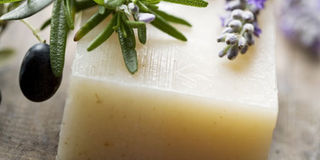
My children eat soap

PHOTO | FILE Most pica cravings involve non-food substances.

Sona Parmar Mukherjee answers your questions

Q: I do not know why, but my three-year-old son and one-year-old daughter eat soap. Do you think it is because something is missing from their diet?

A: What you describe is called pica, an eating disorder where people frequently eat non-nutritive (non-food) substances. The word pica is Latin for magpie, which is a bird notorious for eating almost anything. Most pica cravings involve non-food substances such as dirt or chalk.

Eating non-food substances is potentially harmful, as it can interfere with the nutrient absorption of healthy food and cause a deficiency. Pica cravings are also a concern because non-food items may contain toxic or parasitic ingredients.

Fortunately, in your children’s case, soap is not a very dangerous substance. It is generally non-toxic and should not lead to poisoning.

However, in large amounts over time it could disrupt their health, causing diarrhoea, vomiting, and/or skin irritation.

While we do not really know what causes pica, nutritional deficiencies may contribute to the desire to eat non-food substances. Iron, calcium, zinc, and vitamins C and D deficiencies have been found in people with pica.

Interestingly, some experts believe that cats and dogs that eat soap do so because soaps contain solid fats and oils. For this reason, it may be possible that your children have low levels of fat-soluble vitamins like vitamins A, D, E, and K.

So, in addition to steering them away from the soap, I would suggest adding good fats like nuts, seeds, olives, and avocadoes to their diet (make sure the nuts and seeds are not roasted as this damages the good fats inside). You may just find that their craving for it subsides.

Q: I have a very embarrassing problem. I have no control over my farts. I have incorporated more fruit and vegetables into my diet and even seen numerous doctors, but found no solution yet. Please help, I cannot stop farting!

A: It is easy to laugh when you read this, but how many times have we all found ourselves in this situation after eating something that does not suit us. Now, imagine being like that all the time. In fact, a patient I saw yesterday suffered from the same problem and the word she used was “uncontrollable” and that the smell is what made the problem very embarrassing for her.

Let me start by giving you a bit of background on the large intestine and the micro-organisms that live there. The large intestine, or colon, contains huge numbers of bacteria and fungi (known as “bowel flora”), and our health is profoundly affected by the composition of this population. The “good” bacteria that live there not only help with producing vitamins and helping digestion, they also help to stimulate the immune system and control the numbers of potentially harmful micro-organisms.

Now, when you take a course of antibiotics or other medication like steroids, the drugs kill the bad bacteria and the good bacteria too. And with the good bacteria gone, the bad bacteria start multiplying and as they respire, they create gas — the very gas that you were talking about.

This is where a probiotic comes in — it is a nutritional supplement designed to replenish the good bacteria in the gut. There are plenty of products on the market with this, so when you are choosing one, pick one that contains 10 billion bacteria (do not worry, it is just one little pill).

The writer is a clinical nutritionist and certified by the Nutritional Therapy Council in the UK. Please direct any questions about family nutrition to her on [email protected]