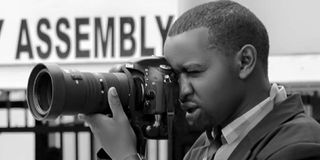

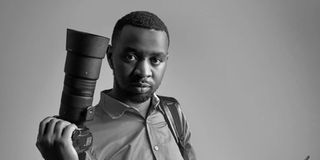
Moses Mbugua, 28, runs a photography business in Limuru town. He learned the art of photography from his father, and as they say, knowledge passed from the old generation to the young is priceless, although disruption can happen along the way, making such knowledge archaic unless one can invent and innovate in this age of technological advancements.
How long have you been in this business?
For seven years. Since the inception of Imara Studios Photography, I have strived to create a brand that not only captures moments but also tells compelling stories through images.
What inspired you to enter the world of photography?
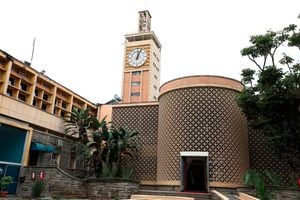
It all began with my father, who was a passionate photographer. Watching him work and seeing the joy his photos brought to others sparked my interest at a young age. The pivotal moment in my career came in 2017 after the Kenyan General Election. I was honored as the best photographer in Kiambu County. This achievement was significant as I was entrusted to document the induction of county assembly members—a task that not only showcased my skills but also placed me in a prominent position within the local photography community.
Which events do you cover mostly? What determines how much you charge for a given event?
I focus on weddings, cultural rituals, and life events like anniversaries and graduations. The pricing for each event is determined by several factors, like the complexity of the event, the duration of coverage, the location, and any special requests from clients. I aim to provide tailored packages that reflect the unique nature of each event while ensuring that my clients receive exceptional value for their investment.
In this age of artificial intelligence, do you think careers in photography will soon be irrelevant?
I am confident that AI will not replace human creativity in photography and art. While AI can generate images, it lacks the emotional intelligence, personal touch, and storytelling ability that a human photographer brings to their work. Photography is about capturing genuine moments and emotions, and that essence can only be conveyed through a human lens. The artistry involved—understanding light, composition, and the intricate dynamics of human interaction—remains unparalleled.
What are some of the lows and highs in your photographic career?
The highs include receiving awards and recognition, which validate my hard work and dedication. Capturing joyful moments for clients, such as weddings and milestones, is incredibly fulfilling. However, the lows can be challenging; for instance, dealing with fluctuations in demand due to seasonal changes can create uncertainty. Additionally, navigating the pressures of running a business, including marketing and client management, can sometimes feel overwhelming, but these experiences have ultimately contributed to my growth.
What are the best seasons when demand for your services is high?
The peak seasons for my services are April, August, and December. These months are particularly vibrant in Kenya due to various cultural and religious celebrations, as well as the wedding season. During these times, I find myself fully booked, capturing the essence of love and community, which makes my work all the more rewarding.
Do you reinvest profits in the business or in a different income stream?
I reinvest profits back into Imara Studios to enhance my equipment, upgrade my studio space, and expand my service offerings. This reinvestment is crucial for maintaining high standards and staying competitive in a rapidly evolving industry. I also explore opportunities for passive income through workshops and online courses for aspiring photographers.
What business lessons have you learned along the way?
Networking is essential. Building relationships with clients and fellow creatives can lead to referrals and collaborations. Understanding client needs is paramount. Listening to their stories helps create a personalised experience. Additionally, continuous learning is vital—staying updated with industry trends and techniques ensures that my work remains relevant and innovative.
What would you advise one seeking a career in photography?
I’d tell them to immerse themselves in the job. Build a diverse portfolio that showcases various styles and subjects. Seek mentorship from experienced photographers and be open to constructive feedback, as it is invaluable for growth. Networking is equally important; connect with others in the industry to learn and gain exposure. Lastly, stay passionate and persistent. The journey is often challenging, but resilience will pay off.
When not doing photography, what do you do?
I mentor young individuals, helping them discover their potential and guiding them in leadership development. I am actively involved in community-based projects that aim to uplift and empower others. My aspiration is to become a leader who not only excels in my field but also contributes positively to society.