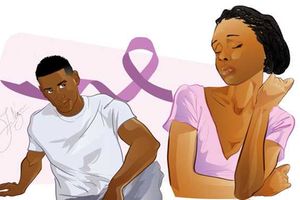
Abortion is often framed as a women’s issue, and in many ways it is, since it is her body that goes through the procedure and the recovery. Yet behind many of those decisions stands a man who was consulted, informed late or never told at all, and who carries a loss he has no words for.
Brian Mwangi, 39, learned of his girlfriend’s abortion by accident on a Thursday evening in March 2024. He was looking for a phone charger in her bedside drawer in Roysambu. Under the charger lay a folded receipt and a clinic report.
“I read them three times,” he says. “The date was three months old. The amount spent was Sh18,000. Nobody had told me a word.”
“My mind raced as I drove back to my place. I kept asking myself who I was to her,” he says.
“I remember telling her that I would love to have two children. She laughed. I thought that meant yes.”
Fatherhood was never a casual idea for Brian. He grew up in Nyeri as the eldest of four, raised by a single mum after his father left when he was nine.
“I told myself I would stay. I would be the man who comes home, pays school fees and shows up at the school gate for my children.”
A week after finding the papers, Brian asked his girlfriend to meet him at a coffee shop in town.
“I put the papers on the table,” he says. “She went pale.”
His girlfriend, then 26, told him she had been afraid he would leave her.
“She also said she was scared I would push her to keep it, yet she wasn’t ready to be a mum.”
The abortion had been done at a private clinic, paid for from her savings.
“I felt so many emotions at once. I was angry that she did not trust me enough to share the information. I felt sad that she went through that procedure all by herself.”
“I regret how it was decided,” he says. “If we had sat down together, and it ended the same way, I think I would be at peace.”
What hurt him most was being excluded from an important decision. Their relationship started to falter.
Four months later, they mutually agreed to part ways.
In April this year, the Court of Appeal in Malindi overturned a landmark 2022 High Court ruling that had declared that the "right to abortion is fundamental."
Photo credit: Shutterstock
Brian still thinks about what having a child would have meant for him. The thoughts surface in ordinary places, such as Sunday walks at Karura Forest, where fathers lift toddlers onto their shoulders near the gate.
“My age mates arrive at weddings with children on their hips and ask me who is next,” he says. “My old classmates fill the group chat with first day of school photos. I scroll fast...”
“I smile and change the subject,” he says. “She prays for me every day, though. I let her pray. I do not have the words to tell her what I know.”
“Before, I wanted two children,” he says. “Now I ask a woman about her fears early. I ask about contraception; about what she would do if she got pregnant. Trust is a conversation you keep having.”
The loneliest part, he says, was that he never got a chance to grieve.
For Kamau Njoroge, all odds were stacked against him. He and his girlfriend were expecting their first child.
“Our first pregnancy came easy,” he says.
At 16 weeks, in November 2025, a routine blood test came back with unusual indications.
“Usually that test is boring to many,” Kamau says.
They travelled from their home in Eldoret to see a specialist in Nairobi, who found clubbed feet on the scan, then clenched hands.
At 20 weeks, a scan showed too much fluid around the baby, and the doctors explained that he could not swallow and therefore could not practise breathing.
“They told us this pregnancy could not live outside the womb,” Kamau says.
If his girlfriend carried the pregnancy on, she would likely need a caesarean section (CS). As the doctors listed the risks, Kamau’s mind drifted to his girlfriend’s sister, who had suffered CS complications.
“I kept seeing that sister in the ward with the drip in her arm, weak,” he says. “They wanted to cut my girlfriend open to deliver a baby who could not breathe. At that moment I stopped thinking about the baby and started thinking about her. I wanted her alive.”
Both sides of the choice hurt: a baby who could not breathe on his own, and a woman whose body would pay a heavy price to bring him into the world. The couple booked three sessions with a hospital counsellor over 10 days at Sh3,000 each.
“The counsellor never told us what to do,” he says. “She asked us what we were most afraid of. I said losing her. She said losing the baby slowly.”
On the second visit, the counsellor asked each of them to say the hard sentence out loud. Kamau went first and could not finish.
“My mouth would not make the words,” he says. “My girlfriend held my sleeve like I was the one who was sick. That was the day I understood we were choosing who we could still save.”
The drive to Nairobi took six hours, and nobody turned on the radio.
“She talked to the baby,” Kamau says. “Very softly, so I would not hear. I heard anyway.”
It was close to Mother’s Day, and people kept asking about the baby’s gender and whether they had a name.
“Pregnancy is public,” he says. “People walk into your life with questions.”
His girlfriend was induced and delivered a stillborn child. A few days later, they travelled back to Eldoret. On their first night home, neither of them slept. The cot they had bought stood in the corner.
“We covered it with a kanga,” he says. “Neither of us could touch it. It stayed like that for months.”
They still talk about children, though not on any schedule.
“She says when her health is steady,” he says. “Some nights we speak about it softly, like testing a river with a foot.”
Once a year, on the same date, they light a candle and say the name they had chosen for their child.
Felix Odhiambo, 28, wanted his girlfriend to get an abortion. In 2023, aged 25, he earned about Sh28,000 a month repairing televisions and phones at a stall in Kisumu and lived in a single rented room.
“There was nothing wrong with the pregnancy,” he says. “There was something wrong with me. I was not ready.”
His girlfriend, then 24, told him on a quiet Sunday that she was six weeks pregnant.
“I laughed because I thought she was joking,” he says. “Then I looked at her face. I felt my chest go tight.”
On three consecutive evenings, they walked to Dunga Beach and watched fishermen drag in nets.
“I said I could not feed a child and a mother. She said she was still in college. We both knew we were saying the same fear in different words.”
For the next few days, Felix turned thoughts over and over in his head.
“I woke every morning thinking today I will say we keep it,” he says. “Then I would see my bank balance. Another day I would see her books. I saw my friends on Friday nights buying rounds, and I saw myself holding a baby in a rented room, counting coins for milk. I was scared too of being a father at that age.”
Where a relationship was already struggling, an abortion may deepen the tension.
Photo credit: Shutterstock
On the ninth night, he shared his position.
“I told her I did not want the child,” Felix says. “She asked me to say it again, and I said it again. It was the worst sentence I have ever spoken.”
The abortion was done at a private clinic in Kisumu in October 2023, and Felix paid Sh7,500 for the procedure and medicine.
“I borrowed from a friend,” he says. “I remember counting the notes twice at the counter, with my hands shaking.”
He then sat in the waiting area for two hours beside a woman who was scrolling her phone and laughing.
“I hated her for laughing, and I hated myself for hating her. Nobody tells you the waiting room is the longest part.”
Three years on, Felix says abortion isn’t a black-and-white issue.
“I do not preach it, and I do not curse it,” he says. “Other people have different shoes. I would not tell a woman what to do, and I would not tell her what to feel.”
The relationship became strained, and two years later they parted ways. Felix still hopes to be a father one day.
“I would like one child before I am 35. A girl, maybe, but I would also be glad if it is a boy.”
Sometimes he passes a primary school and watches the children spill out in their uniforms, and then he wonders.
How men cope with abortion
In April this year, the Court of Appeal in Malindi overturned a landmark 2022 High Court ruling that had declared that the "right to abortion is fundamental."
The appellate judges overturned key parts of the 2022 High Court ruling and upheld that the Constitution protects life from conception and prohibits abortion except in limited circumstances under Article 26(4): where a trained health professional determines there is an emergency, or that the life or health of the mother is in danger.
In Kenya, and many parts of the world, abortion is usually discussed through women’s experiences. Less often asked is how men experience it, particularly when they had hoped to become fathers or were not ready to have a child.
Dr Mehreen Farrukh, a consultant clinical psychologist at Aga Khan University Hospital, explains that a man’s response depends partly on his relationship with the woman, his feelings about the pregnancy and whether the decision was mutual.
“The experience of a husband in a stable marriage may differ from that of a man in a casual relationship or one who was never part of the woman’s life,” she says.
“In an established partnership, involving the man in the conversation is important. In other circumstances, particularly where the pregnancy follows sexual violence, the decision may be approached differently.”
Even when an abortion is planned, and both partners agree, relief can coexist with sadness, leaving some men unsure how they should feel. Emotions grow more complicated when partners disagree.
“A man who wanted the child but whose partner chose to have an abortion may experience grief, resentment or regret,” she says.
“In such cases, anger, helplessness and a loss of trust can emerge. Others may initially encourage the decision but later regret it, leaving them struggling with guilt and self-blame.”
For men who had become emotionally attached to the pregnancy, the loss can be particularly hard to process, and it may change how a man sees himself, especially if fatherhood is central to his identity.
Where a relationship was already struggling, an abortion may deepen the tension, since some couples stay together partly because they share the hope of raising children.
“Some withdraw into silence, become irritable or distance themselves from their partners. This silence can eventually contribute to a deterioration of the relationship.”
The difficulty, she notes, is that abortion can challenge a man’s deeply held beliefs about fatherhood, masculinity and family.
“When he does not know how to make sense of what has happened, he may struggle to identify or communicate his emotions,” she says. “This can leave both partners feeling misunderstood. A woman who has undergone an abortion may be dealing with her own emotional and physical recovery while wondering why her partner seems distant or unsupportive. Meanwhile, the man may not know how to respond or how to explain what he is experiencing.”
Other men become isolated or lose interest in activities they once enjoyed, or turn to alcohol, nicotine, gambling or sexual relationships to cope.
“Where a man already has a history of substance use, he may return to it as he tries to manage his grief,” she adds.
The changes can begin subtly: a man who once enjoyed morning runs or the gym may simply stop, and what looks like a change in routine may reflect a struggle he has not found the words to explain.
For couples hoping to move forward, she advises allowing six to eight weeks for grief before attempting to repair the relationship.
“This period can also help the couple consider whether they both want to rebuild the relationship. Where they do, forgiveness and a willingness to move forward may help.”
Where reconciliation remains difficult, a trusted friend, elder, therapist or couples’ counsellor may offer support, and a gynaecologist may be involved if the couple is discussing conceiving again.
“Support can begin during the grieving period. In some settings, counselling is offered soon after an abortion, while the woman is still in hospital,” Dr Farrukh advises.
For men, one of the biggest obstacles is taking the first step. In her experience, men who reach out for therapy are committed and willing to follow through, but getting them to speak up is the challenge.
“More public discussion and educational media coverage of men’s experiences could help create room for men to acknowledge their feelings without feeling that they must remain silent,” she suggests.
An important part of counselling is helping men who blame themselves understand where those feelings come from. When self-blame persists for months, it may become an entrenched way of thinking that needs to be challenged.
“Therapy can help men examine why they believe they are at fault, question those thoughts and develop a different way of understanding the experience. This, in turn, can influence how they feel and behave, including how they relate to their partners,” she adds.