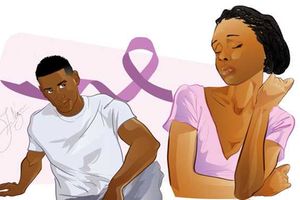
When choice meets fear: The women navigating Kenya's abortion maze

Is a survivor of rape allowed to abort ? Legally, yes. But with medics being arrested and guidelines being rescinded, the answer is a confusing “no.” One woman lost her son; another grieves for the child she was forced to keep.

What you need to know:
- Nearly 800,000 abortions occur each year, many unsafe. As one counsellor asks: if we deny a woman safe care and she dies from bleeding while the foetus dies, “who have you saved?”
The sunshine may soften Nairobi's chilly, unpredictable weather or brighten the city centre's newly laid cabro pavements. But in the heart of one woman, Neema*, nothing can ease the weight she continues to carry, four years on.
In 2022, the now 30‑year‑old woman from Ruaraka Sub‑County lost her three‑year‑old son.
“He had pneumonia,” says a tearful Neema.


“He was my gold. He was my everything. I had decided to keep him. I didn’t want to abort because I thought, ‘What if he grows up to be a great person, gives me a better life, and saves me from this horrible business?’”
Neema is a commercial sex worker. Even with the child, she could not identify his father, since many clients force her into unprotected sex.
“In this business, clients drug you. When you regain consciousness, you cannot even tell who slept with you, how many, or whether they used protection. And you find they are gone. They don’t pay you,” she shares.
“Others will pay Sh50, and you end up returning home with Sh200, which you must spend on food for the day.”
Under Kenya’s Sexual Offences Act (2006), such non‑consensual sex, regardless of her work as a commercial sex worker, constitutes rape. Upon conviction, it is punishable by imprisonment for a term of not less than 10 years, which may be increased to life imprisonment.
Hard choices
A check with a chemist on June 18 established that the cheapest emergency contraceptive, Safe‑72, cost Sh100, while the most expensive one on the shelves was Sh200, Postinor‑2, a price that tells the hard choices Neema must make with the little money she earns.
She was rarely with her child as she had to make a living.
“You know with our work, you have no stable income, and you work 24 hours, day and night. So, I’d leave my child wherever I could; at neighbours’ or at home with my mother. But no one can take care of your child like you, his mother. Still, I had to survive,” she says.
“I had to get money to buy food for him. On days when my mother complained that I was leaving the child with her without money for food, I’d take him to a friend. But again, they could not care for him as I could. So, he died, and his death hurts me to this day. I loved my son so much. He was my everything. That is why I struggled to provide food for him and hoped to educate him one day.”
His death remains a fresh wound she struggles to recover from.
Then in 2023, she discovered she was seven weeks pregnant with another client’s child. Again, unable to identify the father.
“I could not carry that child to term. I was lost in deep trauma and could not imagine having this child again. I wanted to terminate the pregnancy immediately, and I wanted to do it safely,” she says.
“By virtue of the work we do, it doesn’t mean we are not human. We are doing this work because of a harsh life. We cannot find jobs. We just want to survive.”
The eldest of four siblings, Neema lives with her mother. She completed Form Four with a D+, while her mother, the sole parent, survives on domestic work. Together, they combine incomes to get by.
Termination of pregnancy
Neema says she walked into a health facility in the north-eastern part of Nairobi to seek a pregnancy termination. A check on the Ministry of Health website confirmed that the facility is officially registered to provide health services.
“I explained my situation. I told them the trauma I was in. I could not have the baby. I went through counselling for three days. They wanted to be sure of my decision,” she recalls.
On the fourth day, she was given abortion pills, which terminated the pregnancy.
“They told me my pregnancy was like fluid, so they gave me pills. That night I experienced heavy bleeding and severe cramps, similar to labour pains. I couldn’t sleep at all.
Afterwards, I continued to have light bleeding for about two weeks,” she recounts.
What she now needs, she says, is money to venture into the second‑hand clothing business. She says this livelihood could give her a decent income to raise a child under better circumstances.
A counsellor at a public health facility in Kwale County, who asked not to be named because abortion is “a very sensitive matter”, explains that in government hospitals, ending a pregnancy is treated as an extremely serious decision.
“You have to go through several tests to assess your health and medical status, and it’s not just one health professional who sees you. Multiple professionals review your case before any decision is made,” the counsellor says.
Counselling is part of this process.
“In counselling, we follow the principle of ‘do no harm’. When a patient presents with trauma or suicidal thoughts, that becomes a serious case requiring urgent intervention.
In such situations, ongoing counselling is essential,” the counsellor adds.
But the therapist also spoke of the painful dilemma health workers face.
“For women with traumatic experiences, three sessions are not enough. So, the difficult question is this: if you deny a woman who fears for her life a safe termination, and she turns to unqualified providers out of desperation and dies from bleeding while the foetus also dies, who have you saved?”
He pauses before concluding: “It is a very difficult decision to make, but there are circumstances where those decisions must be made urgently.
No figures on safe abortion
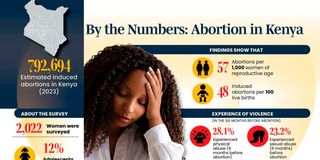
Kenya has no official data on safe abortions. But a 2025 study by the Ministry of Health, the African Population and Health Research Centre (APHRC), and the Guttmacher
Institute estimated that 792,694 abortions took place in 2023.
This, according to the findings, means that for every 1,000 women of reproductive age, about 57 had an induced abortion during the period being measured. Or, for every 100 babies born alive, there were about 48 induced abortions.
APHRC, with headquarters in Nairobi, is a pan‑African research institution focusing on health, population, and development. The Guttmacher Institute, with headquarters in New York, is a global organisation advancing sexual and reproductive health and rights.
The study surveyed 2,022 women. Of these, 12 per cent were adolescents aged 15–19. Most women (82.3 per cent) reported only one abortion in their lifetime. Violence was common: 28.1 per cent experienced physical abuse and 23.2 per cent sexual abuse in the six months before their abortion.
When it came to ending a pregnancy, most women turned to medication abortion (61.8 per cent), using misoprostol alone or combined with mifepristone. Others relied on traditional or non‑harmful methods (26.7 per cent) - drinking soda or strong tea, alcohol, exercising, using herbs or getting a massage. Manual vacuum aspiration, a simple surgical procedure, was reported by 12.5 per cent.
A small but worrying minority (7.8 per cent) resorted to dangerous methods such as inserting sharp objects, drinking toxic substances like bleach, or overdosing on medicines.
These practices, though rare, highlight the risks women face when safe options are out of reach.
Restrictive access
Access to abortion in Kenya remains highly restricted, even though experts classify it as a maternal healthcare service.
Before the enactment of the 2010 Constitution, Kenya allowed abortion for survivors of rape and defilement, explains Martin Onyango, Associate Director of Legal Strategies for Africa at the Centre for Reproductive Rights.
Section 35(3) of the Sexual Offences Act (2006) accorded the Minister for Health responsibility for prescribing circumstances under which a victim of sexual violence could access treatment in any public hospital or institution, he explains.
This gap was filled in 2009 when the Ministry of Public Health and Sanitation unveiled National Guidelines on Management of Sexual Violence in Kenya, which dictated compassionate treatment and appropriate referral for women seeking to terminate pregnancies resulting from rape.
These guidelines were updated in 2014 to align with the 2010 Constitution, which under Article 26(4) permits abortion only if, in the opinion of a trained health professional, there is need for emergency treatment, or if the life or health of the mother is in danger, or if permitted by another written law.
The Health Act (2017) defines health as “a state of complete physical, mental and social well‑being and not merely the absence of disease or infirmity.”
Yet in the same year, the country backtracked on progress in protecting women’s rights to access abortion. The Ministry of Health withdrew the Standards and Guidelines for Reducing Morbidity and Mortality from Unsafe Abortion in Kenya, which had been introduced in 2012.
The document guided health professionals on how, when, and where to conduct abortion.
It allowed safe abortion to be performed by a trained and skilled health professional in health facilities that met minimum standards.
It presumed that by terminating the pregnancy, the providers would be acting in “good faith” and within the tenets of medical ethics of preventing harm.
It defined a trained health professional as a registered medical practitioner, clinical officer, nurse, and midwife who has acquired the relevant skills for decision-making and provision of the service.
The Centre for Reproductive Rights, however, successfully challenged the withdrawal at the Nairobi High Court of Kenya.
The Court nullified the memo and letter that withdrew the guidelines.
Arrested survivors and providers
Martin says termination of pregnancy as a remedy for survivors of defilement, rape, and incest is poorly understood.
“The existence of safe abortion as a remedy for sexual violence has not been made public or known to many survivors,” he explains.
In practice, this gap leaves girls and women unable to access safe services even when they do not wish to continue with a pregnancy. Instead, they may carry the pregnancy to term or resort to unsafe alternatives. The legal expert links this to enforcement actions against both patients and providers.
“Those who have sought safe abortion have been arrested together with the service providers and charged,” he says.
He points to multiple cases in which his organisation has defended health workers accused of providing abortion care, including more than 20 providers linked to cases involving survivors of sexual violence aged 17 and below.
How a survivor accessed safe abortion
Some survivors have accessed abortion through World Health Organisation‑recommended safe methods: medical abortion using pharmacological drugs and vacuum aspiration, a simple surgical procedure.
One such case was described by Catherine Menganyi, Migori County’s Gender‑Based Violence (GBV) Coordinator and Chapter Lead for Women in Global Health Kenya.
Six years ago, she received a call from a 24‑year‑old woman whose drink had been spiked in Nairobi. She was brutally raped, sustained severe injuries, and later discovered she was pregnant.
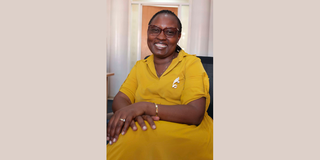
Catherine Menganyi, Migori County’s GBV Coordinator and Chapter Lead for Women in Global Health Kenya at Nation Centre in Nairobi on May 22, 2026.
“She told me, ‘Catherine, if I have to keep this pregnancy, I am going to commit suicide’,” Catherine recalls.
Unsure how to respond, Catherine consulted a counsellor before calling back. She asked the survivor what would work best for her. The answer was unequivocal: she did not want to continue with the pregnancy.
Catherine referred her to a health facility, and a month later, the woman informed her she had terminated the pregnancy.
“In that case, would you judge anyone? Before violence strikes you, you don’t know the magnitude of it,” she notes.
A teenager’s consent in access to abortion
The GBV coordinator recounts another case involving a 15‑year‑old girl who was defiled and impregnated. She had not initially told her parents; the truth only emerged when the pregnancy was discovered at school.
The parents wanted the pregnancy terminated, driven in part by fear of stigma and what the community would say.
But the girl’s position was just as clear. She wanted to keep the baby and return to school.
Catherine says she intervened with a firm warning against making decisions on her behalf.
“The girl herself, even if she’s a minor, has a right,” she says, pointing to the importance of consent and listening to the survivor’s voice, even in difficult circumstances.
In the end, Catherine says, the decision remained with the family and the health system. She has not followed up on the outcome.
Misinformation
Although access to safe abortion in Kenya is embedded in law, it remains contested in practice, shaped by stigma, misinformation, and uneven understanding among both the public and health providers.
Martin situates abortion firmly within the ambit of maternal health.
“Safe abortion or abortion care is part and parcel of maternal health care,” he says.
“It encompasses the full continuum of care: before pregnancy, during pregnancy, at the time of termination, during delivery, and after childbirth.”
Even miscarriage, he notes, is medically understood as an involuntary form of pregnancy loss, further placing abortion care within maternal health services rather than outside them.
Yet public debates have been dominated by pro‑ and anti‑abortion rhetoric, overshadowing the legal and medical realities. Persistent misinformation, including the belief that seeking an abortion at a health facility will automatically lead to arrest, continues to deter women from accessing care.
Martin stresses that abortion is a clinical service governed by trained professionals within the law.
“Any patient seeking safe abortion needs to approach a healthcare provider and discuss the issue,” he says.
The decision, he adds, rests on medical assessment of risk to life, or to a person’s physical, mental, and social wellbeing, as well as other legally recognised circumstances.
But misinformation makes it even harder for women to seek services, even where counselling is available.
Faraja’s fear
Take Faraja*, who was 15 years old and in Form One when she was impregnated by a boda boda operator in Kakamega County in 2022. Rejected by her parents, she had nowhere to go but to the man who impregnated her. Despite Kenya’s Protection Against Domestic Violence Act (2015) and the Children Act (2022) expressly prohibiting child marriage, the man took her in as a wife.
Faraja says he was violent, beating her nearly every day.
“I wanted to be free and return home because the beating and the hunger were too much,” she recalls.
“The only way to be free was to terminate the pregnancy. It hadn’t reached two months. I wanted to go to hospital, but I knew it was illegal and I’d be arrested. My friends told me going to a hospital was like taking myself to jail. I was very afraid. They advised me to drink a concentrated mixture of Omo detergent and tea leaves. I did, but it didn’t work.”
She later gave birth to a son. Her “husband” died in a road accident in Nairobi in 2024, where they had moved in search of work.
Now, Faraja says she hates her son, blaming him for the suffering she has endured.
“If I had aborted, I wouldn’t be suffering like I am today,” she says bitterly. “I’d have finished school and become a lawyer like I always dreamed.”
Today, she survives on domestic work.
Emotional consequences
For women who carry an unplanned pregnancy to term, the emotional consequences can be profound, says Mehreen Farrukh, a consultant clinical psychologist at Aga Khan University Hospital.
Unlike other unexpected life events, she explains, pregnancy involves the arrival of “a human being, which is inside you” - a reality that can fundamentally alter a woman’s life trajectory.
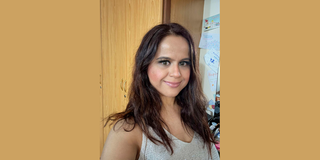
Mehreen Farrukh, a consultant clinical psychologist at Aga Khan University Hospital, says that an unplanned pregnancy to term, the emotional consequences can be profound.
“It’s an unplanned pregnancy which leads to them being unprepared,” Farrukh says. “And as a result, it creates emotions like anxiety. There is a lot of fear of the unknown.”
The psychological burden often begins long before birth. Some women struggle with how to disclose the pregnancy to partners and family members, particularly when neither they nor their partners had wanted a child.
She, however, cautions against assuming that an unplanned pregnancy will inevitably result in a negative relationship between mother and child.
Strong bonds
In her clinical experience, many women who initially feel overwhelmed later develop strong bonds.
“Conception is a beautiful thing,” she says.
“We’ve seen mothers come around feeling very unprepared and overwhelmed in the first month of pregnancy. They come back when the baby is six, seven months and say, ‘That was the best decision - I’m so happy we brought the baby into this world.’”
Cases where a mother remains unable to form an emotional attachment years after birth are rare, she notes.
“More often than not, the connection is built,” she says.
When a mother continues to feel no affection for her child several years after delivery, Mehreen explains, mental health professionals look beyond the pregnancy itself to understand what may be driving the distress.
“If the mother has decided to proceed with the pregnancy, has given birth, and it’s been as long as four years where she’s not able to feel that connection, now we will look at other disorders and explore what is happening,” she says.
Underlying factors may vary, she explains. She says some women feel trapped by financial pressures; others struggle with the perception that motherhood has restricted their ambitions.
“Maybe she wanted to be a lawyer, maybe she wanted to be a doctor, and then now she has a baby,” she says. “So, we empower them so that they can actually be this and that as well.”
The dilemma
While abortion remains a maternal health service, Kenya is torn between the “right” and “wrong” of abortion. And women are left to decide for themselves, but without accurate information, they cannot enjoy the highest quality of health guaranteed under the Constitution.
“No one should judge a woman for seeking an abortion. The question should be, ‘Please tell me your story, and I’ll take you to a doctor to help you,’” Neema, who terminated her pregnancy after the trauma of losing her son, advises.
Neema and Faraja are pseudonyms to maintain the confidentiality of their medical information and privacy.
[email protected]
This work was produced as a result of a grant provided by the Wits Centre for Journalism at the University of the Witwatersrand. The opinions held are of the author(s)