When was the last time you did something for the first time? This is the question that got me packing at midnight for an overland trip to Samburu with Solive Travel. Travelling to the Northern parts of Kenya was in my 2022 bucket list and so when the opportunity came, I was ready to grab it. The itinerary had us departing Nairobi CBD by 6am. We used the Thika highway, down to Sagana for breakfast before proceeding to Nanyuki for Lunch, shopping and the mandatory photo taking at the equator marker.
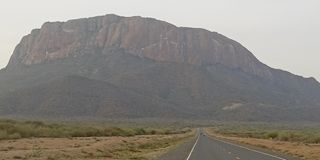
The famous Mt. Ololokwe which is also known as the Sacred Mountain.
This was my first time using an overland truck which is basically a house on wheels. The truck can comfortably carry 28 people at the back and three people at the front. Just right behind the driver’s seat, is a small “bedroom” area fitted with a comfy mattress and is enough to fit one person. The truck has two tables and “face-me “ seats in the middle which are mostly used for games on the road or meal serving areas. At the far back, it has private lockable cabinets where the passengers can put away their luggage safely. It also has huge glass drop windows for a good all round view and some fresh air. The seats are very comfortable and had enough leg room for people with long legs like me. And since these kinds of trucks are used for long distance travel, they come with charging systems for your electronic devices and also the windows have curtains to block unwanted lighting.
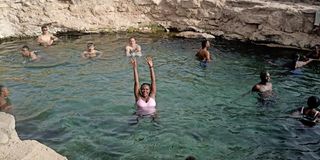
Passing through the bright yellow wheat farms and the endless view of Mt. Kenya, we proceeded to Buffalo Springs National Reserve through the Chokaa Gate in Isiolo County. This is one of the triad of the Northern reserves that also include Shaba and Samburu. The main attraction here is the natural blue swimming pool right in the middle of the wilderness which we definitely had to take a dip in, and the scenic Ewaso Ngiro River. We were able to spot the reticulated giraffes, Beisa Oryx, African bush elephants and even the endangered Gravy’s Zebras.
We came to learn later that the pool was a result of World War II as the Italians dropped a bomb on what they thought was a British camp only to realise they had bombed a herd of buffaloes and the result was a spring that burst and created a walled-off pool believed to have therapeutic properties.
After the swim, it was time to head to our final destination; Sabache Camp in Samburu set at the foot of the famous Mt. Ololokwe in Namunyak Conservancy. The camp is named after the hook of the Samburu woman’s necklace and a symbol of beauty in their culture. It simply means a place of beauty and reverence in the Samburu Language and is also known as the last unspoiled African wild place. It is a natural ecology, where you can enjoy unspoiled, personal safari with an untouched wilderness setting. It has eight classic safari tents with tree-shaded decks but we opted to pitch our own tents and experience traditional camping and prepare our own meals.
I was stunned at how much our overland truck could carry!! It had tents, gas cookers, tables, utensils, mattresses, basins, camping seats, a food store, sufurias, you name it. It was fully self-sufficient as the nearest shopping center is at Archers Post which is about 37km away! We started pitching our tents at around 7pm and in an hour; we were done and ready to enjoy some bonfire as we waited for dinner. The place gets quite chilly past midnight, so, if you plan to camp, carry extra warm clothing.
Early the next morning as part of the team woke up at 3am to hike Mt. Ololokwe, the rest of us remained behind to enjoy the beauty of the camp and help the chefs prepare breakfast and unhitch the tents. The hike up and down the mountain takes roughly six hours for trained hikers and by 9am, the team was back to the campsite. We hang out for a bit before embarking on another 10-hour trip back to Nairobi!
But all I can say is that, it was an amazing experience.