Hello

Your subscription is almost coming to an end. Don’t miss out on the great content on Nation.Africa

Ready to continue your informative journey with us?

Hello

Your premium access has ended, but the best of Nation.Africa is still within reach. Renew now to unlock exclusive stories and in-depth features.

Reclaim your full access. Click below to renew.

women’s leadership in the church
Caption for the landscape image:

Women in the pulpit

Scroll down to read the article

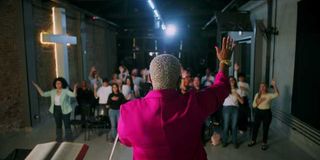
Debate over women’s leadership in the church continues to stir strong views worldwide.

Photo credit: Shutterstock

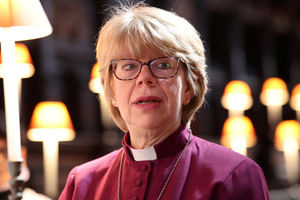
On March 25, the Anglican Church will set history when it enthrones Sara Mullaly as the first woman to be its spiritual leader.

Dame Sarah was confirmed in January as the 106th Archbishop of Canterbury, and her ascension has not been without controversy.
Notably, some conservative Anglicans in Nigeria wanted to elect a man whom they would recognise as the ceremonial leader of the worldwide church, though they later dropped their bid.

And on the day she was confirmed in London in January, a heckler briefly interrupted the proceedings.

Back in Kenya, a debate raged in January about the place of female preachers.

This was after a female preacher from the Presbyterian Church of East Africa (PCEA) went viral on social media following her conduct at a burial in Kirinyaga County.

Her hard-line position on who should talk caused a furore.

The Right Reverend Patrick Thegu Mutahi, the Moderator of the PCEA General Assembly, later issued an apology, saying the preacher had overstepped boundaries.

“I would like to apologise because some things went overboard that day. We would like to ask all who have heard of this matter and witnessed it to forgive us,” said Rev Mutahi, in a filmed message.

The preacher’s action and the subsequent apology made Kenyans pause to reflect on where they had placed women in their church. We went around asking about the highest position a woman can be in various denominations, and here’s what we got”

Sarah Mullally, the Anglican Church Archbishop of Canterbury.

Photo credit: Photo I Reuters

Roman Catholic Church

At the Roman Catholic Church, a document issued by Pope Paul VI in 1976 is the authority on the role of women in the church.

Prof Fr Lawrence Njoroge, a priest who is a professor of development studies and ethics at the Jomo Kenyatta University of Agriculture and Technology, said that the document “prohibits ordination of women as deacons or priests in the Catholic Church”.

A review of the document, titled Inter Insigniores, shows that it adopts a take-it-or-leave-it stance.

“The church, in fidelity to the example of the Lord, does not consider [itself] authorised to admit women to priestly ordination,” says the document. “It is a position which will perhaps cause pain but whose positive value will become apparent in the long run.”

Though it elaborates on the importance of women in the church, it notes that Jesus did not call any woman among his 12 disciples.

“If he acted in this way, it was not in order to conform to the customs of his time, for his attitude towards women was quite different from that of his milieu, and he deliberately and courageously broke with it,” the document states.

Recalling the moment in the Bible where Jesus told Peter to feed his sheep if he loved him, the document says: “For this reason, one cannot see how it is possible to propose the admission of women to the priesthood in virtue of the equality of rights of the human person.”

Seeking to leave no doubts, the Inter Insigniores further indicates: “Some women feel that they have a vocation to the priesthood. Such an attraction, however noble and understandable, still does not suffice for a genuine vocation. In fact, a vocation cannot be reduced to a mere personal attraction, which can remain purely subjective.”

“It must not be forgotten that the priesthood does not form part of the rights of the individual, but stems from the economy of the mystery of Christ and the Church. The priestly office cannot become the goal of social advancement,” it adds.

“The highest position a woman can hold in the Roman Catholic Church at the present moment is prefect of a dicastery,” Prof Njoroge noted. “Sister Simona Brambilla of the Consolata [Missionaries] was appointed Prefect of the Dicastery for Institutes of Consecrated Life by Pope Francis on January 6, 2025.”

Anglican Church

With Dame Sarah, the Anglican Church has a woman at the very top.

The BBC reported in January that although the church has allowed women to be ordained as priests since the 1990s, “it has also allowed male bishops to continue to refuse to ordain women if they choose to do so”.

When Dame Sarah spoke to the BBC after her election, she said she had encountered some misogyny.

“I’m conscious that being in this role, it’s important for me to speak of it [misogyny], because there are some that don’t necessarily have the status or power of this role, and feel more hesitant to do it. I commit myself to making an environment where all people can flourish and which is safer for all,” she said.

In 2021, Bishop Rose Okeno became the first female Anglican bishop in Kenya. Speaking with the Nation later that year, she said: “I believe young girls and women are called to be faithful to God and to submit to his will when called to serve his ministry. God does not look at gender to accomplish his mission.”

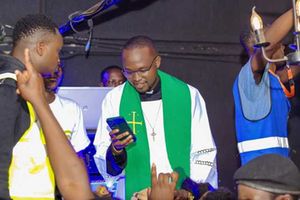
Rev Michael Watenga

Rev Michael Watenga, an Anglican priest at the Diocese of Kitale converses with patron at a local club in Eldoret City.

Photo credit: Boniface Mwangi | Nation Media Group

Presbyterian Church of East Africa (PCEA)

At the PCEA, women can hold the highest office, which is that of the Moderator of the General Assembly.

According to Rev Kenneth Muruthi, a clergyman serving in the PCEA Marsabit Mission Area, no woman has held the moderator position but there is no barrier.

He added that the church’s constitution and the Westminster Confession of Faith, which guide governance and doctrine, “do not restrict leadership based on gender.”

Women, he said, already hold various top positions within PCEA structures. They have been parish ministers, presbytery moderators, session clerks and departmental directors at the general assembly level.

“Women participate in decision-making at the highest levels through their service as commissioners to the General Assembly, Presbytery and local church councils,” Rev Muruthi noted, adding that they “vote, deliberate, and even chair committees”.

PCEA’s journey on inclusion of women has been incremental.

“In the early years of our church, women were largely confined to supportive roles, especially through the Woman’s Guild,” said Rev Muruthi.

Over the past few decades, he notes, ordination has expanded the scope of leadership.

“Women have been ordained as elders, evangelists, and ministers. This has opened the way for broader leadership opportunities and greater participation in decision-making,” said the preacher.

He acknowledged that acceptance of women preachers is not uniform.

“Urban and more progressive congregations often fully embrace women in leadership, including preaching roles,” he said, noting that in some rural areas, resistance persists, often “due to cultural norms rather than theology.”

Still, he sees the trajectory bending towards fuller inclusion.

“As more women receive theological training and younger generations embrace equality, we can expect more women in senior leadership roles,” he said.

Rev Kenneth Muruthi of the PCEA Marsabit Mission Area

Rev Kenneth Muruthi of the PCEA Marsabit Mission Area says women serve in several leadership roles within the church, although none has yet held the top position of Moderator of the General Assembly.

Photo credit: Pool

Seventh-day Adventist (SDA) Church

Two elders at the SDA Church told Nation Lifestyle that, whereas women can do a lot in the church, they cannot take up roles such as headship of the family and priestly duties that require ordination.

“They can play any part in the church, but anything about ordination they can’t perform,” said one elder, adding that women cannot baptise believers, pray for children or preside over weddings.

The Adventist Biblical Research Institute says that the church “has not taken an official position on the biblical support (or lack of it) for the ordination of women to the ministry”.

In one of her writings on the role of women in the church, SDA co-founder Ellen G White stated: “Women who are willing to consecrate some of their time to the service of the Lord should be appointed to visit the sick, look after the young, and minister to the necessities of the poor. They should be set apart to this work by prayer and laying on of hands. In some cases, they will need to counsel with the church officers or the minister, but if they are devoted women, maintaining a vital connection with God, they will be a power for good in the church.”

Pentecostal Evangelistic Fellowship of Africa (PEFA)

At Pefa, the most senior office a woman can hold is that of bishop. Bishop Peter Ndambuki, the cathedral bishop of Pefa Kayole B in Nairobi, said there are no restrictions.

“One can hold any office if she qualifies,” he said, adding that he knows of two female Pefa bishops.

He acknowledged that in the past, some leaders leaned on the example of Christ’s 12 male disciples to argue against women in senior offices.

“That’s when I was young in the ministry… I used to hear such from bishops,” he recalled. “But currently, we do not have any doctrinal position in regard to that.”

The evolution has been visible in ordination patterns.

In Nairobi and its environs, he cited specific examples, including a woman at Katani near Syokimau who was ordained bishop about two years ago and another in Ongata Rongai. A similar case exists in Mombasa.

However, the women serve as regional or branch bishops, not members of the national executive board.

“We don’t have a lady there,” Bishop Ndambuki said of the national executive board.

Ordained women in Pefa perform the same liturgical functions as their male counterparts.

“Yes, they do,” he said when asked whether they administer sacraments such as baptism. “Some of them are senior pastors where they are, so they do those things.”

He also pointed to shifts in church culture that signal bigger change.

“Today, we have women pastors whose husbands are not pastors. That was not there in the beginning,” he said.

Asked if there has been resistance, Rev Ndambuki argued that Pefa’s governance structures have prevented major disputes.

“Our organisation is very firm structures,” he said. “Because there are structures stipulating what one can do, we have never had a case where women have an issue because of the church.”

Leadership, in his view, rests on spiritual grounding and preparation. A woman aspiring to senior office “must be born again… and then sharpen her skills, that is, go for theological training,” he said.

His message to young women sensing a call was unambiguous: “I can tell them not to be shy of any ministry because in our organisation, I don’t see that limitation on barriers… As long as your ministry exposes you and raises you up, nobody will stand against you.”

Bishop Rose Nereah Ayiemba Okeno

Bishop Rose Nereah Ayiemba Okeno during a Sunday service in Butere Diocese. Her calm strength a reflection of faith’s quiet revolution, one led by women breaking barriers in the Church. 

Photo credit: Alex Odhiambo | Nation 

Kenya Evangelical Lutheran Church (KELC)

The Lutheran Church made history in January when Rev Catherine Ngina Musau, currently based in Malindi, was elected the first bishop of the church in Kenya.

A press release from the church cited the general secretary of the Lutheran World Federation, Rev Dr Anne Burghardt, saying it was a giant leap.

“Being the first woman elected into episcopal ministry in your church is indeed historic. Above all, it marks a great step toward the equality of all members of KELC in the ordained ministry and the sharing of leadership within the church,” Rev Burghardt told Rev Musau.

Rev Musau will be installed in June.

Other local churches

Women are at the helm of various local churches, including the Jubilee Christian Church (JCC) and the Faith Evangelistic Ministry (FEM).

At JCC, Bishop Kathy Kiuna took over after her husband passed on in July 2024, The church has a presence in Kenya and abroad.

“Under the apostolic leadership of Lady Bishop Kathy Kiuna, JCC Parklands continues to thrive as a centre of worship, transformation, and kingdom excellence. Her voice remains a guiding light in the body of Christ — raising, equipping, and sending out believers to walk in victory and dominion,” says a post on the JCC website.

At FEM, Rev Teresia Wairimu has been at the helm of its leadership. The decades-old ministry has branches locally, in the UK and in the US.

“She also took up the role of a teacher alongside her greatly respected spiritual authority, the late Rev Reinhard Bonnke, at Christ for All Nations (CFAN) School of Evangelism Worldwide, where they teach and equip ‘the called’ to be effective in ministry,” reads a post on the FEM website.

Follow our WhatsApp channel for breaking news updates and more stories like this.