When Anglican Church of Kenya Archdeacon Japhet Sugut took the decision to rear crocodiles on his farm in Chepsangor, Nandi County, in 2018, neighbours in other villagers thought he had lost his mind.
Almost eight years later, his sanctuary on the hills of Nandi is a thriving enterprise, attracting hundreds of students, researchers and other visitors from near and far every week.
What began as a small conservation experiment has since grown into a licensed animal sanctuary, approved under a Kenya Wildlife Service (KWS) programme that allows private individuals to keep wild animals under strict regulations.
“My main aim was to create an opportunity for students to learn, for residents to see wildlife and to conserve these animals,” the clergyman says.
With his land now a home to three adult crocodiles, several tortoises and monkeys, Mr Sugut is talking to the KWS to introduce other wildlife species on the farm.
The sanctuary, which he named Bustani la Edeni – Kiswahili for Garden of Eden – is a rare sight that has turned an ordinary family’s farm into one of Nandi County’s most unique attractions.
The name, Archdeacon Sugut says, reflects a celebration of God’s creation.
The sanctuary doubles as a spiritual space, hosting Christian activities, including the Way of the Cross. These activities take place under the indigenous trees on the farm.
To start the rare project, the priest applied and obtained a change-of-user licence from the devolved government of Nandi.
KWS then conducted on-site assessments. The government agency dispatched a team to see of Mr Sugut’s land and surrounding environment were suitable for wildlife adoption
The agency then granted Mr Sugut a licence to keep guinea fowls, ostriches, crocodiles and tortoises.
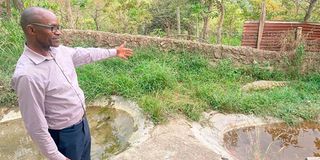
Archdeacon Japhet Sugut, a resident of Nandi Hills, inspects his three crocodile ponds after cleaning as the animals bask after feeding.
Photo credit: Macharia Mbugua | Nation Media Group
In February 2022, the priest finally acquired the reptiles from a private crocodile farm in Sagana, Kirinyaga County. He began with three young crocodiles.
The archdeacon settled for crocodiles “because they are rare and unique, especially in this part of the country”.
For his wife, Esther Sugut, however, the idea was initially terrifying and strange when he shared it with her.
She had never imagined living in the same environment with deadly predators whose jaws are legendary.
“When he told me about keeping crocodiles and other animals, it sounded really scary,” Mrs Sugut says.
“While growing up, I believed crocodiles were meant to be in the wild, not near people. The animal had a bad reputation.”
After being assured of the safety measures in place and convinced by the natural environment in Chepsangor, Mrs Sugut gradually became convinced that it was not a bad idea after all.
Mrs Sugut feeds the three crocodiles, cleans the ponds and moves among them with what she calls careful confidence.
“I only do so after feeding them and being convinced that they are full,” she says.
The animals now easily recognise Mrs Sugut’s scent and voice, allowing her to move in their enclosure.
“They know my voice. Immediately I approach and say ‘croco, croco’, they lift their heads, aware that something good is on the way,” she says.
The crocodiles are given chicken and rabbit meat, each consuming about a kilogramme and a half once every three to four weeks.
“They are very slow digesters. That is one of the biggest advantages of raising crocodiles. Unlike cows, goats, chickens, sheep and other domestic animals, crocodiles do not need to be fed all the time,” Mrs Sugut says.
For the villagers, too, the idea was puzzling. Many were sceptical when they learnt about it.
Despite the careful planning, the project was met with a lot of fear and suspicion by Mr Sugut’s neighbours.
Why would a priest want to rear deadly animals in a region known for its lush tea plantations, maize fields and dairy farming, many villagers loudly wondered.
Some even thought the archdeacon had gone crazy or was up to no good, considering that the place is deeply rural.
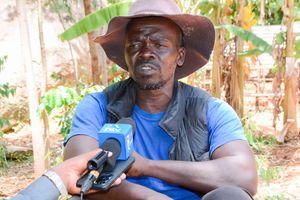
Mr Macurin Tirien, a Chepsangor village resident, recalls keeping distance from the homestead as he thought the reptiles could escape.
“From the beginning, we were worried. We watched from far even when invited by the archdeacon and KWS personnel to the ponds. Very few people dared approach,” he says.
Months after the start of the rare venture, Bustani la Edeni gained community acceptance and support.
As part of the process, public education and awareness sessions were held in a specified radius of the sanctuary.
“As neighbours and other residents of Chepsangor, everything was explained to us in detail. That helped us understand what was going on and what to expect. We were assured of safety,” Mr Tirien says.
Two crocodiles in one of the ponds at Bustani la Edeni sanctuary in Nandi County.
Photo credit: Macharia Mbugua | Nation Media Group
Over time, the residents grew comfortable. Today, some supply rabbits and chickens to Edeni La Bustani while others engage in casual jobs as visitors throng the farm.
“Having these crocodiles has brought many people and new opportunities to our village,” Mr Edwin Kogo, another resident, tells the Saturday Nation.
“Some of us have been employed here. Our children visit the sanctuary to play, learn and relax.”
Deadly predators, curious visitors, scientists, students and religious devotion coexist at Bustani La Edeni.
Visitors learn about wildlife, and neighbours supply food for the animals.
In February 2022, four years after the rigorous approval by the KWS, Mr Sugut finally acquired the reptiles from a private crocodile farm in Sagana, Kirinyaga County.
Archdeacon Sugut says he envisioned a space for students to study wildlife, locals to engage with animals they would otherwise never encounter, and eventually, have a sustainable venture for the leather industry.
“The whole idea was to create an opportunity for academic learning and appreciate God’s creation,” he tells the Saturday Nation team while watching one of the giant reptiles lazily swimming in the water.
“I wanted to create an opportunity for students to learn and for residents to see and interact with wild animals. It was also about conservation.”
He had also thought of engaging in a unique venture, not maize, tea and milk production practised by almost all the households in Nandi and neighbouring counties.
Apart from adding more crocodiles to the farm, Mr Sugut plans to have ostriches.
With the crocodiles now mature, the archdeacon expects them to begin breeding.
He plans to apply for more permits that would allow him to supply and sell baby crocodiles to other licensed keepers.
In the long term, he intends to supply crocodile skins to the leather industry.