Premium
Digital public relations and marketing trends in Africa
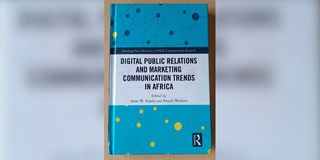
Cover of the book ‘Digital Public Relations and Marketing Communications Trends in Africa,’ edited by: Anne W. Njathi and Brandi Watkins.

What you need to know:
- The KFC potatoes crisis is one of the chapters of Digital Public Relations and Marketing Communications Trends in Africa.
- Another analyses the provocative tweets of Uganda’s Gen Muhoozi and the contentious Kenya-Uganda Twitter (X) discourse.
Book: Digital Public Relations and Marketing Communications Trends in Africa
Edited by: Anne W. Njathi and Brandi Watkins
In January 2022, the Kenya franchise of American fast-food company KFC found itself in the centre of a row with Kenyans on Twitter (X) over French fries.


What began as an innocuous tweet by KFC, announcing that they had run out of potatoes to make French fries (chips), quickly snowballed into a full-blown crisis for the company.
Kenyans on Twitter (KOT) simply couldn’t understand the logic of ‘running out of potatoes’, which are plentiful in the country. The situation was further aggravated when the company explained that it sources potatoes from Egypt and that the shortage had been caused by delays in shipment occasioned by the Covid-19 pandemic.
But unforgiving KOT would have none of it. On a short notice, KFC was being fried online, in the practical sense of the word. The hashtag #Boycott KFC quickly gained traction as the fast-food outlet struggled to manage the escalating crisis.
This KFC incident is one of the chapters of Digital Public Relations and Marketing Communications Trends in Africa, a newly published book that showcases digital marketing trends in Africa that are burgeoning at the same speed as the uptake of technology in the continent.
Twitter (X) activism and crisis management
Authored by several contributors and edited by Anne W. Njathi and Brandi Watkins, the book seeks to interrogate digital marketing trends in two stages; the status of digital marketing on the African continent, including cases from Nigeria, Egypt, Uganda and Kenya, and an analysis of the rise of influencer marketing, including cases from Nigeria and Uganda.
The book also explores factors driving the increase in digital media platforms in Africa as well as an analysis of the implications of the growth in digital marketing, using various theoretical and methodological underpinnings to probe trends.
In the case of the KFC potato crisis, a chapter authored by Anne W. Njathi and Eric Wamanji, the study examines the reactions and counter-reactions from KFC and the Kenyan public during the crisis.
According to the authors, the objective of the study is to determine the extent to which Twitter users contributed to a cyclic crisis and to interrogate how KFC handled the crisis using dialogic communication principles.
While the study in this chapter is broadly on Twitter (X) activism and crisis management, it also examines social media crisis – such as the one KFC Kenya found itself in when KOT advocated for Kenyans to boycott the franchise. The study also draws comparisons with similar KOT campaigns that likewise trended such as #SomeoneTellCNN and SwitchOffKPLC.
General Muhoozi Kainerugaba's tweets
Another chapter of this book that would be of great interest to Kenyan readers is the one that analyses the provocative tweets of Uganda’s General Muhoozi Kainerugaba and the contentious Kenya-Uganda Twitter (X) discourse.
The background of this study is the diplomatic row between Kenya and Uganda which General Muhoozi sparked in October 2022 with his series of provocative and taunting tweets about invading Kenya.
The tweets angered the Kenyan online community, with thousands flocking Twitter (X) to tell off General Muhoozi, eventually forcing the Ugandan government to apologise to Kenya.
Most chapters in the book include literature reviews, theoretical principles, methodologies, limitations, findings and implications of the respective studies.
Digital Public Relations and Marketing Communications Trends in Africa provides significant implications for marketing scholars and researchers and will be relevant to those looking to understand the opportunities ahead.