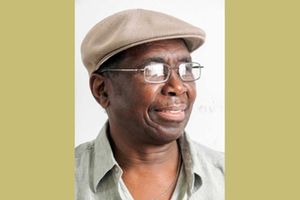
In detached cool, Meja Mwangi, the celebrated Kenyan novelist and filmmaker, held Nairobi’s backstreets up like a diamond, revealing each facet through meticulous and surprisingly raw detail — the clang of construction sites, the neon shimmer of River Road bars, the weary shuffle of men chasing day wages — startling social insights, and prose so clean it’s incandescent.
For him, Nairobi possessed a certain shimmer around the edges; when we read his works, we enter that shimmer and emerge with a new way of seeing, a shared crystallisation of truth. In beautiful and oblique writing, he paints Nairobi’s gritty urban setting — harsh and desolate — a place where the halo of the city dematerialises in the debris of lost dreams of suburbia — characters drifting past dingy kiosks and bright city lights, a mirage that dissolves even as they walk through it.
As Meja Mwangi died on Thursday, December 11, 2025, some of his most renowned works remain his two searing novels — Kill Me Quick and Going Down River Road — both circling back to Nairobi, to that formative, fractured cityscape of casual labour and survival, shadowed with exploitation and despair, told against the larger backdrop of Kenya.
The closest personal encounter I had with Meja Mwangi was when he wrote to me on April 3, 2021, thanking me for a review I had done in this paper of his novel Kill Me Quick. He also attached a photo of himself receiving the Jomo Kenyatta Award for Kill Me Quick from President Jomo Kenyatta in 1972.
Cyrus Jirongo during an interview at his Mayfair Suites offices in Nairobi on October 28, 2021.
Photo credit: File | Nation Media Group
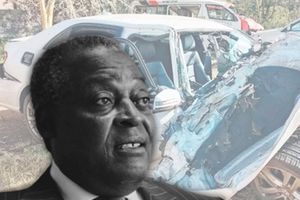
As fate would have it, two days after Meja Mwangi’s death, Cyrus Jirongo, former Lugari Member of Parliament and a once towering tycoon and political powerbroker, died in a tragic Naivasha road crash on December 13, 2025. Jirongo’s life arc — through the panorama of his squandered fortune — the towers of Nairobi real estate, the debts that swallowed his empire, the fragments that remained after failed ventures, the stalls of promises unkept.
Through the wet Saturdays of political despair, through the loneliness of Lugari’s fields, through the mystery of alliances broken, the confusion of political parties, of home, of learning, through the finding of money (and losing it) and the accompanying drama of it all, the marshalling of fading political instinct, and living through the politics of Moi, Raila, and Ruto.
The lives of Meja Mwangi and Cyrus Jirongo were sharply contrasted. If Jirongo was frontier nobility, Mwangi sought to puncture that myth of a privileged section of Kenyans. Jirongo conjured the mystique Mwangi wanted to dispel.
There is a tension between the utopia of Jirongo’s world and the dystopia of Meja Mwangi’s characters. Mwangi flips Jirongo’s narrative on its head so that the dream’s fatal flaw is exposed: many are starving in the same country where a few have plenty.
As the Jirongos of the world eat in five-star hotels, Meja Mwangi’s characters languish in Nairobi’s streets. One of the most heartrending scenes in Kill Me Quick is where Meja and Maina are eating food from the dustbins:
“Meja... sat... with the stench of the backstreet in his nose, and worried. He had been in the city three days. He was yet to find something that did not scare him. The busy people, the heavy traffic, and the tall buildings filled him with awe. He had landed in a strange world where everyone was an adversary... It was not what they had said he would find in the city. This was not the place of his dreams... Maina hopped out of the dumpster with a paper bag in each hand and joined him. ‘Food,’ he said, dropping the bags at their feet... One bag had fruit: squashed bananas, mouldy oranges, and a pawpaw that was just a mushy mess at the bottom. In the other bag were a dry loaf of bread, chocolate that looked like shoe polish, and some hard scones. Maina broke the bread and gave Meja a piece. Meja had not eaten for some days, but the look of the food left him with no desire to eat.”
Challenges of human suffering
Meja realises, too late, that Nairobi is not the shining city he imagined. It is a nightmare: Kenya’s braying capital has a certain brashness and abruptness of style — always hurried, breathless, and cruel.
In the same city where the Jirongos, through whatever means, dispelled the ghosts of the city and claimed a space for themselves, Meja Mwangi’s characters couldn’t find even necessary food.
And there is a sadder reality. For the young men and women eating from Nairobi’s dustbins, where are their political leaders who should have devised policies to alleviate this kind of poverty?
The wreckage of the Mercedes Benz that former Lugari MP Cyrus Jirongo was driving before a road crash that claimed his life on the Nakuru-Nairobi highway on December 13, 2025.
Photo credit: Boniface Mwangi | Nation Media Group
There is therefore a further sense of abandonment, a form of political alienation, reflecting a generational loss of innocence — where leaders remain nonchalant about the struggles of the Mainas and Mejas until they need votes in the next election cycle.
In their passing, Mwangi and Jirongo remind us of the fragility of human power and the challenges of human suffering and resilience. Kenya mourns two sons — one who wrote about the cries of the ruled, another who lived the privileges of the ruling. Their lives, set against each other, form a tragic chorus that will echo in our collective memory for a long time.