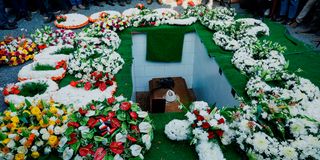
The coffin of Kenya's former Prime Minister Raila Odinga, who died while receiving medical treatment in India, lies in a grave surrounded by floral wreaths during his burial at the Kango Ka Jaramogi home in Bondo, Siaya County, Kenya, October 19, 2025.

“Of the dead do not speak ill,” read a trinket of wisdom from a Greek thinker uttered more than 2,600 years ago.
It was attributed to Chilon of Sparta, a politician that history recognises as one of the Seven Sages of Greece who lived 600 years before the common era, or before Christ as some would put it.
Recorded in books in later years, the remark became an aphorism that morticians and the general public use commonly, though not everyone obeys it.
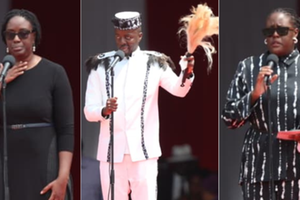
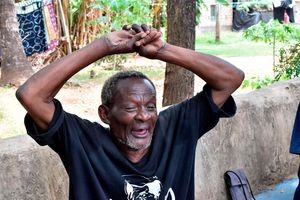
And so, when former Prime Minister Raila Odinga died at 80, Kenya was awash with glowing tributes from every corner. Social media posts, paid-up newspaper statements, press statements, and verbal tributes shoved aside the criticisms he received from some sections of society when he was alive.
“True statesman”, “incorruptible leader”, “founding father of Kenya’s multi-party democracy”, “the father of our Constitution,” and “formidable hero of Kenya’s second liberation” were among the terms used.
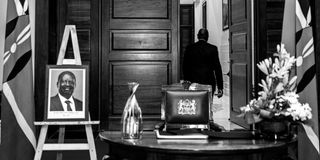
President William Ruto signed a condolence book in honour of the Right Honourable Raila Odinga at the State House in Nairobi. Members of the Executive will also sign the condolence book. This is one of many events organised to celebrate and reflect on the life of Hon. Odinga.
President William Ruto, who has been with and against Mr Odinga in various seasons of his political career, said of Mr Odinga: “A quintessential progressive and reformer, he fought for the ideals of human rights, democracy, the rule of law, and inclusivity and economic opportunity for all until he breathed his last.”
He added: “l have lost a big brother, a mentor, a confidant, and a selfless patriot. Every time l needed wise counsel, I turned to him time and again. He never once failed me and told me the truth every time, even when the truth was hard.”
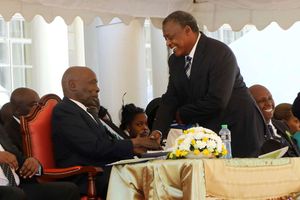
In 2020, when Kenya’s second president Daniel arap Moi, died at 95, many of the things that made some people throw epithets on him when he handed over power were put aside. He was eulogised as an “iconic leader”, “generous man”, “steady leader”, among other praises.
Even Mr Odinga, who spent time in jail for nearly a decade under Mr Moi and had to flee to exile (though they later had a brief rapprochement), chose to remember the latter in shining light. He described him as “one of the greatest leaders of our country”.
The same case applied to Mr Moi’s successor, Mwai Kibaki. Upon his death at the age of 90 in 2022, he was celebrated as a man who served Kenya with “diligence and transparency”, an “outstanding economist,” and a man who had “legendary intolerance for political pettiness”.
Even ordinary folk receive all but praise when they die. Mr Walter Momanyi, who prepares burial booklets for various bereaved families in Kisii town, said he has never seen a “single negative thing” said in a eulogy.
“There is nobody who can say that someone deceased was a thief or something bad. Even if they know you were a murderer and they know a person you killed, they will never say it in a eulogy,” he told Nation.
He reasoned that setting aside the negative aspects is a way of fostering harmony by not reminding society of a person’s ills.
“It’s just for keeping peace with the other aggrieved parties,” he said. “The society might know who the person’s victim is, but they choose not to play it up after the perpetrator’s death.”
Various documents we reviewed on the subject tended to have a consensus that it is “bad manners” to speak ill of someone immediately after they die, be it in Africa or elsewhere.
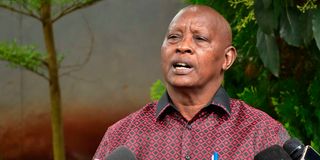
Nyeri Governor Mutahi Kahiga addresses a press conference at his home in Nyeri town on October 22, 2025.
When Nyeri Governor Mutahi Kahiga appeared to defy this unwritten rule and made light of Mr Odinga’s death, he definitely touched a raw nerve.
On Wednesday, after his apology and resignation from the vice chairmanship of the Council of Governors, the Nation spoke with Oyunga Pala, a former Nation columnist who is trained in anthropology (study of human societies and cultures) and who recently released a book on death, grief, and mourning.
Mr Oyunga said it is not entirely true that the dead don’t receive criticism, referring to cases where Kenyans online have mocked the dead previously. However, he noted that when a major person like Mr Odinga dies, there is a communal instinct that should kick in.
“In a way, there’s always a sense of occasion. When a country is going through national mourning as we witnessed with the death of Baba [Mr Odinga], there’s a kind of understanding usually that we need to rise above our political rivalries and differences to respect the sense of occasion, because that’s the one ultimate path that everybody is going through,” he said.
Mr Oyunga, the author of “Strength and Sorrow: Reflections on the Ones We Lost”, noted that praising the dead is part of society’s unwritten rules.
“It is basically a social code; an unwritten social code, basically the rules of utu [humanity] — that even if you didn’t like someone, when they die, you pass by and say sorry,” he said. “That people can make capital out of it so soon tells us about the bankruptcy of our political class.”
Mr Oyunga’s reasoning is that the aftershocks of Governor Kahiga’s remarks have rekindled tribal tensions in Kenya, which is the perfect situation for politicians.
“They’re playing up the old trick because that’s all they know,” he said.
“There’s basically no moral standing whatsoever in this political class, and that’s what we’ve been reduced to; that even in a solemn ceremony like this that demands basically decorum from everybody, the political class is completely unable to rise above its need for opportunism,” added Mr Oyunga.
Follow our WhatsApp channel for breaking news updates and more stories like this.