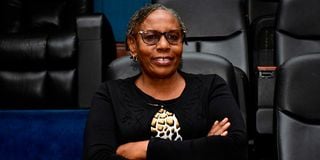
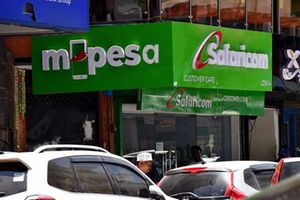
Jemmimah Thiong’o, who once dominated the Kenyan airwaves with back-to-back gospel music hits, has ratcheted up her long-running lawsuit against Safaricom seeking Sh15 million in a copyright case.
The singer is accusing Safaricom of pirating 39 of her songs and selling them for profit without paying her.
The case filed at the Milimani Commercial High Court has dragged on for nine years, but now the hearing is set for November this year.
The gospel artiste, who has not released a new album in 15 years, accuses Safaricom of selling her songs on its Skiza Tunes platform without compensation.
Among Ms Thiong’o’s hit songs involved in the row include Mipango Ya Mungu, Alinitua, Pendo la Ajabu, and Mganga.
Skiza Tunes is a Safaricom service that allows subscribers to set personalised music as their ring-back tone. This service provides ring-back music and allows artistes to earn royalties from downloads and plays.
In court documents seen by the Nation, Ms Thiong’o’— who owns the rights to 80 per cent of the songs, and Robert Kimanzi (also known as R Kay), staking claim to the remaining 20 per cent — say they have never earned a single shilling in royalties from Skiza Tunes.
Through their lawyer, Ms Thiong’o’ and Mr Kimanzi claim that Safaricom “reproduced, altered, modified, mutilated, distributed, offered for sale, stored, communicated to the public, pirated, and generally used and benefited from the plaintiffs’ (the artistes) musical work without the plaintiffs’ authority and consent.
Ms Thiong’o argues Safaricom was complicit in acquiring the songs and ought to have done due diligence to identify the rightful shareholders of the intellectual property when it obtained the records from Liberty Afrika, a music aggregator, and the Music Society of Kenya (MCSK) who are also part of the suit.
“The defendant has unjustifiably and to the detriment of the plaintiffs enriched itself...the defendant has failed to ameliorate the plaintiffs for losses suffered and unauthorised use,” she argues.
By Safaricom making her songs readily available to the public without her consent, Ms Thiong’o adds that she has lost business as she was unable to sell her musical works for profits and this has subjecting her to mental anguish, and ridicule.
“I have suffered ridicule and embarrassment resulting from the financial losses and the fact that my struggle to make ends meet has caused people to take me less seriously resulting whereof people who were erstwhile my clients shunning me and denying me business,” she argues.
When Ms Thiong’o first filed the case in 2016, she told the court that she had suffered losses of over Sh5 million at the time. She claims that she has continued to suffer financial losses over the years because Safaricom has continued to sell her music without paying her any royalties.
For this reason, she is claiming more than Sh15 million in compensation for the current value of her catalogue infringed upon by the telecom company.
The singer also wants the court to compel Safaricom to give an account of all the money it has received from the sale of her music without her consent.
Before filing the suit, Ms Thiong’o, through her lawyer, had sent a demand letter to Safaricom dated June 15, 2015, demanding to be compensated.
In response, the telc,o through their legal lead Angela Karamba, denied any copyright infringement and maintained that it had obtained her content.
“The content on the Skiza platform is uploaded by licensed content service providers. The content, the subject matter of your letter, has been provided through Liberty Afrika Technologies Ltd, with whom your client has signed a valid agreement. In view of the foregoing, Safaricom has not infringed upon your client's rights either as alleged or at all,” wrote Ms Karamba on behalf of Safaricom.
In its defence statement, Safaricom admits that it used and sold some of the singer’s songs on its Skiza Tunes platform after obtaining them from two music aggregators, Cellulant Kenya Limited and Liberty Afrika Technologies, who are premium rate service providers (PRSPs).
Among the evidence Safaricom submitted was an agreement dated May 27, 2009, which it had signed with the two PRSPs.
Safaricom argues that this agreement granted it non-exclusive and revocable rights to use and reproduce Ms Thiong’o’s songs. The telecom company claims that, by signing a deed of assignment with the PRSPs, the two artistes had assigned their rights to the PRSPs. As such, Safaricom did not commit any infringement when obtaining the musical works from the two music aggregators.
“The defendant avers that it offered only some of the plaintiffs' songs on its Skiza Tunes upon representation from the PRSPs that they had obtained the requisite licenses, rights of use, assignment, and approval from the plaintiffs,” states Safaricom.
However, the company denies using Ms Thiong'o's song in its “Surf Na” promotion, saying it was a campaign to reward its clients for using its internet data and as such did not need to use her songs for that.
In response to Ms Thiong'o's allegations that it had failed to pay her royalties, Safaricom stated that it had paid all royalties from sales of the songs to the two PRSPs. As such, Ms Thiong'o should check with the two music companies for her payment.
On why it deleted some of the songs after Ms Thiong'o launched a complaint, Safaricom says it did so only after the PRSPs instructed it to withdraw or stop offering the digitised form of the music works of the artistes. Some of the songs were deleted on March 6, 2023, after MCSK wrote to Liberty Afrika.
Safaricom explains why it didn’t pay
In her witness statement, Ms Karamba defended Safaricom’s decision to enter into a contract with the middlemen, the music aggregators, to provide the content it needed instead of dealing directly with the artist.
“To use the sound recording or copyright work of various artists in Skiza Platform, the defendant is required to enter into agreements with the various artists. However, due to the sheer number of artists both locally and internationally and because of the different rights that accrue to different people from the usage of copyrighted works,” she said.
Ms Karamba added that it was challenging for the company to individually contact all the copyright owners to obtain permission as well as to monitor the usage of the said copyright work.
“As a consequence thereof, the defendant has entered into a contract with PRSPs or content service providers (CSPs) who are licensed by Communication Authority of Kenya,” she explained.
She added, “Payment would be made through the CSPs, who would then pay the right owners. I am aware that all revenue collected by the defendant from the plaintiff’s songs has been remitted to the 1st and 2nd third parties (PRSPs) every month after deducting its share of the revenue as per agreements.”
From the agreement, Safaricom retained 60 percent of the total revenue, with 40 percent paid to the PRSPs, which after its deductions, paid the rest to the right holders.
Jennifer Wanjira, who worked as Cellulant’s Rights Acquisition Manager from 2014 to 2022, stated in her witness statement that the company and Ms Thiong'o entered into a license agreement on June 29, 2012 and even advanced her some money which she has failed to repay.
“By the said agreement, the plaintiffs granted Cellulant a non-exclusive right and privilege and license to create, reproduce, transmit, display, deliver, distribute, and sell the compositions for wireless use in the territory. I am aware that Cellulant is not indebted to the plaintiff herein, as Cellulant advanced to her the sum of Sh50,000 on account of advance royalties, which sum she has not repaid to date, nor have the active works generated revenue to settle the same,” said Ms Wanjira.
In the row, MCSK says Liberty, one of the music companies, continued to exploit Ms Thiong'o’s music in its catalogue past 2013 "despite only being licensed to do so for the years between 2008 to 2013," and it never received any payment from the PRSP.