The Judicial Service Commission (JSC) is pushing for a legal overhaul to expand its mandate, seeking powers to discipline errant judges rather than just recommending their removal.
The proposals, presented to the Constitutional Implementation Oversight Committee (CIOC) of the National Assembly, are part of the commission’s effort to rid the Judiciary of bad elements.
However, even with its current authority to recommend the removal of judges, the JSC has been rendered largely ineffective—the High Court determined that the lack of regulations renders the commission’s actions legally null and void.
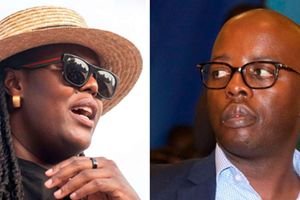
In submissions to the committee, JSC vice-chairperson Isaac Ruto stated that both the Constitution and the Judicial Service Act “are silent on the process of reprimanding judges”, leaving the commission without intermediate disciplinary measures for minor infractions.
“The commission can only recommend removal of a judge or dismiss petitions and complaints, with no provision for immediate sanctions when minor violations are identified,” Mr Ruto told CIOC, chaired by Suba South MP Caroli Omondi.
Suba South MP Caroli Omondi.
Photo credit: Dennis Onsongo | Nation Media Group
In turn, the committee challenged the JSC to draft the necessary amendments to enable proportionate disciplinary action against errant judges.
The amendments the committee is requesting would include procedures for reprimanding judges for minor violations and the development of comprehensive disciplinary regulations that provide intermediate sanctions, not just removal or dismissal.
Article 168 of the Constitution outlines the strict process for removing judges on grounds such as incapacity, breach of the code of conduct, bankruptcy, incompetence, or gross misconduct. Removal is initiated by the JSC or through a petition, followed by a tribunal investigation and, if warranted, presidential suspension—ensuring judicial independence while holding judges accountable.
Unlike jurisdictions such as South Africa and Uganda, which have established procedures for judicial reprimands, Kenya’s system of either dismissal or exoneration is deemed insufficient for addressing minor breaches.
Mr Ruto noted that the current mechanisms “are inadequate for addressing judicial misconduct comprehensively”.
“This binary approach [dismissal or exoneration] fails to provide proportionate disciplinary responses and undermines the intended purpose of judicial accountability,” said Mr Ruto.
Chief Justice Martha Koome.
Photo credit: File | Nation
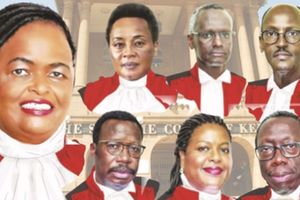
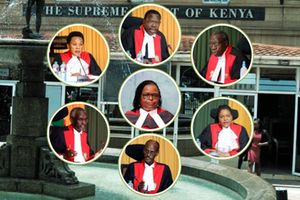
Last year, Supreme Court judges, led by Chief Justice Martha Koome, obtained High Court orders blocking the JSC from hearing petitions for their removal over alleged misconduct and incompetence.
The High Court temporarily paused the proceedings, questioning the commission’s processes and the validity of petitions based on leaked documents.
The situation has raised questions about whether the JSC, as a body with executive and administrative functions, can encroach into judicial territory when disciplining judges.
The courts have emphasised that the JSC’s role is to investigate and recommend judges for removal, not “to discipline or adjudicate all misconduct that often involves appointing tribunals”.