Many people in Kenya, especially my Amagoro community, know me as a former Member of Parliament (MP). However, some may recognise me more from my long career at the Nation Media Group (NMG) or simply “The Nation” newspaper, where I worked for over two decades.
When I joined NMG, the top management offices were situated at Stanley House on Kimathi Street, while Nation House on Tom Mboya Street, and Kenya Litho in the Industrial Area operated separately.
The expatriate managers were visibly surprised to see a black man there and openly questioned my presence. For an entire year, I had an office but no actual work. I was in a job but essentially jobless. Eventually, I approached my boss, whom I was supposed to replace, and asked for clarity. He seemed puzzled that I had no assigned duties. I offered to draft a job description outlining my potential responsibilities as his deputy and in handling other management tasks. He agreed but insisted I avoid the newspaper business initially, stating, “Newspapers are a very tricky business. I don’t want you to be there yet.”
Instead, he suggested I start with Kenya Litho. I proposed becoming the executive chairman there and he accepted. After getting him to sign my job description, I requested to work from the Kenya Litho offices on Mombasa Road for a year, which he approved.
NMG offered me a company house in the upscale Muthaiga estate to occupy as the Group’s Managing Director. However, I declined and requested a loan to build my home in Karen instead. At the time, the loan amount was quite substantial.
At Kenya Litho, the white expatriates tried to diminish my role by suggesting I sit in the Managing Director’s office instead of having my own space. I refused this and demolished a wing to construct my larger office out of mabati iron sheets and timber, befitting my position as executive chairman. Stories spread that I was wastefully spending unbudgeted money on this, but I paid them no mind. When the office was complete, I invited my boss over, offered him a drink and informed him bluntly: “This is my office now!”
The 1975 assassination of politician J.M. Kariuki (a popular politician) plunged our paper into crisis. The Editor-in-Chief, George Githii, outrageously lied, claiming he had confirmed Kariuki was alive in Zambia that morning, when in fact Githii knew his body had been found in Ngong Forest. Overnight, our credibility and sales hit rock bottom. We debated whether to fire Githii or retain him with a strong warning to mend his ways. As an editor, he had stellar credentials; apart from Hillary Ng’weno, nobody matched his competence in knowledge, skills and drive.
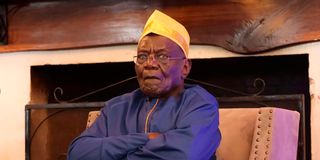
Former Nation Media Group chairman and chief executive Albert Ekirapa addresses guests during the launch of his memoir at Karen Country Club in Nairobi on July 25, 2025.
Photo credit: Evans Habil | Nation Media Group
Githii was also highly controversial in other ways. Attorney-General Charles Njonjo used to call our newsrooms at a set time daily to inquire about the editorial and lead story. Githii routinely disclosed this information to him.
One day, Stan Denman told Githii he would not publish a particular story, saying it would only run “over his dead body.” Denman was known for his firm stance on editorial matters, sometimes leading to intense confrontations. Githii calmly picked up the phone, dialled and after a little while, started speaking in reverential tones: “Yes Sir, yes...Your Excellency, I’ve heard you...thank you.” He then told the baffled Denman: “I told you that story has to be published.
The President has given his go-ahead.” Few people in the room believed that Githii had actually spoken to the President, but since he was once Jomo Kenyatta’s private secretary and still retained high-level contacts, it was impossible to tell. He was cheeky, constantly looking over Denman’s shoulder at what he was doing.
In another incident, Githii backed one side of the Bohra Muslim community’s schism through an editorial. The Aga Khan himself angrily called me about Githii publishing lies about Muslims at their leaders’ behests. We convened a board meeting to demand that Githii justify or withdraw the piece.
Githii refused to withdraw it and threatened resignation. He protested his independence as editor and we told him independence was not an open-ended thing; he was accountable to the board. The next thing he did was to make good on his threat and resigned publicly. Later, he came to my office and demanded to be paid his dues. I told him first, that there were no dues to be paid since he had walked out on the company, effectively absconding duty.
Further, I told him he was addressing the wrong person; he should go and see his lawyer. He would hear none of it. He went away and I thought that was the last I was seeing of him. But he came back two or three days later with the same demand for money. I repeated what I had told him but noticed that he was reaching for his gun, which he always carried to the immense discomfiture of his colleagues in the newsroom.
Something told me that if you see somebody pulling out a gun, he intends to use it. I didn’t wait. I rushed forward and grabbed him and a great scuffle ensued. The commotion attracted people in the neighbouring offices. Stan Denman was the first to arrive and we were able to disarm Githii before he could do any harm. We handed over Githii’s gun to the police. Njonjo later called to say Githii had reported our altercation and would apologise — which he did, though dismissively.
After Githii’s departure, Njonjo schemed to install the Standard’s editor, Henry Gathigira as his replacement. Essentially, his aim was to plant an insider informant. Gathigira was a spineless man. He worshipped power and used his newspaper to sing its praises. He was a perfect fit for Njonjo’s schemes. While on a trip to Paris, I warned the Aga Khan that Njonjo intended to hire Gathigira as his “stooge” to control the Nation’s narrative. The Aga Khan listened, effectively putting an end to Njonjo’s plans.
Joe Rodrigues replaced Githii as the Editor-in-Chief. Githii joined the United Nations Atomic Agency Commission in Vienna. When we attended an International Press Institute meeting there, we discovered that Githii intended to denounce the Kenyan Government as anti-press freedom and one persecuting journalists. I was in Vienna with George Mbugguss, the long-time editor of Taifa Leo, so we issued a joint “binding resolution.” If Githii dared show up, we would directly confront and “face-off” with him over his planned attacks on Kenya. Githii was made aware of our intentions and chickened out.
Later, he bizarrely offered to buy us “champagne,” which turned out to be sparkling water. I wondered if he knew what champagne was or he was just being his usual cheeky self. At the meeting, Mbugguss performed admirably in representing the Kenyan press. Then we returned home and that was the final time I saw Githii in person. I only heard later that he had become a street preacher in Canada.
First African Editor-in-Chief
One of the most recognisable figures at NMG was Hillary Boniface Ng’weno, our first African Editor-in-Chief. He was a great man. He was a richly talented individual who had trained as a scientist in the United States of America but returned home to show superb journalism skills. And he was only in his 20s. Ng’weno left the Nation to found his own stable of publications, starting with the Weekly Review, which would later be acquired by NMG after my departure. He also started the Sunday weekly newspaper, the Nairobi Times, a broadsheet and Rainbow, a children’s magazine. But at the time I met him in my capacity as NMG executive chairman, he was running the
Former Nation Media Group chairman and chief executive Albert Ekirapa (centre) with Jubilee Party politician David Murathe (right) during the launch of Ekirapa's memoir at Karen Country Club in Nairobi on July 25, 2025.
Photo credit: Evans Habil | Nation Media Group
I was much impressed with the magazine. So I came up with what I thought was an offer Ng’weno would be wise to take up. I proposed to him that instead of buying him out in hard cash, we could convert the Weekly Review’s worth into NMG shares. And he would continue editing the magazine. I figured he could see the enormous opportunity in the proposal. But he flatly rejected it without a second thought. I was not done with him yet. I invited him to become the Nation’s Editor again and suggested that his valuers assess the Weekly Review’s value and transfer that equity into the Nation shares for him. Again, I could not convince Hillary to accept.
We wanted him to continue as editor, overseeing the entire the Nation newspaper. Given what NMG grew into as the years went by, imagine how wealthy he or his family would be today if he had taken that path. Unfortunately, he apparently misunderstood our intentions. What happened afterwards is that I started hearing rumours that we aimed to kill off his news magazine, which was most emphatically not the case. When we initially launched The EastAfrican (in 1994), few expected it to endure for so long. We first introduced it in Kampala, Uganda, before subsequently launching it in Dar es Salaam, Tanzania — with President Benjamin Mkapa, himself a former journalist, proudly serving as the chief guest for that unveiling. Given his media background, Mkapa was delighted at the paper’s arrival. The EastAfrican has since grown substantially over the years.
The Weekly Review could have eclipsed even The EastAfrican’s eventual success by expanding across East Africa under the Nation Media Group’s umbrella. Unfortunately, that never materialised as Ng’weno declined my offer. To me, that was one great missed opportunity.
Under my chairmanship, Nation Printers and Publishers (NPP) transformed into the Nation Media Group and rapidly expanded, culminating in our relocation from the rented premises on Tom Mboya Street to our new headquarters — Nation Centre on Kimathi Street.
We decided the newspaper operations had outgrown the Tom Mboya Street location and required a modern, custom-built home we could own. The Nation Centre’s iconic architectural design emerged from an Aga Khan programme in which architects globally competed to propose the best conceptual plans. The winning design astonished Kenya’s architectural community, who doubted our vision for constructing such an avant-garde building. However, our goal was an enduring structure whose design could stand the test of time — and time has vindicated that bold aspiration. The Nation Centre’s distinctive and robust design still stands out today as an iconic landmark meant to last centuries.
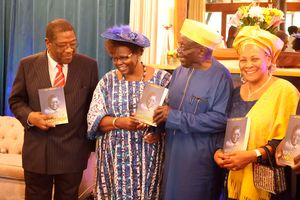
Former Nation Media Group chairman and chief executive Albert Ekirapa (second right) with (from left) former Attorney General Amos Wako, Dr Rachael Masake and Margret Ekirapa during the launch of Ekirapa's memoir at Karen Country Club in Nairobi on July 25, 2025.
Photo credit: Evans Habil | Nation Media Group
The company underwent significant transitions during my tenure at NMG from 1974 onwards. The most significant was Africanisation. Many key roles held by white and Asian staff were gradually taken up by indigenous Africans.
But in implementing this, we were very meritocratic. We tried hard not to bring in people simply because of their skin colour, although in the long run, we had to. We instituted a rigorous performance appraisal system to evaluate and promote staff based on merit. This upset some complacent individuals, who rebelled against the increased supervision and accountability and eventually left.
We began professionalising our journalists through overseas training programmes in Canada, Germany, the UK and the USA. This exposure helped eliminate timidity and instil responsibility. I cracked down on “brown envelope journalism,” where reporters accepted bribes from politicians to cover events favourably. While such corruption persists today, we established strict rules and consequences that forced journalists to be discrete and adhere to professional standards of fairness and accuracy.
As one of only two major dailies along with the Standard, the Nation wielded significant influence due to its large circulation. This attracted political interest and attempts at manipulation. In one major crisis, President Daniel arap Moi was angry at our reporting of issues he felt tarnished his government’s image. This was mainly instigated by Attorney-General Charles Njonjo, who claimed he had to repeatedly stop us from publishing specific stories. The situation escalated to the point where the Aga Khan flew in from Paris to meet Moi directly. The Aga Khan simply offered to hand over the newspaper if Moi wanted to take control. Moi beat a retreat and agreed to respect the Nation’s independence.
While vacationing with my wife in the USA, I received an urgent call from Kenya’s UN Representative informing me that several of our journalists had been arrested. The gravity of the matter demanded immediate action, so I cut short my holiday and returned home. Upon arrival, I tried to reach President Moi by phone but to no avail. Determined to resolve the issue, I went to Parliament, hopeful that Speaker (Francis ole) Kaparo or his deputy, Stephen Kalonzo Musyoka , could help me establish contact with the President.
When I approached Kalonzo, however, his response was both dismissive and surprising. Rather than engaging with the issue or offering the assistance I sought, he questioned my motives, implying that I was acting out of place. His attitude was disheartening and unhelpful, given the urgency of the matter. I attempted to redirect the conversation towards the journalists’ predicament, but it was clear that Kalonzo was unwilling to assist. Left with no support from him, I had to explore other avenues to reach Moi.
Eventually, I managed to secure a face-to-face meeting with the President at State House. During our discussion, I explained that newspapers report facts and are quick to issue corrections when mistakes occur but do not intentionally target individuals.
Moi listened without defending the actions of the police and the matter was amicably resolved. The journalists were released unconditionally, but the entire episode left me reflecting on the challenges of navigating such encounters in public service.
The Nation had faced issues with the presidency even before President Moi. During President Mzee Jomo Kenyatta’s tenure, Udi Gecaga, Chairman of the Standard and Ngengi Muigai, the President’s nephew, hatched a plan to take over the Nation. They wanted Muigai to become the Nation’s chairman, which would have cost me my job.
The Aga Khan called a meeting in St. Moritz, Switzerland, to discuss the matter with us. On February 16, 1976, he came to Nairobi to open the Serena Hotel with President Kenyatta as the chief guest. Gecaga and Muigai had arranged for Kenyatta to instruct the Aga Khan to appoint Muigai as chairman during the ceremony.
As planned, Kenyatta raised the issue in a private room, with Gecaga and Muigai present. The Aga Khan cleverly responded that he had heard the request and would get back to the President later. Unsatisfied, Gecaga and Muigai approached the Aga Khan again at the airport on his departure day, insisting that Kenyatta wanted Muigai announced as chairman before leaving Kenya. The Aga Khan firmly stated that he would respond directly to the President, not through them.
The Aga Khan later returned to Kenya and met with Kenyatta, offering to hand over the Nation if the President wanted his family to control it along with the Standard. Kenyatta declined.
The Aga Khan then called a board meeting in St. Moritz to seek our views on the takeover request. The expatriate- dominated board unanimously declared they would resign if it happened. The Aga Khan told us to enjoy London while he scheduled another meeting for Monday.
Unbeknownst to us, he had also asked the Editor-in-Chief, George Githii, for his stance. Githii reportedly threatened to quit if the Aga Khan yielded to the takeover demands. At the Monday meeting, Gecaga and Muigai were surprised to find us all present. The Aga Khan informed them that he could not decide without the board’s approval and none of us supported their idea. They left, shocked, and the matter was put to rest.
The editorial department is the engine of a media house, determining its reputation and credibility. My success at NMG can be attributed to the outstanding talents in our editorial team, including Joe Kadhi, George Mbugguss, Joe Rodrigues and Wangethi Mwangi.
Wangethi Mwangi.
Photo credit: Joseph Kanyi | Nation Media Group
When I became NMG chairman, the Kenyanization of the media house was underway. The predominantly European staff was not pleased with this change and the Kenyans who took over had to work hard to prove their competence. I often had to defend my Kenyan staff against my bosses who wanted to hire Europeans.
Transitioning from the civil service to the private sector was a turning point that shaped my career and significantly impacted Kenya’s media landscape. I often reflect on whether I made the right choice and what might have happened if I had stayed in the civil service. This move was a career change and a transformative shift driven by circumstances, experiences and personal vision.
Although the civil service initially seemed like a fulfilling long-term path, I encountered frustrations, bureaucratic challenges and politics within the system. Leaving the civil service was difficult. I was motivated by a desire to make a significant impact, challenge the status quo and set new moral standards.
My time at NMG became a platform to pursue these goals. I focused on transforming NMG into a prominent media player, emphasising quality journalism and ethical reporting. This was not just a professional choice but a commitment to shaping society, providing accurate information and ensuring accountability.