As part of its push for integration within the East African Community (EAC), Somalia has announced plans to accelerate the introduction of Kiswahili into the country's school and university curricula.
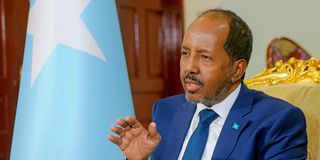
President Hassan Sheikh Mohamud announced that the government would accelerate the process to integrate the language into Somalia’s education system at all levels.
The initiative is part of Somalia’s objective to align with the standards of the East African Community (EAC), of which it became the eighth member in 2024, following Kenya, Tanzania, Uganda, Rwanda, Burundi, South Sudan, and the Democratic Republic of Congo.
Kiswahili is already recognised as an official language of both the EAC and the African Union, and is spoken by over 200 million people.
“Somali National University, along with all Somali universities, must take the lead in promoting Kiswahili, the common language of the East African region,” said President Mohamud.
He made these comments on Tuesday at the opening of the second East African Cooperation and Economic Integration Conference (EACON 2025) in Mogadishu, where the event has been held for the past two years.
The President’s call marks the first time that Somalia has moved to formally incorporate Kiswahili as a working and instructional language, alongside Somali, Arabic and English.
On his part, Education Minister Farah Sheikh Abdulkadir said that the government is collaborating with regional institutions to develop a framework for teaching Kiswahili nationally.
“We are working to enhance the study and use of the Kiswahili language in Somalia. We want to see it become a language of communication, trade, and learning, even replacing English at our next conference,” he said.
The recently established National Higher Education Board of Somalia is coordinating joint efforts with the East African Universities Association and the East African Qualifications Authority, the minister added.
The cooperation is expected to help harmonise education standards and qualifications between Somalia and other East African countries, thereby facilitating greater collaboration and mutual understanding between the two regions.
Kiswahili, spoken by over 200 million people across East and Central Africa, is already an official language of the African Union and the East African Community.
The policy aligns with ongoing efforts by EAC leaders to revise the regional treaty and promote Kiswahili as an official working language across all institutions. While English remains the bloc’s primary official language, Kiswahili is spoken by over 150 million people in East and Central Africa.
If implemented, the inclusion of Kiswahili in Somalia’s education system would mark a significant step toward aligning the country’s linguistic and educational policies with those of its regional partners, enhancing cultural exchange, trade, and cooperation across East Africa.
This year’s edition of EACON focused on enhancing cooperation, production, trade and investment across the East African region.
Somalia officially joined the East African Community (EAC) in 2024, becoming the bloc’s eighth partner state alongside Kenya, Tanzania, Uganda, Rwanda, Burundi, South Sudan, and the Democratic Republic of Congo (DRC).
In order to participate in the East African Community, Somalia must align its trade, legal and education systems with those of the other member states. According to the government, adopting Kiswahili is one of several steps in a broader programme that includes developing regional infrastructure, promoting cross-border business and harmonising laws and professional qualifications.
The process of implementing Kiswahili in the education system will begin with teacher training, curriculum development, and translation of key learning materials.