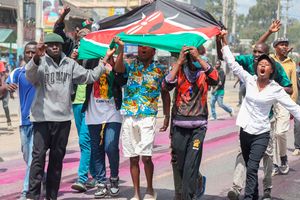
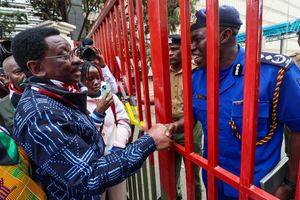
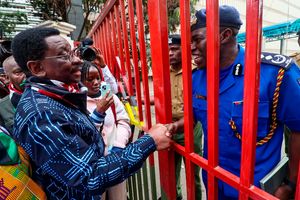
Thousands of young Kenyans poured into the streets on June 25, 2024, in what became one of the most consequential days in the country's recent history.
They came from different backgrounds. Some were students, activists, professionals, artists and ordinary citizens who had never attended a protest before.
Then Parliament was breached, a dramatic moment that became the defining image of demonstrations that quickly turned bloody and deadly.
The events that followed altered lives in ways few could have imagined. Some protesters never made it home while others survived gunfire, arrests, abductions and torture.
Many lost jobs, opportunities and relationships. Almost all were forced to confront a reality they had not anticipated when they first answered calls on social media to join the demonstrations.
For some, it was the moment young people discovered the power of collective action, and for others, it is a painful reminder of the cost of demanding accountability.
Yet even among those who carry deep trauma from that day, there remains a striking sense of unfinished business.
Daily Nation spoke to some of the faces associated with the movement about what June 25 means to them two years later.
Bernard Kavuli during an interview at Nation Centre in Nairobi on June 24, 2026.
Photo credit: Bonface Bogita | Nation Media Group
For Kavuli, the anniversary is not merely a remembrance of a historic protest. It is a reminder of the personal price he paid.
He was among those at the forefront of the demonstrations. In the aftermath, he was abducted, tortured and later lost his job, yet despite what happened, Kavuli insists he will be part of the commemorations.
"We will be laying a wreath at the gates of Parliament, with or without the goons," he said.
Human rights defender Hanifa Adan.
Photo credit: File | Nation Media Group
Few people became as closely associated with the Gen Z movement as Hanifa Adan. Yet, looking back, she says much of what happened remains difficult to explain because nobody anticipated the scale of what was unfolding.
What began as small demonstrations on June 18 rapidly grew into a nationwide movement, culminating in the events of June 25.
"At no point did I ever plan or imagine myself being at the centre of what happened," she said.
Her role in mobilising support and helping raise more than Sh31 million for protesters thrust her into the national spotlight. But she says the movement was never about influence.
"It was a fight for our lives," she said.
While the withdrawal of the Finance Bill 2024 marked a victory, she believes the cost was far too high.
“If President William Ruto had withdrawn the Bill before so much bloodshed, it would have been a different case. The objective was met. The Bill was dropped, but the lines had already been crossed,” she says.
“I’ll forever disdain the political elite and everyone who was violent towards unarmed protesters and young people,” she said.
Human rights activists Odhiambo Ojiro speaks to the media in Nairobi on June 21, 2026.
Photo credit: Lucy Wanjiru | Nation Media Group
For activist Odhiambo Ojiro, June 25 imposed a responsibility that did not end when the crowds left the streets.
He remembers courage and loss, but above all, he remembers the people who never returned home.
Since then, he has dedicated much of his time to documenting cases of police brutality, abductions, torture and enforced disappearances alongside human rights organisations.
“We need data and we need information so that we can use that information to push for accountability from those responsible for those violations,’ he said.
The work has come at a personal cost. He says he has attended post-mortems, comforted grieving families, been arrested several times and even relocated because of security concerns.
Still, he believes the spirit that drove young people onto the streets remains alive.
“The spirit of June 25 is what carries us. It guides every step and action of young men and women of this generation," he says.
Gabriel Oguda.
Photo credit: File | Nation Media Group
Gabriel Oguda found himself at the centre of the anti-Finance Bill campaign while serving as a policy analyst in the office of then Minority Leader Opiyo Wandayi.
His role involved analysing policy proposals, including the Finance Bill, and communicating their implications through social media platforms.
“I was not leaderless. I was acting in the line of duty and taking instructions from my leader,” he said.
Oguda was abducted a day before Parliament was breached and later released. Since then, both Kenya's political landscape and his own circumstances have changed significantly, particularly after ODM entered into a broad-based arrangement with the government.
He now serves on the committee overseeing implementation of the Memorandum of Understanding between ODM and the government.
Looking back, he advises Gen Z activists to remain focused on issues rather than personalities or politics.
“The Gen Zs should centre their activism around issues affecting Kenyans. Ask politicians not to muddy the ground,” he said.
“Kenyans are suffering and they want people to champion their issues. The moment the movement shifts from issue-based activism to politics, that is when it loses public goodwill,” he adds.
Human rights activist Joshua Okayo during an interview at Nation Center in Nairobi on June 23, 2026.
Photo credit: Evans Habil | Nation Media Group
For him, the breach of Parliament represented something much larger than a demonstration.
“It signified people who felt unrepresented deciding to represent themselves and speak for themselves," he said.
A day later, he was abducted and held incommunicado for three days.
Before June 25, life seemed predictable. He was completing his legal training and preparing to enter the profession. Since then, he says, he has lost relationships and employment opportunities.
Looking back, he believes protesters underestimated what would happen after Parliament was breached.
“We were not very well prepared for what would happen afterwards. We should have discussed ways of minimising deaths and injuries," he said.
Willie Oeba, a spoken word artist who was vocal in the build-up to the Anti-Finance Bill protests in 2024 during the interview at Nation Centre, Nairobi on June 22, 2026.
Photo credit: Billy Ogada | Nation Media Group
For spoken-word artist Willie Oeba, creativity and activism became inseparable during the protests.
“In 2024, the youth were agonising. Now they are organising," he said. Oeba believes one of the movement's greatest weaknesses was its spontaneity.
“The protests were left to be spontaneous. We did not have structures or schedules," he says.
Like many others, he paid a price for his activism. He says he lost friends, became a target for abduction and missed international opportunities.
Even so, he views June 25 as a defining moment in Kenya's history.
“It should be remembered as a day when the collective consciousness of the nation was pricked,” she says.
Allans Ademba, 29, the man behind ‘Uko Kadi?’.
Photo credit: Bonface Bogita | Nation Media Group
For youth advocate Allans Ademba, one achievement stands out.
“The biggest achievement of the Gen Z protests was forcing the government to acknowledge the existence of Gen Zs and recognise them as a political constituency,” he said.
He argues that young people now occupy a central place in national political conversations in ways they did not before 2024.
“We are still fighting for accountability, transparency and competence from our leaders,” he says.
His focus has since shifted towards voter registration and encouraging greater youth participation in leadership.
Billy Mwangi, a Gen Z activist and Embu Senate aspirant.
Photo credit: Pool
“I witnessed at least two people being shot. Some of the bullets missed me by a whisker. I thank God I survived. But I have never recovered from the trauma of that day,” he recalled.
Months later, he was abducted and held incommunicado for 17 days because of his online activism. He also lost his job at Huduma Centre yet, he has not abandoned the cause.
“Until today, I am still speaking. I am still fighting for my people,” he says.
Now seeking elective office, Mwangi says the same conviction that took him to the streets continues to guide him.
Human rights activist Shakira Wafula speaks to the media at Uhuru Park, Nairobi on July 30, 2025.
Photo credit: Wilfred Nyangaresi | Nation Media Group
She was among the most recognisable faces of the Gen Z movement. For her, June 25, 2024 is defined by a feeling she could not fully explain at the time.
“I remember a strange energy in the air. I didn't know whether it was tension or something else. Later, when people ended up injured, dead or disappeared, I understood what I had been feeling that morning,” she said.
Like many young Kenyans, she was driven to join the protests by frustration over the high cost of living and a belief that leaders were ignoring citizens.
“I watched as David Chege was shot near Parliament. I’d interacted with him minutes earlier. Seeing his blood flowing on the streets was traumatic,” she said.
Looking back, Shakira believes inexperience was one of the movement's greatest weaknesses.
“We were too young, too fresh and too inexperienced to know what to do with the power we held on June 25,” she said.